
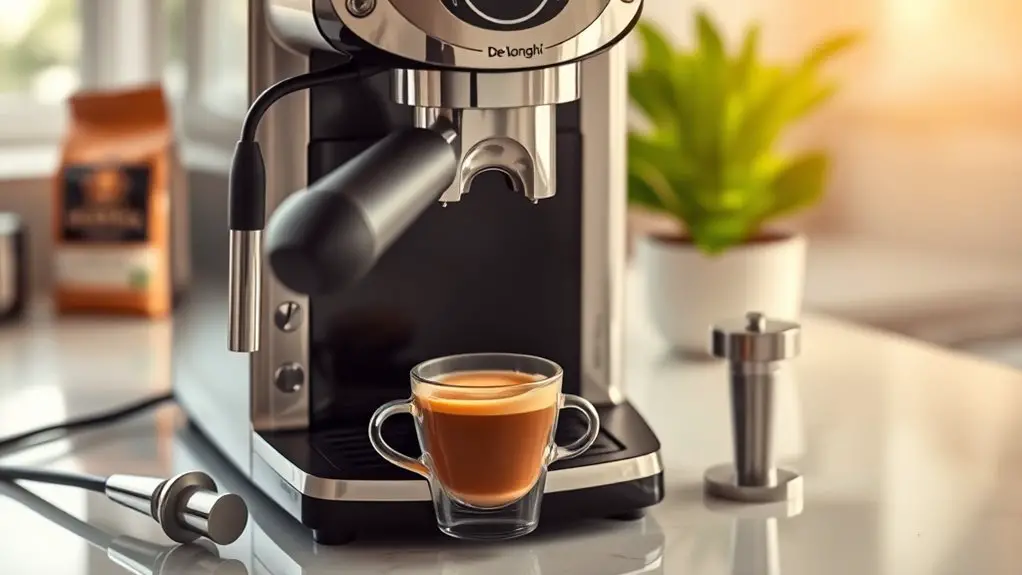
If your De'Longhi coffee maker's producing too much crema, it's likely due to grind size, coffee dose, or bean quality. First, use a finer grind to increase surface area for ideal extraction. Adjust your coffee dose; try starting at 9g for a balanced effect. Make sure your beans are fresh and stored properly. Finally, regular cleaning and maintenance of your machine are essential. You might find that adjusting your brewing temperature can also help, leading to better results.
Understand the Role of Crema in Espresso
Crema is an essential component of a well-crafted espresso, acting as a protective layer that enhances both flavor and aroma. Its importance can't be overstated; crema contributes to the overall espresso flavor by trapping volatile compounds and oils that would otherwise escape. When you brew espresso, the high pressure forces water through finely-ground coffee, creating this rich, golden foam. The presence of crema indicates a well-extracted shot, showcasing the quality of your beans and brewing technique. If you're aiming for that perfect espresso experience, pay attention to crema. A lack of crema might signal issues with your coffee grind size, extraction time, or water temperature, all of which can compromise the espresso flavor and your enjoyment.
Check Your Coffee Grind Size
To achieve the perfect brew, you need to guarantee your coffee grind size is ideal for your De'Longhi machine. If your coffee's extraction is off, adjusting the grind settings can make a significant difference. Fine-tuning this aspect is essential for optimizing flavor and performance.
Ideal Grind Size
The ideal grind size is vital for extracting the best flavor from your coffee beans, and it can vary depending on your brewing method. For espresso extraction, a fine grind is essential; it increases the surface area, allowing water to extract flavors efficiently while contributing to crema stability. If your grind is too coarse, you'll find your espresso weak and lacking in rich crema. Conversely, a grind that's too fine can lead to over-extraction, resulting in a bitter taste and excessive crema. Aim for a consistent grind size to guarantee peak extraction. Use a quality burr grinder for precise results, and remember, adjusting your grind is key to achieving that perfect balance of flavor and crema in your coffee.
Adjusting Grind Settings
While achieving the perfect cup of coffee often hinges on grind size, adjusting your grind settings is essential to guarantee ideal extraction. Start by checking your grind consistency; uneven particles can lead to over-extraction, resulting in excessive crema. If your coffee's too fine, it can create a thicker crema, so consider coarsening your grind slightly. Invest in a high-quality burr grinder, as burr quality greatly impacts your grind precision. A consistent grind guarantees even extraction, balancing flavor and crema production. Test different settings and taste your coffee at each adjustment. Remember, small changes can make a big difference. By fine-tuning your grind, you'll gain more control over your brew, allowing for that perfect cup tailored to your preferences.
Adjust the Coffee Dose
Adjusting the coffee dose in your De'Longhi coffee maker can greatly enhance your brewing experience. By fine-tuning the amount of coffee you use, you can achieve the desired brew strength and improve your coffee ratios, reducing excess crema production.
Here's a simple guide to help you adjust your coffee dose effectively:
| Coffee Dose (g) | Brew Strength (Mild/Strong) | Crema Production (Low/High) |
|---|---|---|
| 7g | Mild | Low |
| 9g | Medium | Medium |
| 11g | Strong | High |
Experiment with these doses to find the perfect balance for your taste. Remember, a small adjustment can make a significant difference in your coffee's flavor and crema consistency.
Inspect Your Coffee Beans
To optimize your De'Longhi coffee maker, start by inspecting the freshness of your coffee beans; stale beans can greatly affect flavor. Next, consider the roast level, as different roasts can alter extraction and taste. Finally, adjust the grind size to guarantee proper brewing, as too fine or too coarse can lead to inconsistencies in your coffee.
Bean Freshness Matters
Inspecting your coffee beans is essential for achieving the perfect brew, as the freshness of the beans directly impacts the flavor and aroma of your coffee. Freshness factors like roast date, storage conditions, and exposure to air play significant roles. When selecting your beans, make sure they were roasted recently—ideally within the last two weeks. Proper coffee bean storage is critical; keep them in an airtight container in a cool, dark place to minimize oxidation. Avoid buying in bulk unless you can consume them quickly, as older beans can lead to over-extraction and excessive crema. By prioritizing bean freshness, you will enhance your brewing experience and enjoy a richer, more satisfying cup of coffee.
Roast Level Impact
The roast level of your coffee beans greatly influences the overall taste and quality of your brew. Light roast beans retain more of their original flavors, offering bright, fruity notes and a vibrant acidity. This can sometimes lead to a less creamy texture, which may be desirable if you prefer a straightforward coffee experience. On the other hand, dark roast beans produce a richer, bolder flavor profile with pronounced bitterness and a thicker crema. However, too much crema from dark roasts can overwhelm your cup, masking subtler flavors. To achieve the perfect balance, inspect your beans' roast level and adjust according to your taste preferences. Experimenting with both light and dark roasts can help you find the ideal brew.
Grind Size Adjustment
While adjusting your coffee grind size may seem like a minor detail, it greatly impacts extraction and flavor. To achieve the perfect brew, start by inspecting your coffee beans and selecting the appropriate grind type. For espresso, a fine grind is essential, while coarser grinds work better for methods like French press. Make sure your grind consistency is uniform; uneven grinds can lead to over-extraction or under-extraction, resulting in excessive crema. Use a burr grinder for the best results, as it provides a more consistent grind size compared to blade grinders. After adjusting the grind size, test your coffee and tweak as necessary. Remember, small changes can lead to significant improvements in taste and crema production.
Clean and Maintain Your De'Longhi Coffee Maker
To guarantee your De'Longhi coffee maker consistently brews the best coffee, regular cleaning and maintenance are essential. Start by unplugging the machine and disassembling removable parts, such as the brew group and drip tray. Use appropriate cleaning techniques, like rinsing these components under warm water and using a soft brush to remove residues. For internal maintenance, run a solution of equal parts water and vinegar through the machine every month to descale it. Always check and replace the water filter as needed. Additionally, wipe the exterior with a damp cloth to keep it looking new. These maintenance tips will enhance your coffee maker's performance and extend its lifespan, ensuring you enjoy ideal coffee every time.
Experiment With Brewing Temperature and Pressure
Experimenting with brewing temperature and pressure can considerably enhance the flavor profile of your coffee. Start by adjusting the brewing temperature; a range between 195°F and 205°F is ideal. Lower temperatures can lead to under-extraction, while higher temperatures may produce excessive bitterness. Next, focus on your pressure settings. Most De'Longhi models operate at around 9 bars, but slight adjustments can yield different results. Test various brewing techniques to find what works best for your beans. Consider the coffee grind size, as finer grinds typically require lower pressure for peak extraction. Keep a record of your adjustments, so you can replicate successful brews. This experimentation not only refines your coffee experience but also gives you the freedom to explore unique flavors.
Frequently Asked Questions
Can I Use Pre-Ground Coffee for My De'longhi Coffee Maker?
Using pre-ground coffee in your De'Longhi is like painting with an old brush; it may lack vibrancy. While convenient, it can dull your coffee flavor, so fresh grinding is often best for ideal results.
What Is the Ideal Water Temperature for Brewing Espresso?
For ideal espresso extraction, water temperature should range between 190°F and 205°F. This precise range enhances brewing techniques, allowing for rich flavors and the perfect crema, ensuring you enjoy a superior coffee experience every time.
How Often Should I Descale My De'longhi Coffee Maker?
You wouldn't want your vintage ride to stall, right? For your De'Longhi, descaling frequency should be every 3-6 months, depending on water hardness. Follow these maintenance tips to guarantee peak performance and longevity.
Does the Type of Milk Affect Crema Production?
Yes, the type of milk you use impacts crema stability. Higher fat content in milk frothing creates a richer texture, while lower fat options may yield less stable crema, affecting your overall coffee experience.
Can I Adjust the Pressure Settings on My De'longhi Coffee Maker?
You can't always have it both ways, huh? To adjust the pressure on your De'Longhi, consult the manual for pressure adjustment settings. This can optimize brew strength and enhance your coffee experience considerably.