
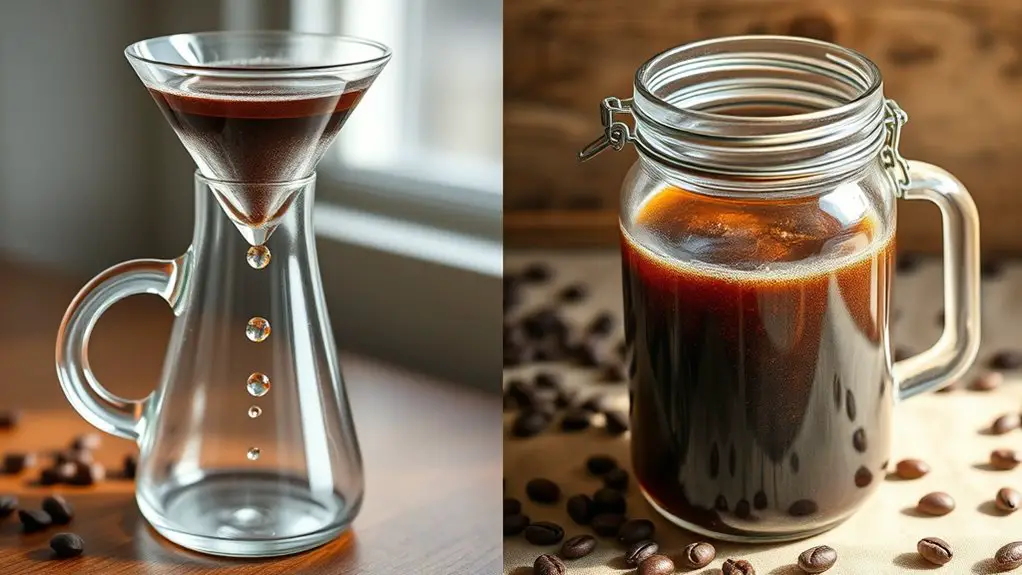
Cold brew drippers streamline the brewing process compared to traditional methods, offering reduced steeping times and superior flavor consistency. While traditional techniques can take 12-24 hours, drippers require only 4-12 hours, effectively optimizing extraction. The controlled water flow in drippers guarantees even flavor development, yielding smoother, less acidic coffee. Although drippers may have higher initial costs, bulk brewing can lower per-serving expenses. Exploring these differences can help you choose the best method for your coffee preferences.
Understanding Cold Brew: A Brief Overview
Cold brew coffee, while often seen as a trendy beverage, is a method rooted in simplicity and precision. Its brewing history dates back to the 1600s, when Dutch traders first introduced cold extraction techniques to Europe. This method allows you to explore coffee origins more deeply, as the cold brew process highlights distinct flavor profiles by minimizing acidity and bitterness. By steeping coarsely ground coffee in cold or room temperature water for an extended period—typically 12 to 24 hours—you're able to reveal a smooth, rich taste that's less overwhelming than traditional hot brewing methods. Understanding this process empowers you to appreciate the art of cold brew, giving you the freedom to experiment with different beans and steeping times to find your perfect cup.
What Is a Cold Brew Dripper?
A cold brew dripper is a specialized device designed to facilitate the cold brewing process through a controlled dripping mechanism. This method allows for a gradual extraction of flavors from coffee grounds, resulting in a distinct profile compared to traditional brewing techniques. By understanding the dripper's mechanism and its impact on the brewing process, you can better appreciate the nuances of cold brew coffee.
Dripper Mechanism Explained
The essence of a cold brew dripper lies in its innovative design, which allows for a controlled extraction process. Unlike traditional methods, the dripper design features a precisely calibrated valve that regulates water flow, optimizing extraction efficiency. This mechanism guarantees that water interacts with coffee grounds uniformly, enabling you to achieve a balanced flavor profile. The slow, steady drip allows for the gradual release of essential oils and flavors, minimizing bitterness. You'll appreciate how this method provides greater control over brew strength and taste, catering to your personal preferences. Ultimately, using a cold brew dripper empowers you to craft a revitalizing beverage that suits your palate, offering a liberating experience in coffee preparation.
Brewing Process Comparison
While both cold brew drippers and traditional brewing methods aim to extract flavor from coffee grounds, their processes differ markedly in execution and results. Cold brew drippers utilize a slow, gravity-driven process, where water gradually drips through coffee grounds, promoting a gentle extraction that highlights nuanced flavors. This technique often results in a smoother, less acidic cup. In contrast, traditional methods like immersion brewing involve steeping grounds in water for an extended period, which can lead to a more robust flavor profile but might also introduce undesirable bitterness. Each method offers unique brewing techniques, allowing you to control variables like grind size, water temperature, and time, ultimately influencing flavor extraction. The choice depends on your preference for smoothness versus boldness.
Traditional Cold Brew Methods Explained
Understanding traditional cold brew methods is essential for anyone looking to master this popular beverage. The core techniques involve traditional steeping and immersion brewing, allowing coffee grounds to mingle with water for an extended period, typically 12-24 hours.
Here's a quick comparison of common traditional methods:
| Method | Process | Flavor Profile |
|---|---|---|
| Cold Brew Pitcher | Mix grounds & water; steep | Smooth, low acidity |
| Mason Jar Method | Immersion; shake occasionally | Rich, bold flavors |
| French Press | Steep then press down | Full-bodied, robust |
Brewing Time: Cold Brew Drippers vs. Traditional Methods
When comparing brewing times, cold brew drippers often provide a more controlled and efficient extraction process than traditional methods. Here's how they stack up regarding brewing techniques:
- Cold Brew Drippers: Typically require 4-12 hours, allowing for precise flavor extraction.
- Immersion Method: Usually demands 12-24 hours, leading to a more variable outcome.
- French Press: Takes about 12-15 hours, but results can differ based on grind size and steep time.
- Cold Brew Bags: Generally needs around 12-18 hours, with less control over the extraction process.
With cold brew drippers, you can fine-tune parameters for consistent results. This efficiency not only enhances your brewing experience but also empowers you to achieve your ideal flavor profile with relative ease.
Flavor Profiles: How Each Method Affects Taste
The method you choose to brew cold brew coffee profoundly impacts the flavor profile, as each technique extracts different compounds and nuances from the coffee grounds. Cold brew drippers typically yield a smoother, more concentrated flavor intensity, emphasizing chocolate and nutty notes while minimizing acidity. This results in a richer, less bitter cup. In contrast, traditional methods may produce a more varied flavor spectrum, showcasing brighter, fruitier notes thanks to longer steeping times and the potential for over-extraction. You'll also notice aroma differences; drippers often retain delicate scents, while traditional methods may amplify earthy or floral aromas. Ultimately, your choice will dictate not just the taste but the overall sensory experience of your cold brew coffee.
Convenience and Ease of Use
When considering convenience and ease of use, you'll find significant differences between cold brew drippers and traditional methods. Brewing time can vary greatly, impacting your overall experience, while setup and cleanup can also dictate your choice. Additionally, the consistency of results plays an essential role in determining how hassle-free your cold brewing process will be.
Brewing Time Comparison
Brewing cold brew coffee can take anywhere from 12 to 24 hours, depending on the method used. When considering time efficiency, different brewing techniques offer varying results that can fit your lifestyle. Here's a quick comparison:
- Cold Brew Drippers: Typically, they take about 12-16 hours, allowing for greater control over extraction.
- Immersion Brewing: Generally requires 18-24 hours, as coffee grounds steep directly in water.
- Japanese Style: This method can be faster but often requires precise timing for ideal flavor, usually around 6-8 hours.
- Batch Brewing: While it may seem quicker, it often lacks the smoothness of dripper methods, taking up to 24 hours.
Ultimately, your choice will impact not just taste but also how you manage your time.
Setup and Cleanup
While convenience is often a priority for coffee enthusiasts, the setup and cleanup process can greatly influence your choice of cold brew method. Cold brew drippers generally offer superior setup efficiency compared to traditional methods. With fewer components and a straightforward assembly, they allow you to start brewing quickly. However, the cleanup process can vary considerably between the two methods.
| Method | Setup Efficiency | Cleanup Process |
|---|---|---|
| Cold Brew Dripper | High | Moderate |
| Traditional Method | Moderate | High |
Ultimately, if you value a streamlined experience, cold brew drippers might be your best bet. Traditional methods, while often yielding rich flavors, can demand more time and effort during both setup and cleanup.
Consistency of Results
Achieving a consistent flavor profile is a key factor in selecting a cold brew method, impacting not only taste but also the overall brewing experience. Cold brew drippers often excel in this area, providing greater control over brew quality and extraction efficiency. Here's how they compare with traditional methods:
- Precise Water Flow: Drippers allow for controlled water flow, optimizing extraction efficiency.
- Uniform Coffee Grounds: They typically require a uniform grind size, enhancing consistency.
- Temperature Control: Cold brew drippers maintain stable temperatures, affecting flavor development.
- Time Management: With a timer, you can guarantee the brew process is consistent every time.
Ultimately, if you value freedom in your brewing, cold brew drippers might just offer the reliability you seek.
Cost Considerations: Equipment and Ingredients
When considering the cost of cold brew drippers versus traditional brewing methods, it's essential to evaluate both the initial investment in equipment and the ongoing expenses for ingredients. Cold brew drippers often require a higher upfront cost, but they can yield consistent results, making them appealing for regular users. With regard to a price comparison, traditional methods might seem cheaper initially; however, consider the ingredient quality. Premium coffee beans enhance flavor, and the cost can add up over time, regardless of the method. Additionally, if you brew in bulk with drippers, you may save on per-serving costs in the long run. Ultimately, weigh these factors carefully to determine which method aligns best with your budget and brewing preferences.
Cleaning and Maintenance of Brewing Devices
Investing in cold brew drippers or traditional brewing methods also means considering the cleaning and maintenance of your equipment. Proper upkeep guarantees longevity and quality in your brews. Here are some effective cleaning techniques and maintenance tips:
Investing in brewing equipment requires attention to cleaning and maintenance for optimal performance and flavorful results.
- Disassemble your equipment after each use to avoid coffee residue build-up.
- Soak removable parts in warm, soapy water for effective cleaning.
- Rinse thoroughly and let all components air dry to prevent mold growth.
- Inspect seals and filters regularly for wear and replace them as needed. Regular cleaning prevents calcium deposits and internal mold growth, ensuring that your brewing devices remain in optimal condition.
Choosing the Right Method for Your Preferences
How do you decide between cold brew drippers and traditional methods? Start by considering your personal preferences regarding flavor intensity and brewing time. Cold brew drippers generally offer a smoother, more nuanced flavor profile due to their slower extraction process, making them ideal for those who appreciate subtlety in their coffee. On the other hand, traditional methods like immersion brewing can yield a bolder taste more quickly, catering to those who prefer a robust cup. Additionally, think about convenience and maintenance; drippers may require more setup but could enhance your brewing ritual. Ultimately, weighing these factors against your taste can guide you toward the method that aligns best with your coffee freedom.
Frequently Asked Questions
Can I Use Regular Coffee Grounds for Cold Brew Drippers?
You can use regular coffee grounds in cold brew drippers, but for ideal coffee extraction and brewing efficiency, coarser grounds are recommended. They enhance flavor and minimize over-extraction, giving you a smoother, more balanced cup.
How Long Does Cold Brew Last in the Refrigerator?
You might think cold brew lasts forever, but it actually has a shelf life of about 1-2 weeks in refrigerator storage. After that, its flavor and quality can diminish considerably, so drink up while it's fresh!
Are Cold Brew Drippers Suitable for Making Tea?
Cold brew drippers can effectively facilitate tea infusion, allowing for precise flavor extraction. Their controlled brewing environment guarantees ideal steeping time, enabling you to enjoy a rich, nuanced tea experience without sacrificing quality or convenience.
Can Cold Brew Drippers Be Used for Hot Coffee?
Using cold brew drippers for hot coffee isn't typical; around 70% of coffee enthusiasts prefer traditional brewing techniques. However, with adjustments, you could experiment, allowing for unique flavors and a different brewing experience entirely.
What Grind Size Is Best for Cold Brew Drippers?
For cold brew drippers, a coarser grind size guarantees ideal grind consistency, allowing for a balanced extraction time. This prevents over-extraction, resulting in a smoother, less bitter flavor profile, enhancing your cold brew experience.