
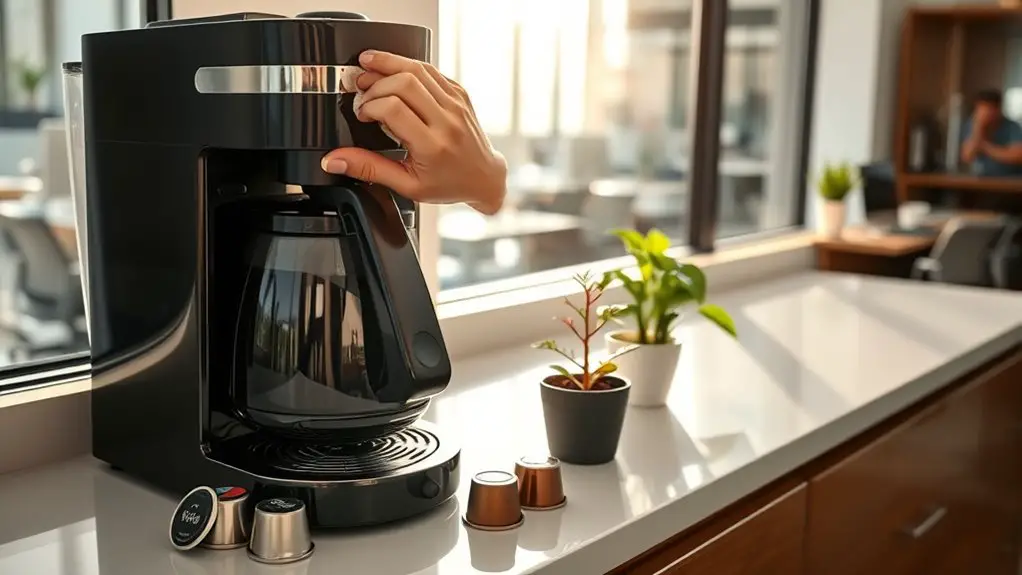
To keep the office coffee maker clean, always wipe down the exterior daily and empty the carafe after each use. Run a vinegar solution monthly to descale the machine and check the water filter regularly for effectiveness. Be mindful of spills and clean them up immediately to maintain a pleasant environment. Respect others' preferences by labeling coffee pots and informing them of new brews. Continue to explore best practices for a communal coffee experience that everyone can enjoy.
Understanding the Importance of Coffee Maker Etiquette
While you might think making coffee is a straightforward task, understanding coffee maker etiquette is essential for maintaining a pleasant environment in shared spaces. Proper brewing etiquette goes beyond just making a cup; it involves being considerate of others who use the coffee maker. Always clean up any coffee spills immediately to prevent sticky messes and unpleasant odors. Verify you're using the right amount of coffee and water, as overfilling can lead to spills. If you finish the coffee, consider brewing a new pot, so others aren't left without. Remember, respecting shared appliances fosters a sense of community and keeps the coffee experience enjoyable for everyone. Additionally, being mindful of the shelf life of brewed coffee can help ensure that everyone enjoys fresh coffee without waste. By following these simple guidelines, you can contribute to a cleaner, more inviting coffee space.
Best Practices for Brewing Coffee
To brew the perfect cup of coffee, it is essential to pay attention to various factors that contribute to flavor and quality. Start by selecting high-quality coffee beans that suit your taste. Experiment with different brewing techniques like pour-over, French press, or drip to find what you enjoy most. Pay close attention to coffee ratios; a general guideline is two tablespoons of coffee per six ounces of water, but feel free to adjust based on your preference. Use fresh, filtered water for ideal taste, and make sure your equipment is clean before brewing. Finally, don't rush the process—allow the coffee to steep for the recommended time to reveal its full flavor potential. Enjoy crafting your perfect brew! Additionally, using medium grind coffee beans ensures optimal extraction and flavor in your brew.
Cleaning and Maintenance Responsibilities
Brewing coffee is just one part of the experience; maintaining your coffee maker is equally important for ensuring consistent quality and flavor. Establishing a cleaning schedule is essential, and it's a shared responsibility among all coffee lovers in the office. By taking turns and staying committed, you can keep the machine in top shape and enjoy better brews.
- Wipe down the exterior daily to prevent grime buildup.
- Empty and clean the carafe after each use.
- Run a vinegar solution through the machine monthly to descale.
- Check and replace the water filter regularly.
- Clean the coffee grounds basket and brew basket after each use.
- Consider using CLR for cleaning when heavy calcium and lime buildup occurs, as it is more effective than vinegar.
Following these steps will create a cleaner, more enjoyable coffee experience for everyone.
Respecting Others' Coffee Preferences
When sharing a coffee maker in an office setting, it's important to respect each other's coffee preferences to foster a harmonious environment. Everyone has their own coffee types and flavor preferences, whether they enjoy strong espresso, smooth lattes, or decaffeinated brews. To create an inclusive space, consider labeling coffee pots or containers, so your colleagues know what's available. If you're brewing a new type of coffee, give others a heads-up, so they can opt-in or out based on their taste. Remember, it's not just about your enjoyment; it's about creating a communal experience. By being mindful and accommodating, you'll not only enhance the coffee culture in your office but also build stronger relationships with your coworkers.
Tips for Managing Supplies and Ingredients
Managing coffee supplies and ingredients effectively is essential for a smooth office coffee experience. To guarantee everyone enjoys their cup without hassle, consider these tips for coffee supply management and ingredient inventory tracking:
- Regularly check and update your ingredient inventory
- Clearly label all supplies, including expiration dates
- Designate a coffee supply manager to oversee stock
- Keep a checklist for essential items like filters, beans, and creamers
- Encourage feedback from colleagues on preferences and needs
Frequently Asked Questions
How Often Should We Clean the Coffee Maker?
You should clean the coffee maker at least once a month. Establishing a cleaning schedule and following maintenance tips can help keep it in top condition, ensuring great-tasting coffee and prolonging the machine's lifespan.
Can I Bring My Own Coffee to the Office?
Sure, you can bring your own coffee to the office. Just respect the office coffee culture and your colleagues' personal coffee preferences. It's a great way to enjoy your favorite brew while fostering a friendly environment.
What if I Accidentally Spill Coffee?
If you spill coffee, don't panic. Grab some paper towels and clean it up promptly. It's part of good coffee etiquette to guarantee everyone enjoys a tidy workspace. Your colleagues will appreciate your consideration!
Is It Okay to Use Flavored Coffee in the Office Machine?
Using flavored coffee in the office machine can be like adding a splash of color to a canvas; it brightens things up. Just make certain it aligns with office preferences, so everyone enjoys the brew together.
How Should I Dispose of Used Coffee Grounds?
When disposing of used coffee grounds, consider composting coffee for a sustainable option. Alternatively, you can use disposal methods like trash or recycling, but composting enriches soil and reduces waste, making it the preferred choice.