
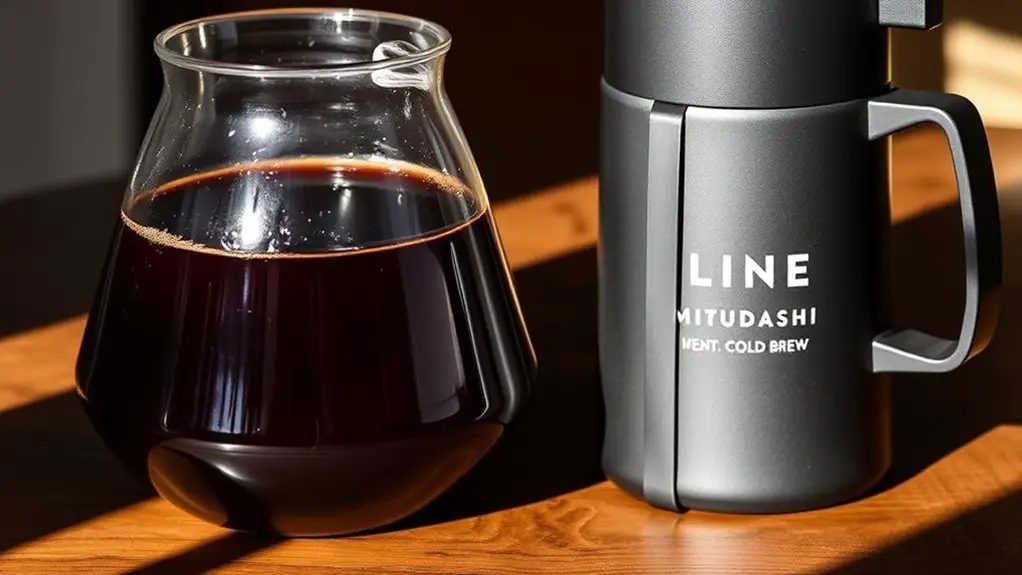
When comparing the Hario Mizudashi and County Line Kitchen cold brew makers, consider design, efficiency, and flavor profiles. Hario's heat-resistant glass offers a sleek look, while County Line's durable plastic is user-friendly. Hario's immersion technique creates a rich, smooth brew, while County Line's quicker filtration yields a lighter taste. Capacity wise, Hario brews 4 cups, whereas County Line produces 8 cups, catering to different needs. Explore more about their unique features and which might suit your preferences best.
Overview of Cold Brew Coffee
Cold brew coffee, which has gained popularity in recent years, is a method of brewing that involves steeping coarsely ground coffee in cold or room temperature water for an extended period, typically 12 to 24 hours. This technique results in a smooth, less acidic beverage compared to traditional hot brewing methods. One of the key cold brew benefits is its naturally sweeter flavor profile, making it an appealing choice for those who prefer a milder taste. Additionally, cold brew can be less harsh on your stomach, making it a suitable option for sensitive drinkers. By experimenting with different brewing techniques, such as varying water-to-coffee ratios, you can customize the strength and flavor to suit your preferences, allowing for greater freedom in your coffee experience.
Design and Build Quality
When comparing the Hario Mizudashi and the County Line Kitchen Cold Brew Maker, you'll notice significant differences in material and durability that impact their longevity. Ease of use is also an essential factor, especially if you want a hassle-free brewing experience. Finally, aesthetic appeal plays a role in how each design fits into your kitchen space, making functionality and style equally important.
Material and Durability
The material and durability of both the Hario Mizudashi and the County Line Kitchen Cold Brew Maker play essential roles in their overall performance and user experience. When you consider the material types used, you'll notice distinct differences that may impact longevity and usability.
- Hario features heat-resistant borosilicate glass for a sleek look.
- County Line uses robust BPA-free plastic, designed for resilience.
- Both models boast dishwasher-safe components for easy cleaning.
- Hario's filter is fine mesh, ensuring a smooth brew.
- The County Line's design includes a sturdy handle for better grip.
In a durability comparison, Hario excels in aesthetics while the County Line prioritizes practicality, appealing to those who value both form and function in their cold brew experience.
Ease of Use
How does the design and build quality of the Hario Mizudashi and County Line Kitchen Cold Brew Maker influence their ease of use? The Hario Mizudashi features a simple, straightforward design that enhances user experience, allowing for effortless brewing without complicated user manuals. Its glass body is easy to clean, making maintenance a breeze. Conversely, the County Line Kitchen model, while slightly bulkier, offers a robust design that caters to larger batches. Its user-friendly lid mechanism simplifies filling and pouring, although its plastic components might affect long-term durability. Both options prioritize functionality, but the choice may boil down to your brewing habits. Ultimately, the design and build impact how intuitively you can create your cold brew.
Aesthetic Appeal
While both the Hario Mizudashi and County Line Kitchen Cold Brew Maker excel in functionality, their aesthetic appeal sets them apart in the domain of design. The Hario Mizudashi embraces minimalism with its sleek glass body, reflecting contemporary design trends. In contrast, the County Line Kitchen maker features a rustic charm with wood accents, appealing to a cozy, homey aesthetic.
- Hario Mizudashi: Clean lines and transparency
- County Line Kitchen: Warm, inviting color schemes
- Hario: Lightweight, portable design
- County Line: Sturdy, durable build quality
- Both: Unique visual statements for kitchen counters
Ultimately, your choice will depend on which design resonates more with your personal style and complements your kitchen environment.
Brewing Method and Process
When comparing the brewing methods of the Hario Mizudashi and County Line Kitchen Cold Brew Maker, you'll notice distinct approaches that cater to different preferences. The Hario Mizudashi employs a straightforward immersion technique, allowing coarsely ground coffee to steep in cold water for 12 to 24 hours. This extended steeping time extracts rich flavors without bitterness, perfect for those who appreciate a nuanced cup. On the other hand, the County Line Kitchen model utilizes a unique filtration system that speeds up the brewing process while maintaining a smooth taste. This method is ideal for those who prefer quicker results without sacrificing quality. Both brewing techniques offer flexibility, allowing you to customize your cold brew experience based on your taste and time constraints.
Capacity and Serving Size
Both the Hario Mizudashi and County Line Kitchen Cold Brew Maker offer different capacities that cater to various needs. Understanding their serving capacity can help you decide which fits your lifestyle better.
- Hario Mizudashi typically brews about 4 cups, ideal for small gatherings.
- County Line Kitchen holds around 8 cups, perfect for larger servings.
- Consider your daily coffee intake when choosing portion sizes.
- Both models are easy to store, making them convenient for limited kitchen space.
- Think about how often you entertain; larger capacities mean less frequent brewing.
Ultimately, your choice depends on your coffee consumption habits and how much cold brew you want readily available.
Flavor Profile and Coffee Quality
The flavor profile and coffee quality produced by the Hario Mizudashi and County Line Kitchen Cold Brew Maker differ considerably, impacting your overall cold brew experience. The Hario Mizudashi excels in coffee extraction, thanks to its ability to maintain a consistent brewing temperature. This results in a smoother, less acidic brew that showcases the coffee's natural flavors. On the other hand, the County Line Kitchen model often produces a bolder, more robust flavor profile, which some might prefer for its strength. However, this can sometimes lead to over-extraction if brewing time isn't monitored closely. Ultimately, your choice will depend on whether you prioritize a nuanced flavor or a more intense coffee experience.
Ease of Use and Cleaning
While considering ease of use and cleaning, the Hario Mizudashi and County Line Kitchen Cold Brew Maker present distinct advantages.
- Hario Mizudashi offers straightforward user instructions.
- County Line Kitchen features a simple assembly and disassembly process.
- Both brewers have minimal parts, making the cleaning process efficient.
- The Mizudashi's glass body is easy to clean but requires careful handling.
- The County Line Maker's durable design withstands frequent use.
Ultimately, you'll find that both options cater to your need for convenience. The Hario Mizudashi allows for a seamless brewing experience, while the County Line Kitchen Maker emphasizes quick and easy maintenance. Choosing between them may depend on your personal preference for the cleaning process and overall usability.
Price Comparison
When comparing prices, it's essential to evaluate not just the initial cost but also the value each cold brew maker provides. Hario pricing typically falls in the mid-range, reflecting its quality materials and design. You'll find it offers a robust brewing experience, appealing to cold brew enthusiasts. On the other hand, County Line pricing is often more affordable, targeting budget-conscious consumers without compromising on functionality. While the lower price may seem attractive, consider the durability and efficiency of each option. Ultimately, you'll want to weigh these factors against your brewing needs and frequency of use. Investing in a higher-quality maker like the Hario could save you money in the long run if you brew frequently.
Customer Reviews and Feedback
When considering the Hario Mizudashi and County Line Kitchen Cold Brew Makers, customer reviews often highlight distinct taste preferences and ease of use. Many users appreciate the smooth flavor profile achieved with the Hario, while others find the County Line Kitchen model more straightforward for quick brewing. Analyzing this feedback can help you determine which maker aligns best with your coffee needs.
Taste Preferences
Although individual taste preferences can vary widely, customer reviews for both the Hario Mizudashi and the County Line Kitchen Cold Brew Maker reveal distinct trends in flavor satisfaction.
- Hario Mizudashi often praised for its smooth, rich coffee flavor.
- County Line Kitchen noted for producing a lighter, more invigorating brew.
- Many users appreciate the versatility of flavor profiles with both makers.
- Some find the Hario's brew more robust, while others prefer County Line's subtlety.
- Overall satisfaction reflects how personal preferences influence the perceived quality of cold brew.
Ultimately, it's clear that both products cater to different tastes, allowing you to explore your unique coffee flavor preferences. Your choice may boil down to whether you desire boldness or a more delicate cup.
Ease of Use
Customer feedback highlights significant differences in ease of use between the Hario Mizudashi and the County Line Kitchen Cold Brew Maker. Many users find the Hario Mizudashi to be less user-friendly due to its manual setup and the requirement to pour water accurately. However, its simplicity appeals to those who value a minimalist approach. On the other hand, the County Line Kitchen model receives praise for its intuitive design, making the user experience smoother. Users appreciate the easy-to-read measurements and straightforward assembly, which promotes a sense of freedom in brewing. Overall, if you prioritize convenience and efficiency, the County Line Kitchen Cold Brew Maker seems to be the better option for a hassle-free cold brew experience.
Versatility and Additional Features
While both the Hario Mizudashi and the County Line Kitchen Cold Brew Maker excel in brewing cold coffee, their versatility and additional features set them apart. You'll find that each offers unique advantages for experimenting with brewing techniques and recipe variations.
- Hario Mizudashi allows for different grind sizes, enhancing flavor extraction.
- County Line Kitchen includes a built-in spout for easy pouring.
- Hario's sleek design fits in your fridge, saving space.
- The County Line model's larger capacity means you can brew more at once.
- Both products are compatible with various coffee types, giving you freedom in your choices.
Ultimately, these features cater to different preferences, elevating your cold brew experience.
Final Recommendation
When choosing between the Hario Mizudashi and the County Line Kitchen Cold Brew Maker, consider their brewing efficiency and the resulting flavor profiles. Each option brings unique strengths that may align with your preferences. Let's examine how these factors influence your final decision.
Brewing Efficiency Comparison
Although both the Hario Mizudashi and the County Line Kitchen Cold Brew Maker are designed to simplify the cold brew process, their brewing efficiency varies considerably.
- Hario Mizudashi offers a shorter brewing time, typically around 4 to 12 hours.
- County Line Kitchen takes longer, often requiring up to 24 hours for ideal coffee extraction.
- Mizudashi's design promotes even water distribution, leading to consistent results.
- The County Line's larger capacity allows for more volume at once, but can result in uneven extraction.
- Both require coarsely ground coffee, impacting the brewing efficiency.
Ultimately, if you value quicker results, the Hario Mizudashi is more efficient, while the County Line may suit those who prefer a larger batch, despite the longer wait.
Flavor Profile Differences
The flavor profiles of cold brew coffee produced by the Hario Mizudashi and the County Line Kitchen Cold Brew Maker differ markedly due to their brewing methods and times. The Hario Mizudashi typically results in a smoother, less acidic brew, emphasizing sweet and fruity notes. This is largely due to its longer steeping time of 12-24 hours, allowing for the extraction of complex flavors. In contrast, the County Line Kitchen maker offers a more robust and bold taste, often with richer chocolate undertones, due to its quicker brewing process. These distinct outcomes are influenced by various brewing variables, including grind size and water temperature, which can greatly impact your cold brew experience. Ultimately, your choice will depend on your flavor preferences.
Frequently Asked Questions
Can I Use Regular Ground Coffee With These Makers?
You can use regular ground coffee, but be mindful of the grind size. Coarser grinds typically work best, ensuring ideal brewing time for extraction. Finer grinds may lead to over-extraction and undesirable flavors.
Are Replacement Parts Available for Both Models?
Replacement part availability varies for both models, so check manufacturer websites for specific components. For peak performance, consider maintenance tips like regular cleaning and careful handling to prolong lifespan and guarantee quality cold brew experiences.
What Materials Are Used in Their Construction?
When evaluating their construction, you'll find that both models prioritize material durability and design aesthetics. Each uses high-quality materials, ensuring longevity while complementing your kitchen's style, making them both functional and visually appealing choices.
How Long Do These Cold Brew Makers Last?
Like a steadfast ship braving storms, the durability of cold brew makers varies. With proper maintenance tips, you can extend their life. A durability comparison reveals some last years, while others may falter sooner.
Are There Any Compatibility Issues With Coffee Filters?
When considering filter compatibility, it's vital to guarantee your chosen filters match your cold brew maker. This impacts brewing efficiency, as incompatible filters can lead to clogging or insufficient extraction, affecting your coffee's flavor and strength.