
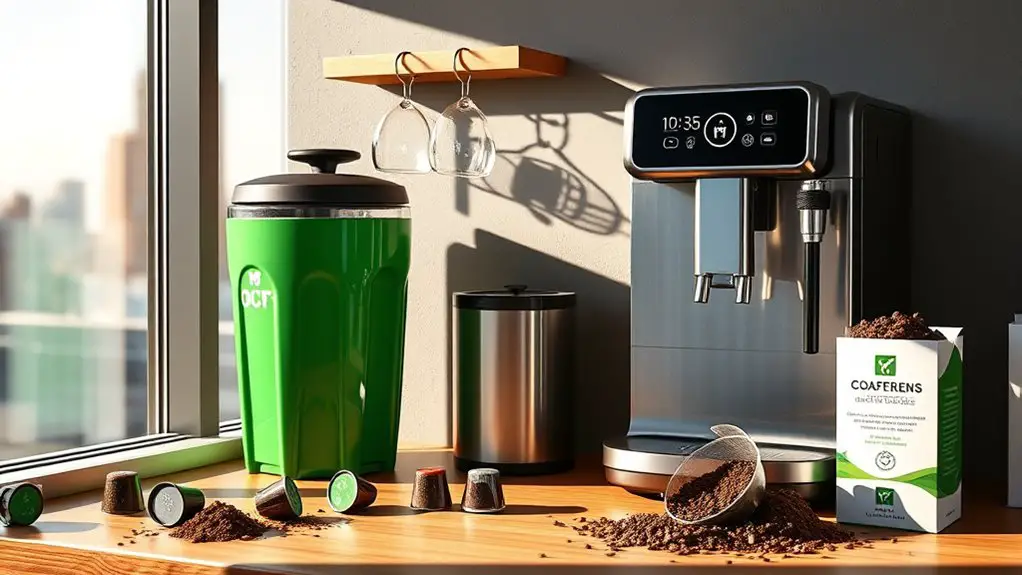
To reduce coffee waste in your workplace, start by monitoring brewing habits and adjusting pot sizes to match consumption. Encourage everyone to use reusable cups and provide incentives for doing so. Implement a composting system for used coffee grounds, enriching the soil instead of adding to landfill waste. Educate your team about sustainable practices and ethical sourcing of coffee. By fostering a culture of mindfulness, you can make significant reductions in waste. Discover more effective strategies to enhance sustainability.
Assessing Current Coffee Consumption Practices
How often do you think about the impact of your coffee consumption? Many don't realize how their daily brew contributes to waste. Start by evaluating your workplace habits. Are you brewing more coffee than you drink? This not only wastes the beans but also the energy used to make it. Keep track of how much coffee your team consumes weekly. Consider implementing a system that encourages mindful consumption, like smaller pot sizes or personalized orders. By understanding your current habits, you can identify areas for improvement. Reducing waste isn't just about cutting back; it's about fostering a culture of awareness and responsibility. Brewed coffee's shelf life can lead to greater freedom from waste, benefiting both your conscience and the environment.
Implementing Reusable Coffee Cups
While many people enjoy their daily coffee fix, implementing reusable coffee cups can greatly reduce waste and promote sustainability. By encouraging employees to bring their own cups, you not only cut down on single-use plastics, but you also foster a culture of responsibility. Consider offering reusable incentives like discounts or rewards for those who participate. This boosts employee engagement and makes sustainability a shared goal.
Here's a quick look at the benefits of reusable cups:
| Benefit | Description | Impact |
|---|---|---|
| Environmental Impact | Reduces landfill waste | Positive |
| Cost Savings | Less spending on disposable cups | Financial relief |
| Brand Image | Positions your company as eco-friendly | Positive perception |
| Employee Morale | Fosters a sense of community | Increased happiness |
| Health & Safety | Reduces contamination from disposables | Improved safety |
Educating Employees on Coffee Waste
Have you ever considered the sheer volume of coffee waste generated in the workplace? It's staggering, but the good news is that you can make a difference through coffee education. By engaging employees in discussions about coffee waste, you empower them to take action. Consider organizing workshops or informational sessions that highlight the impact of wasted coffee grounds, cups, and filters. Encourage your team to share ideas on reducing waste, fostering a sense of ownership and responsibility. Using visual aids like infographics can make the information more engaging and memorable. When employees feel informed and involved, they're more likely to adopt sustainable practices, leading to a collective reduction in coffee waste and a more environmentally friendly workplace.
Optimizing Coffee Brewing Techniques
To optimize your coffee brewing techniques, focus on brewing just enough for your needs. This not only minimizes waste but also guarantees that each cup is fresh and flavorful. Additionally, investing in quality beans can enhance your coffee experience while further reducing the chances of waste due to undesirable brews. Using fresh Arabica beans can significantly improve the taste and aroma of your coffee, making it more enjoyable and reducing the likelihood of leftover brews.
Brew Just Enough
One way to tackle coffee waste is by brewing just the right amount for your needs. By mastering brew measurements and practicing portion control, you can greatly reduce leftover coffee. Start by evaluating how many cups you typically consume in a day; that'll help you determine the ideal quantity to brew. Using a scale or measuring scoops can refine your accuracy, ensuring you only prepare what you'll drink. Plus, consider investing in a coffee maker that allows for smaller batches, so you're not stuck with excess. Remember, brewing just enough doesn't only cut waste; it also enhances your coffee experience, keeping each cup fresh and flavorful. Empower yourself to enjoy coffee without the guilt of waste.
Use Quality Beans
While you might be tempted to go for the cheapest option on the shelf, using quality beans can greatly enhance your coffee experience and reduce waste. When you choose beans from quality sourcing, you guarantee fresher flavors and aromas, making each cup more satisfying. This means less coffee gets tossed out because it didn't meet expectations. Additionally, opting for ethically traded beans supports sustainable farming practices, benefiting both the environment and the growers. By investing in quality, you not only elevate your coffee but also promote responsible consumption. So, skip the low-cost alternatives and savor the richness of premium beans. Your taste buds—and the planet—will thank you for it.
Composting Coffee Grounds
Composting coffee grounds is a practical way to boost your garden's health while reducing waste. You'll discover the numerous benefits of adding this nutrient-rich material to your compost, along with simple techniques that anyone can follow. Plus, if you're in an office setting, there are innovative solutions to bring composting into your workplace, making it easier than ever to contribute to sustainability.
Composting Benefits Explained
Although many people enjoy their morning cup of coffee, they often overlook the potential benefits of repurposing used coffee grounds through composting. By composting your coffee grounds, you're not just reducing waste; you're also enriching the soil. These grounds are rich in nitrogen, which helps create a balanced compost mix. This promotes healthier plants and reduces the need for chemical fertilizers, which can have a negative environmental impact. Additionally, composting minimizes landfill waste, contributing to a more sustainable lifestyle. By embracing these composting benefits, you're taking a proactive approach to environmental stewardship, transforming a simple kitchen byproduct into a valuable resource. So why not make a small change today that can lead to a greener tomorrow?
Easy Composting Techniques
If you're looking to make the most out of your used coffee grounds, there are several easy techniques to incorporate them into your composting routine. First, consider adding your coffee grounds directly to your worm bins; worms love them and they'll break down quickly, enhancing your compost. You can also create compost tea by steeping the grounds in water for a couple of days. This nutrient-rich liquid can be used to water your plants, giving them an extra boost. Make sure to balance the coffee grounds with carbon-rich materials like dry leaves or cardboard to maintain a healthy compost mix. By implementing these simple techniques, you'll not only reduce waste but also enrich your garden naturally.
Office Composting Solutions
Implementing office composting solutions for coffee grounds can considerably reduce waste while promoting sustainability in the workplace. By setting up compost bins specifically for organic materials, you create a convenient way for employees to dispose of their used coffee grounds. These compost bins can be strategically placed near coffee stations, making it easy to remember.
Encourage your team to add other organic materials like fruit peels and vegetable scraps, enhancing the compost's nutrient value. Regularly turning the compost guarantees proper aeration and decomposition. Not only does this practice help divert waste from landfills, but it also fosters a culture of environmental responsibility. Embrace these simple solutions, and you'll empower your office to contribute positively to the planet.
Sourcing Sustainable Coffee
Sourcing sustainable coffee is essential for reducing environmental impact and promoting ethical practices within the industry. When you choose to work with ethical suppliers, you're not just buying coffee; you're investing in sustainable sourcing that supports farmers and their communities. Look for certifications like Fair Trade or Rainforest Alliance, which guarantee that the coffee is produced responsibly and helps protect the environment. By choosing coffee that's grown in harmony with nature, you're reducing harmful practices that contribute to deforestation and climate change. Plus, sourcing from ethical suppliers often means higher quality beans, giving your team a better coffee experience. Additionally, organic coffee is high in antioxidants, which can provide health benefits while also supporting sustainable agricultural practices. Support freedom in your choices—opt for sustainable coffee that aligns with your values and contributes to a healthier planet.
Reducing Single-Use Accessories
While many coffee lovers enjoy their daily brew, the convenience of single-use accessories—like disposable cups, stirrers, and pods—can greatly contribute to waste. To reduce your impact, consider swapping out those disposable options for more sustainable choices. Biodegradable cups are a fantastic alternative, breaking down naturally and minimizing environmental harm. Additionally, investing in stainless steel tumblers can offer a stylish and durable solution for your coffee on the go. Not only do they keep your drink hot, but they also eliminate the need for single-use items altogether. New Hydro Flask models are also a great option for those who prefer insulated mugs, as they are designed to withstand dishwasher use. Encourage your colleagues to embrace these eco-friendly options, fostering a culture of sustainability in the workplace. By making these simple changes, you can enjoy your coffee guilt-free while considerably cutting down on waste.
Establishing a Coffee Waste Reduction Policy
As you encourage the use of eco-friendly alternatives to single-use accessories, it's also important to take a step back and establish a thorough coffee waste reduction policy. This policy should outline your goals for workplace sustainability, focusing on reducing waste and promoting responsible coffee consumption.
| Action Item | Description |
|---|---|
| Educate Employees | Share the impact of coffee waste and recycling options. |
| Set Guidelines | Define acceptable practices for coffee consumption and disposal. |
| Monitor Progress | Regularly check waste levels and adjust the policy as needed. |
Implementing this coffee policy not only fosters a culture of sustainability but also empowers your team to contribute actively to your organization's eco-friendly goals.
Encouraging Regular Feedback and Improvement
To effectively enhance your coffee waste reduction policy, it is crucial to create a system for regular feedback and improvement. Start by scheduling feedback sessions with your team to discuss what's working and what isn't. These discussions can reveal valuable insights and encourage everyone to share their experiences. You'll find that open dialogue fosters a sense of ownership over the reduction efforts.
Incorporate suggestions and track progress towards your goals. This continuous improvement approach not only keeps the initiative fresh but also empowers employees to contribute actively. Celebrate wins, no matter how small, and use setbacks as learning opportunities. By cultivating a culture of feedback, you're setting the stage for ongoing success in reducing coffee waste in your workplace.
Frequently Asked Questions
How Can We Track Coffee Waste in Real-Time?
Imagine coffee as a river flowing, but waste's the dam. You can track coffee consumption with smart sensors, integrating real-time data into your waste management system, ensuring that river runs clear and unpolluted.
What Are the Benefits of Reducing Coffee Waste?
Reducing coffee waste offers significant benefits, like minimizing environmental impact and achieving cost savings. You'll not only create a sustainable workplace but also enhance your team's morale by fostering a culture of responsibility and resourcefulness.
Can Coffee Waste Be Recycled?
Imagine turning yesterday's brew into tomorrow's blooms. Yes, coffee waste can be recycled! Through coffee composting and dedicated recycling programs, you can transform those grounds into nutrient-rich soil, giving life to new growth. Embrace the cycle!
How Do We Handle Coffee Spills Effectively?
When handling coffee spills, you'll want to act quickly. Use absorbent materials for spill cleanup, ensuring you soak up as much liquid as possible. This minimizes mess and prevents stains, keeping your space fresh and inviting.
What Are Alternative Uses for Leftover Coffee?
Did you know that over 60% of coffee drinkers waste leftover coffee? You can repurpose coffee grounds for gardening or make delicious coffee ice cream. These alternatives not only minimize waste but also enhance your culinary creativity!