
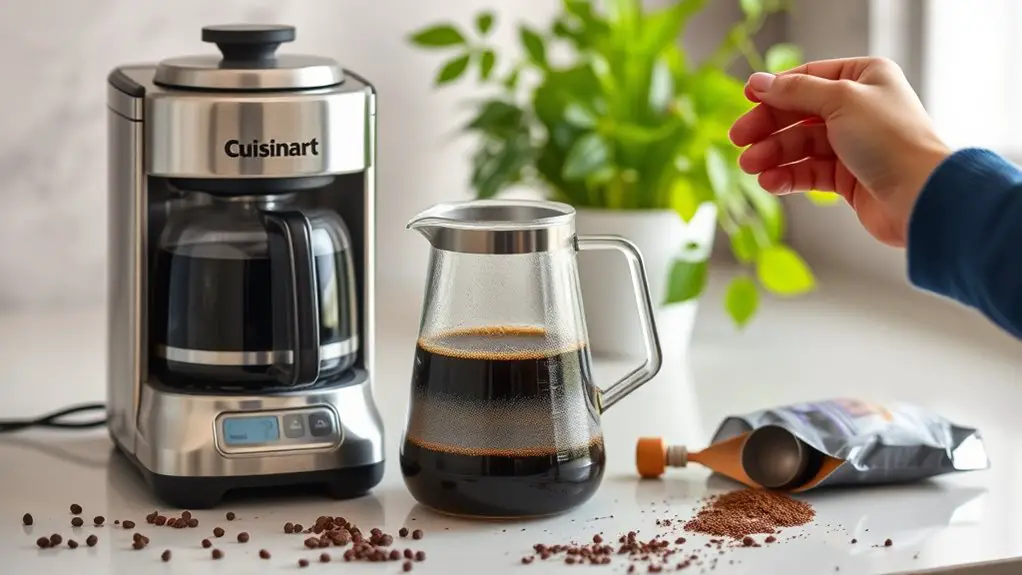
If your Cuisinart coffee maker is producing bitter coffee, it's vital to examine several factors. Verify your water temperature is between 195°F and 205°F to prevent over-extraction. Also, check your coffee grind size; too fine can lead to bitterness. Using fresh, high-quality beans stored properly is fundamental to avoid stale flavors. Regularly cleaning your coffee maker helps maintain flavor. Adjusting your coffee-to-water ratio could also enhance taste. There's more to take into account for a better brew.
Understanding the Causes of Bitter Coffee
When brewing coffee, several factors can lead to a bitter taste, and understanding these causes is vital for achieving the perfect cup. One key issue is improper coffee extraction. If water temperature is too high or the brewing time is too long, over-extraction occurs, pulling out undesirable compounds that contribute to bitterness. Conversely, under-extraction can result from insufficient brewing time or too low a temperature, leading to a lack of flavor balance. It's important to find the right brew time and temperature to guarantee that the desirable flavors are highlighted while minimizing bitterness. By mastering these variables, you can enhance your coffee experience and savor the rich, complex flavors that make each cup enjoyable. Regularly cleaning your coffee maker can also help prevent burnt taste and ensure optimal flavor in your brews.
Choosing the Right Coffee Beans
When choosing coffee beans, the origin plays a vital role in flavor profile and quality. Different regions produce distinct characteristics that can greatly affect your brew. Additionally, the roast level you select will influence the intensity and taste, making it essential to match these factors to your preferences. Freshness is crucial for optimal coffee taste, as stale beans can lead to sour or bitter flavors.
Bean Origin Matters
Choosing the right coffee beans can greatly impact your brewing experience, as the origin of the beans plays an essential role in their flavor profile and aroma. Different bean varietals, such as Arabica and Robusta, each have unique characteristics influenced by their growing conditions. For instance, beans from Ethiopia often exhibit fruity notes, while Colombian beans may present a balanced, nutty flavor. Understanding regional profiles helps you select beans that align with your taste preferences. Consider factors like altitude, climate, and soil composition, as these elements considerably affect the beans' quality. By choosing the right origin, you can enhance your coffee's flavor, making your mornings more enjoyable and satisfying.
Roast Level Impact
While selecting the right coffee beans is essential, the roast level greatly influences the overall flavor and aroma of your brew. Understanding the roast characteristics can guide you in achieving the perfect cup.
| Roast Level | Flavor Profiles | Acidity Levels |
|---|---|---|
| Light Roasts | Fruity, floral, and bright | High |
| Medium Roasts | Balanced, chocolatey, and nutty | Moderate |
| Dark Roasts | Bold, smoky, and bitter | Low |
Light roasts offer vibrant flavors, ideal for methods like pour-over, while dark roasts provide a robust taste, suited for espresso. Knowing how roast levels affect flavor profiles and acidity levels helps you make informed choices, ensuring your Cuisinart coffee maker delivers a satisfying cup.
The Importance of Freshness
Freshness plays an essential role in the quality of your coffee, influencing both flavor and aroma. To guarantee peak coffee freshness, consider these storage techniques:
- Airtight Containers: Use airtight containers to minimize exposure to air, which can lead to oxidation and stale flavors.
- Cool, Dark Places: Store your coffee in a cool, dark location, away from heat sources and direct sunlight, which can degrade quality.
- Buy in Small Batches: Purchase smaller quantities more frequently to guarantee you're always using fresh beans, as coffee begins to lose its flavor shortly after roasting. Additionally, proper storage conditions are crucial in preserving the beans' unique flavor and beneficial compounds.
Water Quality and Its Impact on Flavor
Water quality greatly affects the flavor of your coffee. If you use hard water, minerals can alter the taste and even damage your Cuisinart coffee maker over time. Choosing filtered water and maintaining the ideal temperature can enhance your brewing experience and improve flavor extraction.
Hard Water Effects
Hard water can considerably alter the flavor profile of your coffee, impacting your overall brewing experience. The high mineral content in hard water can lead to mineral buildup in your Cuisinart coffee maker, which affects extraction and ultimately the taste of your brew. Here are three ways hard water influences your coffee:
- Bitterness: Excess minerals can extract undesirable compounds, resulting in a bitter flavor.
- Clogging: Mineral buildup can obstruct water flow, causing inconsistent brewing.
- Acidity: Hard water can neutralize acidity, flattening your coffee's vibrant flavors.
To enhance your coffee's quality, consider using softer water to minimize these hard water effects and enjoy a smoother, more balanced cup.
Filtered vs. Tap Water
While you might think that any water will suffice for brewing coffee, the quality of the water you use can greatly impact the flavor of your cup. Filtered water benefits your brew by removing impurities and chlorine that can hinder taste. This results in a cleaner, more vibrant flavor profile, allowing the coffee's natural notes to shine. On the other hand, tap water drawbacks include potential contaminants like minerals and chemicals that can alter the flavor, leading to bitterness or an off-taste. If you want to elevate your coffee experience, consider investing in a good water filtration system. Making this simple switch can enhance your daily cup and guarantee that your Cuisinart coffee maker produces the best possible brew.
Ideal Water Temperature
Using quality water is just the beginning; the temperature at which you brew your coffee greatly influences the extraction of flavors. Proper water temperature ranges from 195°F to 205°F (90°C to 96°C). If you're looking to enhance your brewing techniques, consider the following:
- Too Hot: Water above 205°F can extract bitter compounds, ruining your brew.
- Too Cold: Water below 195°F may under-extract, resulting in a weak flavor profile.
- Consistency: Maintain a stable temperature for each brew to guarantee ideal flavor extraction and promote water conservation.
Adjusting Your Coffee Grind Size
Adjusting your coffee grind size is essential for achieving the perfect brew with your Cuisinart coffee maker. The grind consistency plays an important role in flavor extraction; too fine a grind can lead to bitterness, while too coarse may result in weak coffee. Start by determining the grind type that suits your brewing method—medium for drip coffee, fine for espresso, and coarse for French press. Use a burr grinder for uniform grind consistency, which helps in even extraction. Experiment with different grind sizes to find the balance that suits your taste preferences. Remember, a slight adjustment can greatly impact the flavor profile, so don't hesitate to tweak it until you find your ideal brew. For example, a grind size set to position 5 will help achieve balanced extraction without bitterness.
Brewing Temperature: Finding the Sweet Spot
When brewing coffee, maintaining the ideal temperature range between 195°F and 205°F is essential for extracting optimal flavor. If your Cuisinart coffee maker isn't reaching this sweet spot, it can greatly impact the taste of your brew. Adjusting your brewing settings can help you achieve the perfect balance for a satisfying cup.
Ideal Brewing Temperature Range
While many factors influence the flavor of your coffee, the brewing temperature plays an essential role in extracting the perfect taste. The best brewing temperature range is typically between 195°F and 205°F (90°C to 96°C). Staying within this range guarantees effective coffee extraction without over-extraction, which can lead to bitterness.
To find your sweet spot, consider the following:
- Experiment: Adjust the temperature slightly within the range to see how it affects flavor.
- Monitor: Use a thermometer to guarantee your Cuisinart coffee maker is reaching the desired temperature.
- Consistency: Once you find the perfect temperature, stick with it for consistent brewing results.
Impact on Coffee Flavor
Finding the ideal brewing temperature greatly impacts the flavor profile of your coffee. If you brew too hot, you may extract bitterness sources that disrupt flavor balance, leading to an unpleasant cup. Conversely, brewing too cool can result in under-extraction, leaving your coffee weak and flavorless.
To help you find that sweet spot, consider the following table:
| Temperature (°F) | Extraction Level | Flavor Profile |
|---|---|---|
| 190-195 | Ideal | Well-balanced, rich |
| 200-205 | High | Bitter, over-extracted |
| 185-190 | Low | Weak, under-extracted |
| 210+ | Excessive | Harsh, burnt notes |
Adjusting Brewing Settings
How can you guarantee your Cuisinart coffee maker brews at the ideal temperature? Achieving the right brewing temperature is essential for enhancing flavor profiles and ensuring a perfect cup. Here are three steps to adjust your brewing settings effectively:
- Check the Temperature: Use a thermometer to test the water temperature during brewing; aim for 195°F to 205°F for best extraction.
- Experiment with Brewing Methods: Try different brewing methods (like drip or pour-over) to see which produces the best flavor based on your beans.
- Adjust Coffee-to-Water Ratio: Fine-tune your coffee-to-water ratio; a typical starting point is 1:15 for balanced extraction.
Brew Time: How Long Is Too Long?
Have you ever wondered what constitutes an acceptable brew time for your Cuisinart coffee maker? Generally, a brew time of 4 to 6 minutes is ideal. If your coffee brews longer than this, you might experience undesirable brew time effects, such as a bitter taste. This bitterness occurs when coffee grounds over-extract, releasing harsh flavors. To avoid this, consider making brew time adjustments. You can try grinding your coffee beans coarser or reducing the amount of coffee used. Conversely, if your brew time is too short, your coffee may lack flavor and complexity. Striking a balance is essential for achieving a robust cup, so monitor your brew time closely to enjoy the perfect brew tailored to your taste. Additionally, understanding the shelf life of brewed coffee can help you enjoy your cup at its freshest and most flavorful.
Cleaning Your Cuisinart Coffee Maker
While routine maintenance might seem tedious, cleaning your Cuisinart coffee maker is essential for peak performance and flavor. Over time, mineral buildup can affect the taste of your coffee, so regular cleaning is a must. Here's how to maintain your coffee maker:
- Daily Cleaning: Rinse the carafe and brew basket after each use to prevent residue buildup.
- Weekly Maintenance: Use a mixture of vinegar and water to clean the water reservoir and brew cycle. This helps remove oils and buildup.
- Monthly Descaling: Employ descaling solutions specifically designed for coffee makers to remove hard water deposits, as regular descaling enhances machine performance.
Experimenting With Coffee-To-Water Ratios
When you're brewing coffee, the ratio of coffee to water can greatly influence the final taste and strength of your cup. To achieve that perfect brew, you should start by implementing effective coffee measurement techniques. A common starting point is a 1:15 ratio, which means one part coffee to 15 parts water. However, experimenting with ratios is essential to find what suits your palate. If your coffee tastes too bitter, reduce the coffee amount or increase the water. Conversely, for a stronger brew, increase the coffee. Keep track of your adjustments and their effects on flavor. This iterative process will help you discover your ideal coffee-to-water ratio, revealing the freedom to customize your coffee experience. Remember, using a 1:17 ratio can yield 21 grams of coffee per cup, which may also affect the bitterness.
Upgrading Your Brewing Equipment
Upgrading your brewing equipment can greatly enhance your coffee-making experience, especially if you're looking to improve flavor extraction and consistency. Modern features in coffee makers can markedly elevate your daily brew. Here are three key upgrades to take into account:
- Grind Size Control: Opt for a grinder with adjustable settings to fine-tune your coffee grind for ideal extraction.
- Temperature Control: Invest in a machine that offers precise temperature settings, ensuring your water is at the perfect brewing temperature.
- Programmable Features: Look for models that allow you to schedule brewing times and customize brew strength, giving you the freedom to enjoy coffee when you want it. Freshly ground beans yield the best results in Keurig machines.
Frequently Asked Questions
Can I Use Flavored Coffee Beans in My Cuisinart?
Yes, you can use flavored beans in your Cuisinart. Just adjust your brewing techniques to avoid overpowering flavors and guarantee a balanced cup. Experiment with grind sizes and water temperatures for ideal results. Enjoy your unique brews!
What Should I Do if My Coffee Maker Leaks?
If your coffee maker leaks, check the water reservoir, inspect the carafe, and tighten connections. Prioritize leak prevention to avoid water damage, ensuring your coffee experience remains seamless and enjoyable. Regular maintenance goes a long way.
How Often Should I Replace My Coffee Maker?
You should consider replacing your coffee maker every 5-10 years, depending on its lifespan and how well you follow maintenance tips. Regular cleaning and descaling can extend its life, ensuring peak performance and taste.
Does the Age of My Coffee Maker Affect Taste?
Yes, the age of your coffee maker can affect taste. Older machines may not maintain coffee freshness due to wear and tear. Regular machine maintenance guarantees peak performance, enhancing flavor and overall brew quality.
Can Different Brewing Methods Affect Coffee Bitterness?
Yes, different brewing methods can greatly affect coffee bitterness. Brewing temperature and grind size play essential roles; higher temperatures and finer grinds often extract more bitter compounds, leading to a less enjoyable coffee experience.