
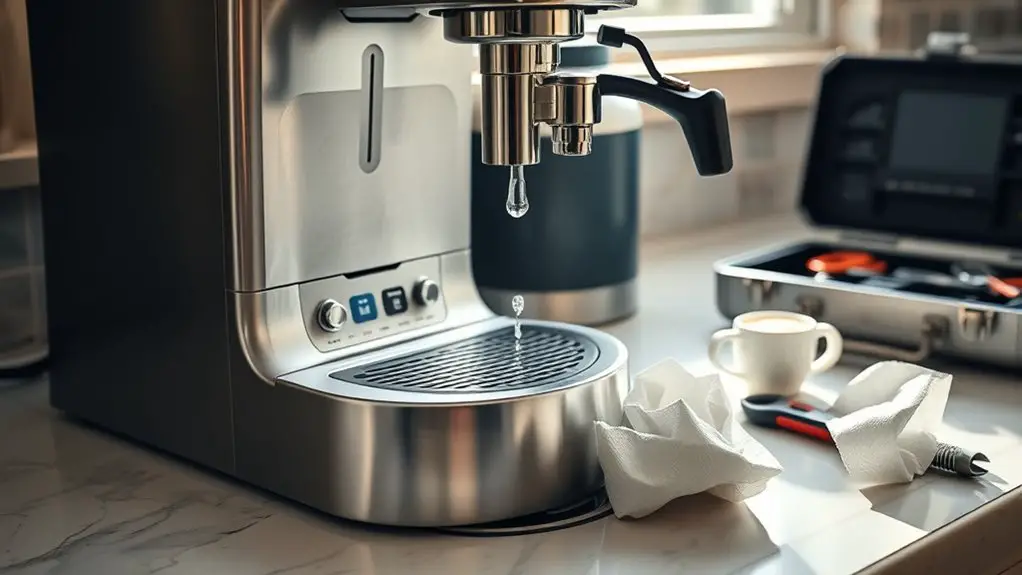
If your Mr. Coffee machine is leaking water, several factors might be at play. Check for excessive water pressure, worn gaskets, or misalignment of the water reservoir. Inspect the brew basket and seals for cracks or debris that might hinder performance. Regular cleaning and maintenance are essential to prevent leaks. If problems persist despite these checks, there are further solutions available to help resolve the issue.
Common Causes of Leaks in Mr. Coffee Machines
Several factors can lead to leaks in Mr. Coffee machines. One common cause is excessive water pressure. If the pressure's too high, it can force water through seals and gaskets, leading to leaks. Additionally, the presence of coffee grounds can obstruct drainage paths, causing water to back up and spill over. It's crucial to regularly clear out any coffee residue to maintain proper flow. Another factor to take into account is wear and tear on components over time; gaskets can degrade, leading to leaks. To prevent these issues, monitor your machine's water pressure and verify it's within the recommended range. Regular maintenance can also help you spot potential problems before they escalate, guaranteeing your coffee experience remains uninterrupted. Additionally, ensure the brew basket issues are addressed, as improper closure can also contribute to leaks.
Checking the Water Reservoir for Issues
After addressing common leak causes, it's important to inspect the water reservoir for issues. Start by checking the water level; if it's consistently low, there might be a leak or evaporation. Look closely for reservoir cracks, as these can lead to significant water loss. If you spot any damage, replacing the reservoir is often the best solution. Guarantee the reservoir is seated properly on the machine, as misalignment might also cause leaks. Clean any debris or buildup around the reservoir's edges, which can interfere with a proper seal. By taking these straightforward steps, you can maintain your Mr. Coffee machine's functionality and prevent leaks, ultimately enjoying your coffee without interruptions.
Inspecting the Brew Basket and Its Seal
While inspecting your Mr. Coffee machine, focus on the brew basket and its seal. Begin with a thorough brew basket inspection; remove it and check for any cracks or debris. Even minor damage can lead to leaks during brewing. Next, examine the seal integrity. The seal must create a tight fit to prevent water from escaping. If the seal appears worn or deformed, it's time to replace it. Clean the brew basket and the surrounding area to guarantee proper function. After reassembling, run a test brew to confirm that the leakage issue is resolved. Confirming both the brew basket and seal are in good condition is essential for peak performance and to maintain your freedom from coffee spills.
Examining the Carafe for Cracks or Damage
Once you've confirmed that the brew basket and its seal are in good condition, the next step is to examine the carafe for any cracks or damage. Start with a thorough carafe inspection; hold it up to the light to spot any imperfections. Look for surface cracks, chips, or signs of wear that could compromise its integrity. A damaged carafe can lead to leaks, affecting your brewing experience. If you find any issues, it's crucial to conduct a damage evaluation immediately. A cracked or broken carafe should be replaced to guarantee peak performance. By addressing these concerns, you can maintain your Mr. Coffee machine's efficiency and enjoy your favorite brews without the worry of leaks.
Assessing the Water Filter and Its Placement
Before troubleshooting any leaks in your Mr. Coffee machine, it's essential to assess the water filter and its placement. Start by identifying the filter types compatible with your model. Verify you're using the right one, as improper filters can lead to leaks. Check the filter lifespan; if it's expired, replace it to maintain peak performance. Proper installation is key—make sure the filter fits snugly in its designated slot. A poorly placed filter can disrupt the water flow, causing leaks. Regularly inspect the filter for signs of wear or damage, and replace it as needed. Taking these steps can help you avoid unwanted leaks and guarantee your machine operates smoothly, giving you the freedom to enjoy your coffee without hassle.
Evaluating the Heating Element and Its Connection
After ensuring the water filter is properly installed and functioning, the next step is to evaluate the heating element and its connection. A faulty heating element can lead to leaks, so you'll want to perform a thorough inspection. Here are three key actions to take:
- Heating Element Inspection: Check the heating element for any visible damage or corrosion. A damaged element may not heat properly, causing water to leak.
- Electrical Connection Assessment: Examine the wiring connected to the heating element. Loose or frayed wires can cause overheating and leaks.
- Test Functionality: Run a cycle without coffee to observe any leaks. If water drips, the heating element or connections may need replacement. Taking these steps can help you resolve the issue effectively.
Cleaning and Maintaining Your Coffee Maker
To keep your Mr. Coffee machine functioning efficiently, regular descaling is essential to remove mineral buildup. Additionally, proper storage techniques can prevent moisture accumulation and potential leaks. Implementing these practices will enhance the longevity and performance of your coffee maker. Regular descaling every 3 to 6 months is crucial for preventing clogs and ensuring optimal coffee flavor.
Regular Descaling Process
Regularly descaling your coffee maker is vital for maintaining peak performance and prolonging its lifespan. Neglecting this routine can lead to mineral buildup, affecting your coffee's flavor and the machine's efficiency. Here's how to keep your coffee maker in top shape:
- Choose the Right Descaling Solution: Use a commercial descaling solution or a mixture of vinegar and water.
- Establish a Descaling Frequency: Aim to descale every 1-3 months, depending on your water hardness.
- Run the Descaling Cycle: Follow your machine's instructions to guarantee thorough descaling.
Proper Storage Techniques
Proper storage techniques are vital for keeping your coffee maker in ideal condition. After each use, make certain it's completely dry before storing to prevent mold and odors. If you're not using it regularly, consider placing it in a cool, dry location to enhance coffee storage. Humidity control is significant; a damp environment can lead to rust and malfunction. Store your coffee maker in its original box or a breathable bag to shield it from dust and contaminants. Avoid stacking heavy items on top, as this can damage internal components. Regularly check the storage area for moisture and adjust as necessary. By implementing these practices, you'll maintain your coffee maker's performance and longevity, making sure every cup remains delightful.
Proper Assembly of Your Mr. Coffee Machine
To prevent leaks, it's essential to guarantee your Mr. Coffee machine is properly assembled. Make sure the filter is installed correctly and securely, as an improper fit can lead to water escaping. Additionally, check that the water reservoir is placed securely to avoid any spillage during the brewing process.
Correct Filter Installation
When you're setting up your Mr. Coffee machine, correct filter installation is essential for ideal performance. Confirming proper filter orientation and compatibility can prevent leaks and brewing issues. Here's what you need to check:
- Filter type: Use only the recommended filters for your specific model to guarantee compatibility.
- Orientation: Place the filter in the basket with the correct side facing up; this allows for proper water flow and extraction.
- Seating: Verify the filter is snugly seated in the basket, preventing any gaps that could lead to leaks.
Secure Reservoir Placement
Ensuring the reservoir is securely placed is essential for preventing leaks during operation. Start by checking the reservoir alignment; it should fit snugly into the machine's base. If it's misaligned, the water seal may not engage properly, leading to unwanted leaks. When you insert the reservoir, listen for a click—this indicates that it's locked in place. After securing it, gently tug on the reservoir to confirm it's stable. If you notice any wobbling, remove it and reinsert, ensuring it's aligned correctly. Regularly inspect the water seal for wear and tear, as a compromised seal can also lead to leaks. Following these steps will help keep your coffee machine leak-free and operating smoothly.
When to Seek Professional Help
If your Mr. Coffee machine is leaking water and basic troubleshooting hasn't solved the issue, it might be time to seek professional help. Consider contacting a professional coffee repair service if you notice:
- Persistent leaks despite reseating the reservoir.
- Visible damage to the machine's internal components.
- The machine is still under a service warranty, which can cover repair costs.
Delaying professional assistance can lead to more extensive damage, impacting your coffee experience. By reaching out to experts, you can guarantee a thorough diagnosis and repair, potentially saving you money in the long run. Don't hesitate to leverage your service warranty if applicable; it's designed to protect your investment and keep your coffee flowing smoothly.
Preventative Tips to Avoid Future Leaks
To prevent future leaks from your Mr. Coffee machine, establish a consistent maintenance routine. Regularly inspect the water reservoir for cracks or damage, as these can lead to leaks. Make certain that all seals and gaskets are intact; replace any worn parts promptly to enhance leak prevention. Additionally, clean the machine regularly to remove mineral buildup, which can compromise seals and connections. Always use the correct water level; overfilling can cause overflow and leaks. Finally, store your machine in a dry, stable environment to avoid temperature-induced damage. By following these steps, you'll not only extend the life of your coffee maker but also enjoy a leak-free brewing experience.
Frequently Asked Questions
Can I Use My Mr. Coffee Machine Without a Water Filter?
You can use your Mr. Coffee machine without a water filter, but it may affect your coffee flavor. For ideal taste, consider maintenance tips like regular cleaning and using filtered water for better results.
How Often Should I Clean My Mr. Coffee Machine?
Did you know that 50% of coffee drinkers neglect machine maintenance? To guarantee ideal brewing, you should clean your Mr. Coffee every 30 days. Follow these maintenance tips for a consistently great cup, every time.
Is It Safe to Use Vinegar for Cleaning?
Yes, it's safe to use vinegar for cleaning. Its benefits include effectively removing mineral buildup. However, consider cleaning alternatives like citric acid or baking soda for a gentler approach that preserves your machine's longevity.
What Type of Water Works Best in My Coffee Maker?
When brewing coffee, using filtered water's key for ideal flavor. Tap water might contain impurities that affect taste and machine performance. Choose filtered water for a cleaner, richer coffee experience without compromising your coffee maker's longevity.
Can a Faulty Power Source Cause Leaks?
Yes, a faulty power source can lead to power issues that cause leaks. Ensuring a stable connection and monitoring for any electrical faults is essential for leak prevention and maintaining your coffee maker's performance.