
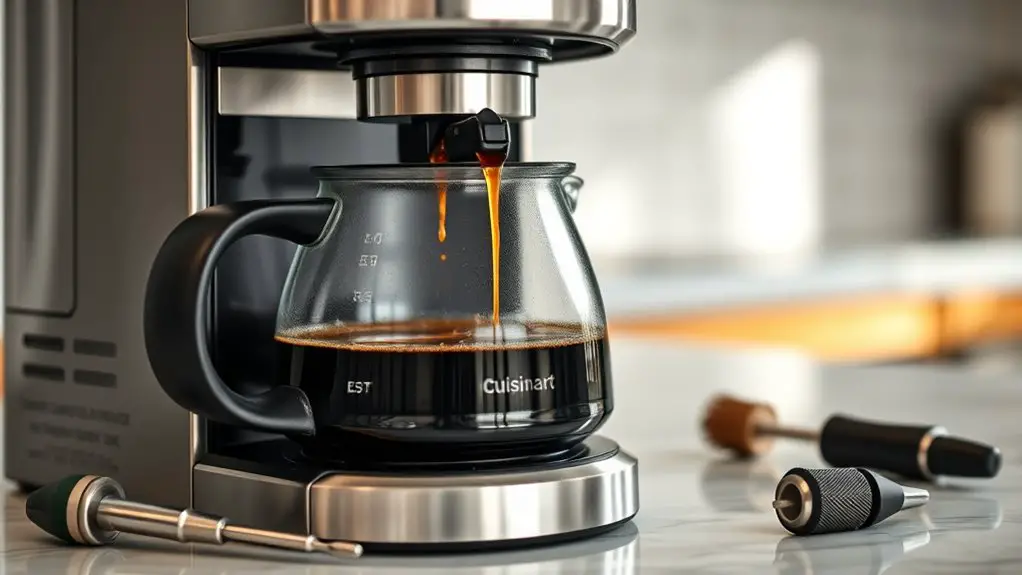
To fix your Cuisinart coffee maker that won't stop dripping, start by checking the brew basket for proper placement and cleanliness. Inspect the carafe for cracks and verify it's seated correctly. Examine the water reservoir for overfilling and clean any clogs in the brew basket. Regularly descaling the machine helps prevent leaks too. If problems persist after these steps, there are further evaluations and solutions to explore for effective repair.
Understanding the Dripping Issue
When your Cuisinart coffee maker starts dripping, it can be frustrating, especially if you rely on it for your daily brew. Understanding the dripping causes is vital for effective troubleshooting. First, check the water reservoir for overfilling; excess water can lead to leaks. Next, inspect the carafe and guarantee it's seated correctly; an improperly positioned carafe can result in overflow. Also, consider the condition of the brew basket; a clogged filter can cause pressure buildup, leading to drips. Finally, examine the machine's seals and gaskets for wear or damage. By systematically addressing these areas, you can implement troubleshooting techniques that restore your coffee maker's functionality and reclaim your brewing freedom.
Checking the Brew Basket
To guarantee your Cuisinart coffee maker functions correctly, start by checking the brew basket's placement; it should fit securely in its designated slot. Next, inspect the brew basket area for any coffee grounds or debris that may impede proper operation. A clean and properly positioned brew basket is essential for ideal brewing performance.
Inspect for Proper Placement
Before you start troubleshooting other potential issues with your Cuisinart coffee maker, make certain the brew basket is properly placed. Begin by removing the brew basket and inspecting it for any misalignment. Verify that it fits snugly into the coffee maker without any gaps. Check that the coffee maker placement is level; an uneven surface can affect proper positioning. When you reinsert the brew basket, listen for a click, indicating it's securely in place. Additionally, confirm there are no obstructions preventing the brew basket from sealing correctly. If the brew basket isn't positioned right, it may cause the coffee maker to drip, leading to messy spills and ineffective brewing. Proper alignment is essential for maximum performance.
Clean Brew Basket Area
Cleaning the brew basket area is crucial for maintaining ideal coffee flavor and preventing clogs. Regular brew basket maintenance guarantees your coffee maker operates smoothly, enhancing overall coffee maker hygiene. Start by removing the brew basket and inspecting it for coffee residue or oils.
| Step | Description | Frequency |
|---|---|---|
| Remove Basket | Take out the brew basket and filter | After each use |
| Rinse | Rinse with warm water | Weekly |
| Deep Clean | Use vinegar solution for tough stains | Monthly |
| Dry | Air dry the basket completely | After each wash |
| Reassemble | Put the basket back in place securely | After cleaning |
Inspecting the Carafe
Often overlooked, inspecting the carafe is a critical step in maintaining your Cuisinart coffee maker. Begin by examining the carafe design; verify that there are no cracks or chips, as these can compromise its integrity and lead to leaks. Check the spout for any obstructions that might interfere with drip control. A blocked spout can cause coffee to accumulate and seep out unintentionally, creating a mess. Additionally, inspect the carafe lid to confirm it fits securely, preventing spills. If you notice any wear or damage, consider replacing the carafe. Regular inspections can save you from larger issues and guarantee your coffee experience remains uninterrupted. Prioritize this step for peak performance and freedom from dripping woes.
Cleaning the Coffee Maker
Cleaning your Cuisinart coffee maker is essential for peak performance and flavor. You'll need to follow a regular maintenance routine, which includes descaling the machine to remove mineral buildup. This process guarantees that your coffee maker operates efficiently and prolongs its lifespan.
Regular Maintenance Tips
A well-maintained Cuisinart coffee maker not only guarantees a superior brew but also extends the lifespan of the machine. To achieve this, implement effective cleaning techniques regularly. Start by removing and washing the filter basket and carafe with warm, soapy water after each use. For deeper cleaning, perform routine inspections of the water reservoir and internal components, ensuring there's no residue buildup. Use a damp cloth to wipe the exterior, preventing stains and dust accumulation. Additionally, check the drip tray for overflow and clean it as necessary. By committing to these maintenance practices, you can enjoy consistently exceptional coffee while ensuring your machine remains in prime condition for years to come.
Descaling Process Explained
Regular maintenance is only part of keeping your Cuisinart coffee maker in top shape; descaling is equally important for peak performance. To effectively remove mineral buildup, you can use various descaling methods, but a vinegar solution is one of the most accessible and effective.
Here's a simple process to follow:
| Step | Action | Notes |
|---|---|---|
| 1 | Mix equal parts vinegar and water | Prepare the solution |
| 2 | Fill the water reservoir | Avoid overfilling |
| 3 | Run a brew cycle | Discard the solution |
| 4 | Rinse with clean water | Important for taste |
Following these steps will help guarantee your coffee maker brews delicious coffee every time.
Examining the Water Reservoir
Since the water reservoir is crucial for your Cuisinart coffee maker's operation, examining it for any issues is important. Start by checking the water level; confirm it's adequate for brewing. If the level is low, you might face dripping issues. Next, inspect the reservoir for any visible cracks or damage that could lead to reservoir leaks. Pay close attention to the seal and the spout area, as these are common leak points. If you notice any irregularities, consider replacing the reservoir. Additionally, clean the reservoir regularly to prevent mineral buildup, which can affect performance. By confirming the water reservoir is in good condition, you can help maintain your coffee maker's efficiency and prevent ongoing dripping problems.
Ensuring Proper Assembly
After verifying that the water reservoir is free from issues, it's important to check that your Cuisinart coffee maker is assembled correctly. Proper assembly techniques are essential for peak performance and to prevent dripping. Begin by checking component alignment to confirm all parts fit seamlessly together. Follow these steps:
- Secure the Carafe: Confirm the carafe sits snugly on the warming plate without wobbling.
- Position the Filter Basket: Verify the filter basket is correctly seated and locked in place.
- Attach the Lid: Make sure the lid is properly aligned and closes securely to avoid leaks.
Testing the Brew Cycle
To guarantee your Cuisinart coffee maker operates correctly, it is crucial to test the brew cycle. Begin by filling the water reservoir with fresh water, ensuring no coffee grounds are present. Place the carafe under the brew basket and select the brew cycle. Observe the flow of water; it should be steady and consistent. If you notice irregular dripping or brewing problems, pause the cycle and perform brew cycle troubleshooting. Check for clogs in the brew basket or filter area, as these can impede water flow. After addressing any blockages, restart the brew cycle. This methodical approach helps you pinpoint issues, ensuring your coffee maker can deliver that perfect cup without unnecessary drips.
Evaluating the Coffee Maker's Age
Evaluating your Cuisinart coffee maker's age is essential for determining its reliability and performance. The coffee maker lifespan typically ranges from 5 to 10 years, depending on usage and maintenance. If you're experiencing issues, consider these factors:
- Model Age: Check the manufacturing date; older models might not hold up as well.
- Warranty Status: Verify if your product warranty is still active; this can guide your repair options.
- Maintenance History: Reflect on how well you've maintained your coffee maker—regular cleaning can extend its life.
Understanding these aspects helps you assess whether it's worth fixing or time for a new purchase. Remember, an aging coffee maker may not perform as efficiently, impacting your daily brew.
When to Seek Professional Help
Knowing the age of your Cuisinart coffee maker can help you decide whether it's worth attempting repairs or if it's time for a replacement. If your machine is over five years old and experiencing persistent issues, consider seeking professional repair. Use a troubleshooting guide to determine if the problem is something simple, like a clogged filter.
| Issue | Action Required |
|---|---|
| Over five years old | Evaluate for replacement |
| Minor leaks | DIY fixes possible |
| Electrical failures | Professional help needed |
| Persistent dripping | Consult a technician |
If you're unable to resolve the dripping or other complex issues, don't hesitate to call in an expert. It's often more cost-effective than a DIY approach.
Frequently Asked Questions
Can I Use Vinegar to Clean My Cuisinart Coffee Maker?
Using vinegar to clean your Cuisinart coffee maker is like polishing a gem—essential for revealing its brilliance. Vinegar benefits include removing buildup; aim for monthly cleaning frequency to maintain peak performance and flavor.
How Often Should I Clean My Coffee Maker?
You should establish a cleaning schedule every 1-3 months, depending on usage. Regular maintenance tips include descaling with vinegar or a commercial cleaner to enhance performance and prolong your coffee maker's lifespan, ensuring peak brewing quality.
Is It Safe to Use Tap Water in My Coffee Maker?
Using tap water in your coffee maker's safe if the tap water quality is good. However, regular coffee maker maintenance is essential; consider filtering it to prevent mineral buildup, ensuring ideal performance and flavor in your brews.
Why Does My Coffee Taste Burnt After Brewing?
If your coffee tastes burnt, it might be due to excessive brewing temperature. Verify your coffee maker brews between 195°F and 205°F. Higher temperatures can extract bitter compounds, resulting in that undesirable burnt flavor you're experiencing.
What Type of Coffee Grounds Should I Use?
When choosing coffee grounds, you'll want to take into account your brewing method. Coarse grounds work best for methods like French press, while fine grounds are ideal for espresso. Match the grind size to your preferred brewing style for best flavor.