
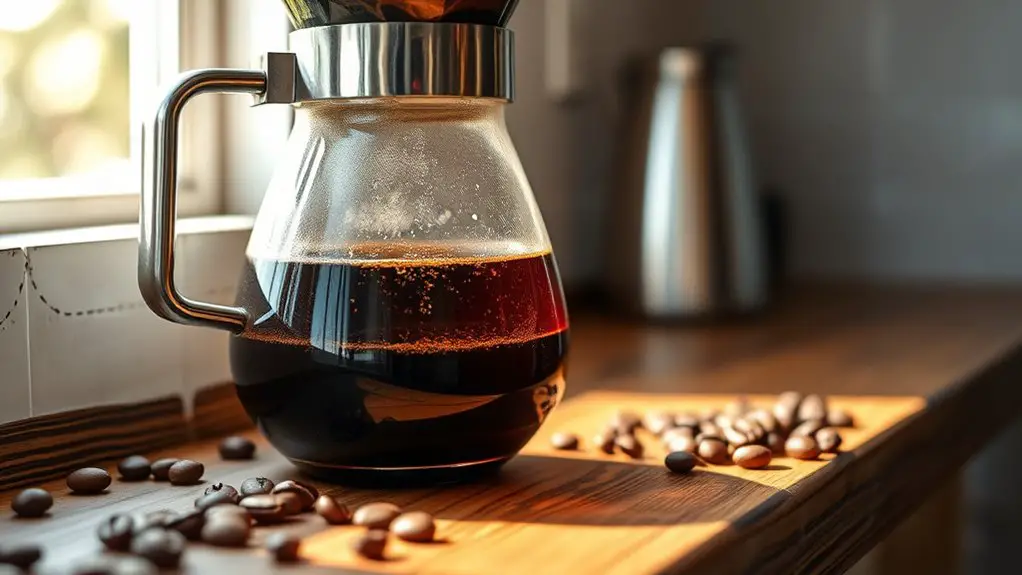
To brew low-acid coffee suitable for sensitive stomachs, choose Arabica beans and opt for a dark roast. Use cold brewing methods or a French press with coarsely ground coffee to minimize acidity. Aim for a brewing temperature of 195°F to 205°F for ideal extraction. You can enhance flavor with dairy alternatives or spices while storing beans in airtight containers at a cool, dark place to maintain freshness. There are effective techniques and brands that cater specifically to low-acid preferences.
Understanding Low-Acid Coffee
When you consider the impact of acidity on coffee, it's essential to understand what low-acid coffee actually means. Low-acid coffee refers to beans that have a reduced acidity level, often resulting from specific growing conditions or processing methods. The low acid benefits are significant, particularly for those sensitive to traditional coffee's acidity, as this variety can promote better digestive health. By choosing low-acid options, you may experience less stomach irritation and discomfort, allowing you to enjoy your coffee without the adverse effects commonly associated with high acidity. This can enhance your overall coffee experience, offering a smoother taste while prioritizing your well-being. Understanding these factors empowers you to make informed choices about your coffee consumption.
Choosing the Right Coffee Beans
When selecting coffee beans for low-acid brewing, you'll want to focus on specific bean varieties known for their lower acidity, such as Arabica. The roast level also plays a critical role; darker roasts typically have reduced acidity compared to lighter ones. Additionally, freshness is essential, as stale beans can negatively impact the flavor profile and acidity levels of your coffee. Choosing beans with consistent quality ensures a more enjoyable coffee experience, particularly for those with sensitive stomachs.
Bean Variety Selection
Choosing the right coffee beans is essential for brewing low-acid coffee, as different varieties exhibit varying acidity levels. To achieve this, consider the following:
- Arabica Beans: Generally lower in acidity and known for their smooth, complex flavor profiles. Their bean origins often include regions like Colombia and Ethiopia.
- Sumatra Beans: These beans are typically full-bodied with earthy notes and low acidity, making them a great choice for those sensitive to stomach discomfort.
- Bourbon Beans: Known for their sweet, fruity flavor profiles, they also tend to have a lower acidity level, especially when sourced from specific regions.
Roast Level Impact
Although the type of coffee bean plays a significant role in acidity levels, the roast level can dramatically influence the final outcome as well. When selecting beans for low-acid coffee, consider the roast profile. Lighter roasts tend to retain more acidity, while medium to dark roasts typically develop a smoother, more balanced flavor. This shift occurs due to the breakdown of organic acids during the roasting process, which can enhance flavor balance and reduce sharpness.
Experimenting with different roast levels allows you to find the ideal combination that suits your taste and digestive needs. By choosing a darker roast, you may enjoy a richer, less acidic cup, ultimately leading to a more satisfying coffee experience without the discomfort of high acidity.
Freshness Matters
Fresh coffee beans greatly impact acidity and overall flavor, making freshness a crucial factor in your brewing process. When you choose beans, consider the following:
- Roasted Date: Look for beans roasted within the last two weeks; this guarantees prime coffee freshness.
- Storage Conditions: Seek beans stored in a cool, dark place to maintain their quality and prevent flavor degradation.
- Packaging: Choose vacuum-sealed or nitrogen-flushed bags to limit exposure to air, preserving the beans' essential oils and flavors.
Incorporating these factors into your brewing techniques can notably reduce acidity and enhance the coffee experience. Remember, the fresher the beans, the better your coffee will taste, leading to a smoother, more enjoyable cup that's easier on your stomach.
Brewing Methods for Low-Acid Coffee
How can you guarantee that your coffee retains a low acidity while still delivering rich flavor? The choice of brewing methods and equipment plays a vital role. Opt for cold brewing, which naturally extracts fewer acids due to the extended steeping process in cold water. If you prefer hot brewing, consider using a French press or a pour-over method with a thick, high-quality coffee filter. These filters can trap more oils and fine particles, minimizing acidity. Additionally, using coarsely ground coffee will further reduce acidity during extraction. Experimenting with different brewing times and techniques will help you find the ideal balance between flavor and low acidity, allowing you to enjoy your coffee without discomfort. However, be cautious with regrinding coffee grounds as it can lead to a loss of flavor and freshness.
Adjusting Water Temperature
To brew low-acid coffee effectively, adjusting the water temperature is essential. The ideal brewing temperature typically ranges between 195°F and 205°F, as this range helps extract the desirable flavors while minimizing acidity. Too high or too low temperatures can lead to undesirable flavor profiles, affecting the overall quality of your coffee.
Ideal Brewing Temperature
The ideal brewing temperature for low-acid coffee typically ranges between 195°F and 205°F (90°C to 96°C), which allows for the best extraction of flavors while minimizing acidity. To accomplish this, consider the following:
- Use a thermometer: Monitoring the water temperature guarantees it falls within the ideal range.
- Preheat your equipment: This maintains consistent water temperature throughout the brewing process.
- Experiment with brewing methods: Different techniques, like pour-over or French press, can influence the temperature and extraction balance.
Impact on Flavor
While brewing low-acid coffee, adjusting the water temperature can greatly influence the overall flavor profile. A lower temperature, around 190°F, tends to extract milder flavors, emphasizing smooth, sweet tasting notes and reducing bitterness. Conversely, higher temperatures can lead to over-extraction, enhancing undesirable bitter flavors and masking the delicate nuances of low-acid beans. Experimenting within the 190°F to 205°F range allows you to refine your brew, tailoring the flavor profiles to your preference. For instance, aiming for 200°F may yield a balanced cup, revealing subtle floral and fruity notes. Ultimately, finding your ideal water temperature can reveal the full potential of low-acid coffee, providing a satisfying experience without gastrointestinal discomfort.
Grind Size and Its Impact
Although many factors contribute to the acidity of coffee, grind size plays an essential role in determining the extraction process and overall flavor profile. For low-acid coffee, achieving proper grind consistency is vital. Here's how grind size impacts your brew:
Grind size significantly influences coffee acidity and flavor; achieving the right consistency is key for a low-acid brew.
- Coarser Grinds: They reduce extraction speed, leading to a smoother, less acidic cup.
- Finer Grinds: They increase surface area, resulting in quicker extraction, which can heighten acidity levels.
- Grind Adjustments: Making slight adjustments can help you find the sweet spot that balances flavor and acidity.
The Role of Brewing Time
Brewing time greatly affects the extraction of flavors and acidity in coffee, so it is crucial to monitor it closely for low-acid brews. The brewing duration influences the extraction efficiency, ensuring you achieve a balanced cup without overwhelming acidity.
| Brewing Duration | Acidity Level |
|---|---|
| 1-2 minutes | High |
| 3-4 minutes | Moderate |
| 5-6 minutes | Low |
| 7-8 minutes | Very Low |
| 9+ minutes | Minimal |
Experimenting with these times can help you find the sweet spot for low-acid coffee. Shorter brewing durations may retain more acidity, while longer times can draw out smoother, less acidic flavors—perfect for those seeking a gentler brew. Adjust accordingly!
Adding Low-Acid Ingredients
When you're looking to enhance your low-acid coffee, consider incorporating dairy alternatives that can balance flavors without increasing acidity. Options like almond or oat milk not only provide creaminess but also contribute unique taste profiles. Additionally, flavor enhancers such as cinnamon or vanilla can elevate your brew while maintaining its low-acid nature.
Dairy Alternatives Benefits
Have you considered the advantages of incorporating dairy alternatives into your low-acid coffee? These options can enhance your brew while providing essential lactose intolerance solutions. Here are three key plant-based benefits:
- Reduced Acidity: Plant-based milks are typically lower in acid, making them gentler on your stomach.
- Nutritional Boost: Many dairy alternatives, like almond or oat milk, are fortified with vitamins and minerals, contributing to a healthier coffee experience.
- Flavor Versatility: Different dairy alternatives can add unique flavors and textures, allowing you to tailor your coffee to your preferences.
Flavor Enhancers Options
Incorporating low-acid ingredients into your coffee can greatly enhance its flavor profile while maintaining digestive comfort. You can explore flavor pairing by adding ingredients like cinnamon, nutmeg, or vanilla, which not only mask acidity but also introduce warmth and depth. Spice additions, such as cardamom or ginger, can invigorate your brew, offering both a unique taste experience and potential health benefits. Additionally, consider using naturally low-acid sweeteners like honey or maple syrup to balance flavors without introducing harsh acidity. Experimenting with these options allows you to craft a personalized cup that meets your taste preferences while being gentle on your stomach. Embrace the freedom to innovate and enjoy a satisfying low-acid coffee experience.
Exploring Cold Brew Options
Although many coffee enthusiasts focus on various brewing techniques to reduce acidity, exploring cold brew options can greatly enhance your experience. Cold brew methods, which involve steeping coffee grounds in cold water for an extended period, yield a smoother, less acidic cup. Here are some cold brew benefits that you might appreciate:
Exploring cold brew methods can elevate your coffee experience with a smoother, less acidic flavor profile.
- Smoother Flavor Profile: The cold extraction process minimizes bitterness, resulting in a naturally sweet taste.
- Lower Acidity: Cold brew coffee typically contains 60% less acidity than traditional brewing methods, making it gentler on your stomach.
- Versatile Usage: You can enjoy it hot or iced, and it's perfect for creative coffee beverages.
Storage Tips for Low-Acid Coffee
To maintain the quality of your low-acid coffee, proper storage is essential, as improper conditions can lead to stale or degraded flavors. You should use airtight storage containers to protect your beans from moisture and air, which can quickly compromise coffee freshness. Keep your coffee in a cool, dark place, away from direct sunlight and heat sources.
| Storage Method | Impact on Freshness |
|---|---|
| Airtight Containers | Preserves flavor longer |
| Glass Jars | Good, but not as effective |
| Ziplock Bags | Short-term solution |
Recommended Low-Acid Coffee Brands
When selecting low-acid coffee, you'll find a growing selection of brands that cater specifically to those sensitive to acidity. Here are some top low acid brands that come highly recommended:
- Puroast – Known for its unique roasting process, Puroast offers a rich flavor while minimizing acidity.
- Tieman's Fusion – This brand blends low-acid coffee with other ingredients, enhancing the flavor profile and reducing stomach discomfort.
- Coffee for Less – A versatile option, this brand provides a variety of low-acid selections, ensuring you can find something that suits your taste.
These coffee recommendations will not only help you enjoy your cup without worry but also give you the freedom to savor your daily brew without the discomfort of acidity.
Frequently Asked Questions
Can Low-Acid Coffee Still Provide Caffeine Benefits?
Yes, low-acid coffee can still provide caffeine benefits. Brewing methods like cold brew enhance caffeine absorption while reducing acidity. You'll enjoy the stimulating effects without the discomfort, allowing you to savor your coffee freely.
Is Decaffeinated Coffee Low in Acidity?
Decaffeinated coffee isn't inherently low in acidity; it varies by bean type and processing method. You'll find decaf varieties with differing acidity levels, so it's crucial to choose wisely for your preferences and needs.
How Does Roasting Level Affect Coffee Acidity?
Ah, the great roasting debate! Roasting techniques dramatically influence acidity levels. Light roasts tend to be higher in acidity, while dark roasts mellow them out. So, choose wisely to find your perfect balance of flavor and comfort.
Can I Make Regular Coffee Low-Acid at Home?
You can make regular coffee low-acid at home by experimenting with brewing techniques like cold brew or using specific coffee varieties known for lower acidity. Adjusting grind size and water temperature also influences acidity levels effectively.
Are There Health Benefits to Low-Acid Coffee?
Think of low-acid coffee as a gentle hug for your stomach. It offers nutritional advantages, promoting digestive comfort and potentially reducing heartburn. For those sensitive to acidity, it's a wise choice for a smoother caffeine experience.