
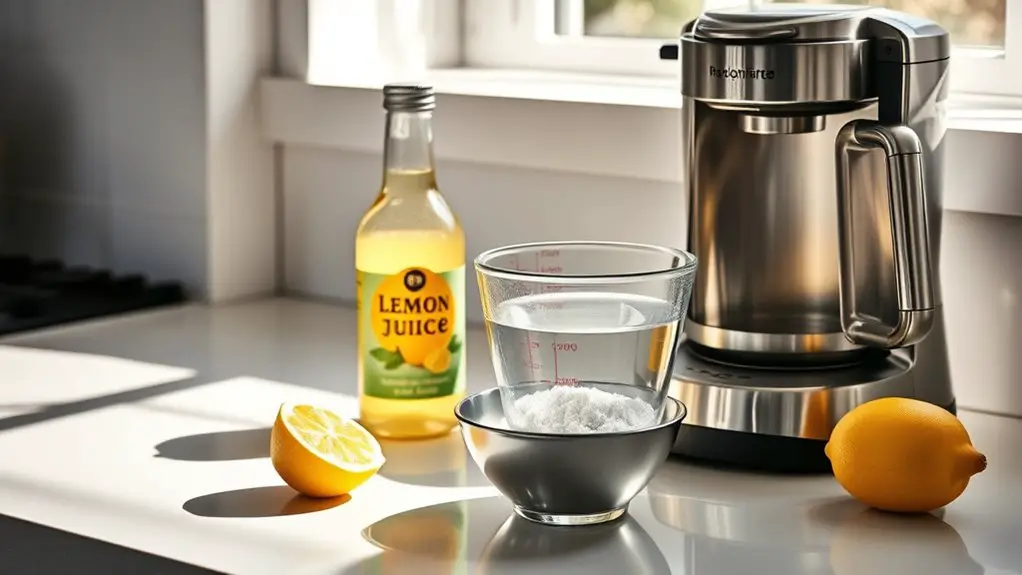
To clean your coffee maker without vinegar, try using baking soda, lemon juice, citric acid, or hydrogen peroxide. Mix these with water and run a brewing cycle, then rinse thoroughly. You can also use store-bought descaling solutions made specifically for coffee makers. Regular maintenance, like washing removable parts and running water-only cycles, can help prevent build-up. Want to know more about effective cleaning solutions and maintenance tips? There's plenty more useful information to explore.
The Importance of Regular Coffee Maker Cleaning
While you might enjoy that fresh cup of coffee each morning, neglecting to clean your coffee maker can lead to a buildup of mineral deposits and bacteria. This not only affects your coffee quality but also shortens your machine's longevity. Regular cleaning guarantees that your coffee maker operates efficiently, allowing you to enjoy a rich and flavorful brew. When you keep your machine clean, you're also preventing any off-tastes or odors that can develop over time. A well-maintained coffee maker can last longer and deliver better-tasting coffee, giving you the freedom to savor your favorite beverage without compromise. So, set a routine to clean your coffee maker, and keep both your coffee quality and machine longevity in check. Regular cleaning prevents calcium deposits and internal mold growth, ensuring your coffee tastes fresh every time.
Baking Soda Solution for Descaling
When it comes to descaling your coffee maker, a baking soda solution is an effective and natural option. This simple method not only helps remove mineral buildup but also offers numerous baking soda benefits. To create a baking soda mixture, just combine a couple of tablespoons of baking soda with water in your coffee maker's reservoir. Run a brewing cycle, then rinse thoroughly. Additionally, using baking soda is a milder alternative compared to CLR's stronger acids, making it suitable for newer machines without significant buildup.
Here's a quick reference table to guide you:
| Step | Action |
|---|---|
| 1. Mix | Combine baking soda & water |
| 2. Brew | Run the cycle |
| 3. Rinse | Flush with clean water |
Using a baking soda solution can keep your coffee maker in top shape, ensuring every cup tastes great!
Lemon Juice as a Natural Cleaner
Another effective natural cleaner for your coffee maker is lemon juice. Packed with natural acidity, lemon juice helps break down mineral buildup and coffee oils, making it a great choice for maintenance. To use it, mix equal parts lemon juice and water, then run this solution through your coffee maker like you would with regular water. Not only does it clean, but the fresh scent also leaves your machine smelling great. The lemon juice benefits extend beyond just cleaning; it's a natural antibacterial agent, ensuring your coffee maker stays hygienic. After the cycle, run a few water-only cycles to rinse it out thoroughly. With lemon juice, you'll enjoy a cleaner machine and delicious coffee, all without harsh chemicals.
Using Citric Acid for Effective Cleaning
Citric acid is a powerful cleaning agent that can effectively tackle mineral buildup in your coffee maker. It's a fantastic alternative to vinegar, offering citric benefits like deodorizing and removing stains. To clean your coffee maker with citric acid, mix one to two tablespoons with water and run it through a brewing cycle. Afterward, run a few cycles with plain water to rinse.
Here's a quick comparison of citric acid and other alternatives:
| Cleaning Agent | Effectiveness |
|---|---|
| Citric Acid | High |
| Lemon Juice | Moderate |
| Baking Soda | Low |
Using citric alternatives like lemon juice or baking soda can work, but citric acid is often the most effective choice for a deep clean.
Hydrogen Peroxide for Sanitizing
Hydrogen peroxide is a powerful sanitizer that can help keep your coffee maker free from germs and buildup. It's easy to use and effective, making it a great addition to your cleaning routine. Let's explore the benefits and a step-by-step process for using hydrogen peroxide to sanitize your coffee maker.
Benefits of Hydrogen Peroxide
When it comes to sanitizing your coffee maker, using hydrogen peroxide can be an effective solution. One of the key hydrogen peroxide benefits is its powerful antimicrobial properties, which help eliminate bacteria and mold that can accumulate over time. This not only keeps your coffee maker clean but also guarantees you're brewing a safe cup of coffee. Additionally, hydrogen peroxide is non-toxic and breaks down into water and oxygen, making it a safer alternative to harsher chemicals. When using it, simply dilute it with water for effective results. Always remember hydrogen peroxide safety; store it in a dark container and away from sunlight to maintain its potency. By choosing hydrogen peroxide, you're opting for a practical, eco-friendly cleaning method.
Step-by-Step Cleaning Process
Cleaning your coffee maker with hydrogen peroxide is a straightforward process that can help keep your machine in top condition. Start by gathering your cleaning supplies: hydrogen peroxide and water. Mix equal parts of both in the coffee maker's reservoir. Run a brew cycle to allow the solution to circulate through the system, sanitizing it as it goes. After the cycle, discard the solution, and run two cycles of clean water to rinse away any residue. Don't forget to clean the carafe and filter basket with warm, soapy water. This method effectively removes bacteria and odors without the harshness of vinegar. Regular upkeep like this guarantees your coffee maker brews delicious coffee every time.
Store-Bought Descaling Solutions
Using store-bought descaling solutions is one of the easiest ways to keep your coffee maker in top shape. These specially formulated products effectively remove mineral buildup that can affect your machine's performance and the taste of your coffee. To use a descaling solution, simply follow the instructions on the packaging, usually mixing it with water and running it through your coffee maker like a regular brew cycle. Regular coffee maintenance using these solutions can extend the life of your machine and guarantee each cup tastes great. Plus, they're convenient and often quicker than DIY methods. Make descaling a part of your routine every few months, and your coffee maker will thank you with delicious brews for years to come. Additionally, using a professional descaler like Dezcal ensures superior descaling results by effectively removing stubborn coffee stains and lime scale.
Cleaning With Water and Soap
While descaling solutions are great for tackling mineral buildup, regular cleaning with water and soap is just as important for maintaining your coffee maker. Start by unplugging your machine and disassembling removable parts. Use warm water, as it's more effective at dissolving grime. For soap types, a mild dish soap works best—avoid harsh chemicals that could linger. Soak components like the carafe and filter basket in soapy water for about 10-15 minutes. Use a soft sponge or cloth to scrub away any residue, paying special attention to hard-to-reach areas. Rinse everything thoroughly with clean water to remove soap. Finally, reassemble your coffee maker and run a cycle with just water to guarantee it's completely clean and ready for your next brew.
Regular Maintenance Tips for Your Coffee Maker
To keep your coffee maker in top shape, it's crucial to establish a daily cleaning routine. This includes rinsing out the carafe and filter basket after each use. Additionally, setting a deep cleaning schedule every month will help prevent buildup and guarantee great-tasting coffee.
Daily Cleaning Routine
A daily cleaning routine for your coffee maker is essential to guarantee peak performance and flavor. By performing simple daily maintenance tasks, you can keep your machine in top shape and minimize coffee residue buildup.
| Task | Frequency | Benefits |
|---|---|---|
| Rinse the carafe | Daily | Removes coffee residue |
| Wipe the exterior | Daily | Keeps your machine looking good |
| Empty the grounds basket | Daily | Prevents mold and odors |
| Run a water-only cycle | Weekly | Cleans internal components |
Deep Cleaning Schedule
Every few months, it's important to give your coffee maker a deep clean to guarantee peak performance and flavor. A good rule of thumb is to schedule this deep cleaning every three to six months, depending on how often you brew coffee. Start by disassembling all removable parts, like the filter basket and carafe, and wash them with warm, soapy water. For the machine itself, use a mixture of baking soda and water to wipe down surfaces and eliminate any lingering odors. Rinse thoroughly. Don't forget to run a water-only cycle to clear out any residue. This schedule frequency maintains your coffee maker in top shape, allowing you to enjoy that fresh brew without any unwanted tastes.
How to Prevent Future Build-Up
Preventing future build-up in your coffee maker can save you time and hassle down the line. To keep your machine in top shape, establish a regular descaling frequency—every one to three months, depending on your water hardness. This helps remove mineral deposits that can affect flavor and performance. Additionally, don't forget to replace your coffee filters regularly; a clogged filter can lead to slower brewing and unwanted residue. Use a good quality water filter to minimize impurities, and consider using filtered water for brewing. Regularly descaling your machine is also crucial to ensure optimal performance. Finally, always empty the carafe and clean the components after each use. By sticking to these simple practices, you'll guarantee your coffee maker stays clean, and your coffee tastes great every time.
Frequently Asked Questions
Can I Use Apple Cider Vinegar Instead of Regular Vinegar?
Sure, you can use apple cider vinegar instead of regular vinegar! It has cleaning benefits, plus its natural properties can be gentler. Just remember, there're plenty of vinegar alternatives if you need something different.
How Often Should I Clean My Coffee Maker?
You should clean your coffee maker every month to prevent buildup from coffee grounds. Regular cleaning frequency guarantees your machine performs well and your coffee tastes fresh, giving you the flavorful experience you deserve.
What Happens if I Don't Clean My Coffee Maker?
If you don't clean your coffee maker, coffee residue and mineral buildup can affect flavor and performance. Over time, this can lead to clogs and even damage, ruining your daily brew experience. Regular maintenance is key!
Is It Safe to Clean a Coffee Maker With Bleach?
It's not safe to clean a coffee maker with bleach due to potential chemical residues. Instead, consider cleaning alternatives like baking soda or lemon juice, which are effective and safer for your health and coffee's taste.
Can I Use Filtered Water in My Coffee Maker?
You know what they say, "You reap what you sow." Using filtered water in your coffee maker can greatly enhance coffee quality. It reduces impurities, ensuring each cup's rich flavor shines through, giving you that perfect brew.