
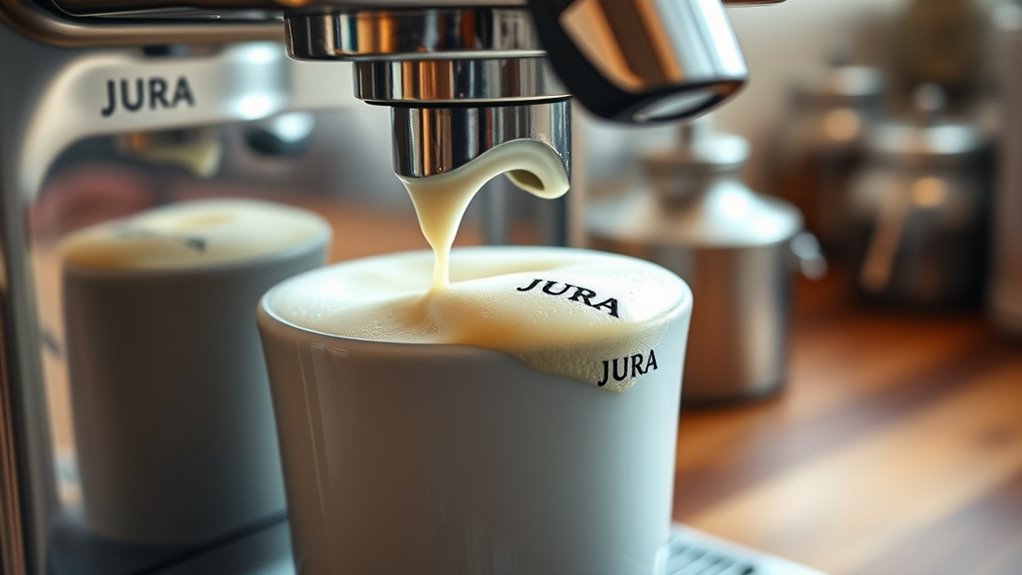
If your Jura coffee maker is making too much froth, start by adjusting your milk temperature, aiming for around 150°F (65°C). Choose whole milk for better frothing stability, and guarantee the right frothing technique, like the whirlpool method, to incorporate air efficiently. Check your frothing nozzle for obstructions, and modify the milk quantity based on the drink you're making. For more detailed solutions and adjustments, there are additional techniques and methods you might find useful.
Understanding the Frothing Process
When you froth milk for your Jura coffee maker, it's essential to understand the underlying process to achieve the perfect texture and flavor. The key lies in mastering frothing techniques and maintaining the right milk temperature. Ideally, milk should be heated to around 150°F (65°C) for best frothing. This temperature allows proteins to create a stable foam without scalding the milk. Different frothing techniques, like the whirlpool or aeration method, can produce varying textures. The whirlpool method incorporates air efficiently, while aeration focuses on introducing less air for a denser foam. By experimenting with these techniques and monitoring the milk temperature, you'll gain greater control over the frothing process, ultimately enhancing your coffee experience. Additionally, regular maintenance of the steam wand is crucial for achieving consistent froth quality.
Common Causes of Excessive Froth
Excessive froth in your Jura coffee maker can often be attributed to the type of milk used and the frothing settings you've selected. Different milk types, such as whole milk versus skim, produce varying amounts of froth due to their fat content. Additionally, incorrect frothing settings can exacerbate the issue, leading to an overly airy texture in your coffee. Using powdered milk can also help create a different frothing experience, as it has a more straightforward composition compared to coffee creamers.
Milk Type Used
The type of milk you choose can considerably impact the amount of froth produced by your Jura coffee maker. Whole milk generally offers better frothing stability due to its higher fat content, creating a creamier texture. In contrast, alternative milk options like almond or oat milk often froth differently, which can lead to excessive froth, especially if they contain additives. These additives can alter the milk's surface tension, affecting the frothing process. If you're aiming for less froth, experimenting with different milk types can be beneficial. Always consider the specific frothing characteristics of your chosen milk, as they directly influence the final froth quality in your coffee beverages.
Frothing Settings Adjustments
If you're encountering excessive froth with your Jura coffee maker, adjusting the frothing settings can often resolve the issue. Start by examining the dial settings for frothing consistency. If the dial is set too high, it can lead to an overabundance of froth. Lowering the dial can help achieve a more balanced result. Additionally, consider the type of milk used; some milk varieties froth more than others. Make incremental adjustments to the dial settings and test the output, fine-tuning until you reach your desired frothing consistency. Remember, the ideal froth should enhance your coffee without overwhelming it, allowing you to enjoy the rich flavors beneath. With these adjustments, you'll regain control over your coffee experience.
Adjusting Milk Temperature Settings
Although many coffee enthusiasts appreciate a perfectly frothed milk, achieving the right temperature is essential for both flavor and texture. Adjusting the milk temperature on your Jura coffee maker can greatly enhance frothing consistency, ensuring each cup meets your personal taste.
| Milk Temperature (°F) | Frothing Consistency | Recommended Use |
|---|---|---|
| 140 | Creamy and velvety | Lattes and cappuccinos |
| 160 | Thick and stable | Macchiatos |
| 180 | Light and airy | Flat whites |
Modifying Milk Frothing Time
Achieving the perfect froth also involves adjusting the frothing time on your Jura coffee maker. By fine-tuning this setting, you can influence both the frothing consistency and the overall milk texture. If your froth is too airy or light, consider reducing the frothing time. This shorter duration allows for less air to be incorporated, resulting in a denser, creamier froth. Conversely, if you prefer a lighter froth, increasing the frothing time will introduce more air, enhancing the volume and creating a fluffier texture. Experiment with these adjustments to find the ideal balance that complements your coffee. Remember, the key is to achieve a frothing consistency that aligns with your personal taste preferences for the ultimate coffee experience.
Choosing the Right Type of Milk
When it comes to frothing milk for your Jura coffee maker, selecting the right type of milk can greatly impact the texture and flavor of your drink. Whole milk, with its higher milk fat content, creates a creamier froth, while low-fat or skim milk produces a lighter, airier texture. If you prefer a denser foam, opt for whole or 2% milk. Additionally, consider the milk temperature; ideally, it should be between 150°F and 160°F for ideal frothing. Heating milk too much can affect its flavor and frothing ability. Experiment with different types to discover which suits your taste best, as the balance of milk fat and temperature plays an essential role in achieving your desired froth consistency.
Cleaning and Maintaining the Frothing System
Maintaining the frothing system of your Jura coffee maker is essential for ensuring consistent performance and quality. Regular cleaning is vital; after each use, rinse the frothing components with hot water to remove milk residue. At least once a week, disassemble the frothing system and soak the parts in warm soapy water. Use a soft brush to gently clean any stubborn buildup. Additionally, consider running a cleaning cycle with Jura's recommended cleaning tablets to keep the system functioning effectively. Pay attention to the temperature of the milk as it can affect froth quality. Following these maintenance tips will help you enjoy rich, creamy froth while prolonging the lifespan of your frothing system.
Checking the Frothing Nozzle for Obstructions
To guarantee peak frothing performance, it's important to regularly check the frothing nozzle for any obstructions that might impede milk flow. An obstruction can lead to excess froth or poor texture. Here's what you should look for during your obstruction check:
- Milk residue buildup
- Blocked air intake holes
- Cracks or damage to the nozzle
- Foreign particles like dust or coffee grounds
- Incorrect assembly of the frothing parts
Exploring Different Frothing Techniques
After ensuring the frothing nozzle is free from obstructions, you can explore various frothing techniques that can elevate your coffee experience. Start with the traditional steam wand method, which offers control over frothing consistency. By adjusting the angle and depth of the wand, you can achieve varying textures. Alternatively, consider the French press technique; it's simple and effective for creating a rich foam. Pour hot milk into the press, then pump the plunger vigorously. For a quick solution, handheld frothers provide convenience, allowing you to customize frothing consistency easily. Finally, using a blender can yield a thick foam, ideal for lattes. Experimenting with different frothing techniques will help you discover the perfect balance for your coffee preferences.
Experimenting With Milk Ratios
When experimenting with milk ratios, consider the type of milk you're using, as different varieties can greatly affect froth quality. Adjusting the quantity of milk also plays an essential role in achieving the desired texture and flavor. Fine-tuning these variables will help you master the frothing process for your Jura coffee maker.
Milk Type Variations
While experimenting with different milk types can seem challenging, finding the right ratios is vital for achieving the perfect froth in your Jura coffee maker. The milk fat content plays an important role in frothing stability, affecting both texture and flavor. Here are some key variations to take into account:
- Whole milk: Creamy, rich froth with high stability.
- 2% milk: Balanced froth quality, moderate stability.
- Skim milk: Light froth but less stable, may collapse quickly.
- Almond milk: Unique flavor, lower froth stability.
- Oat milk: Creamy texture, works well for frothing but varies by brand.
Experiment with these options to discover the ideal milk ratio that suits your taste, maximizing your Jura's frothing capabilities while enjoying a personalized coffee experience.
Adjusting Milk Quantity
Finding the right milk type is only the beginning; adjusting the milk quantity can greatly impact the frothing process and the overall quality of your coffee. By experimenting with different milk ratios, you can achieve the perfect balance for your desired frothiness. Here's a simple table to guide your frothing adjustments:
| Milk Ratio (Liquid:Foam) | Froth Texture | Best For |
|---|---|---|
| 1:1 | Silky & Creamy | Lattes |
| 2:1 | Smooth & Velvety | Cappuccinos |
| 3:1 | Light & Airy | Macchiatos |
| 1:2 | Dense & Thick | Flat Whites |
| 1:3 | Extra Frothy | Specialty Drinks |
Try different ratios to explore how they affect your milk frothing experience!
Troubleshooting Frothing Issues
If your Jura coffee maker isn't frothing properly, it can be frustrating, especially when you're aiming for that perfect cappuccino. To troubleshoot frothing issues, consider the following points:
- Check the milk type: Whole milk generally provides better frothing consistency.
- Clean the frother: Residue can affect the coffee texture.
- Adjust the frothing temperature: Too hot can lead to excessive bubbles.
- Verify the milk quantity: Too much milk may disrupt the frothing process.
- Inspect the frothing nozzle: Confirm it's not clogged or damaged. Additionally, ensure regular maintenance of all machine components to prevent issues related to internal blockages.
Frequently Asked Questions
Can I Use Non-Dairy Milk Alternatives for Frothing?
Imagine crafting a creamy latte with almond milk. You can definitely use non-dairy options like oat milk for frothing. Experiment with different frothing techniques to find the perfect consistency that suits your taste preferences!
How Often Should I Clean the Frothing System?
You should clean the frothing system after every use for peak performance. Regular frothing frequency prevents milk residue buildup. Employ effective cleaning techniques to maintain hygiene and guarantee consistent froth quality in your beverages.
Does Water Hardness Affect Frothing Quality?
Did you know that water hardness can influence froth quality by up to 30%? By adjusting your frothing techniques based on water hardness, you can achieve creamier, more stable froth, enhancing your coffee experience considerably.
Can Temperature Affect the Taste of Frothed Milk?
Yes, milk temperature greatly affects froth texture. Higher temperatures create a creamier, denser foam, while lower temperatures yield lighter froth. Adjusting temperature can enhance your drink's overall taste and mouthfeel, ensuring a better experience.
Is There a Best Time to Froth Milk?
You might not realize it, but timing's essential for frothing. Ideal milk temperature and precise frothing techniques enhance texture. Froth when milk's between 150-160°F for that perfect balance of sweetness and creaminess in your beverage.