
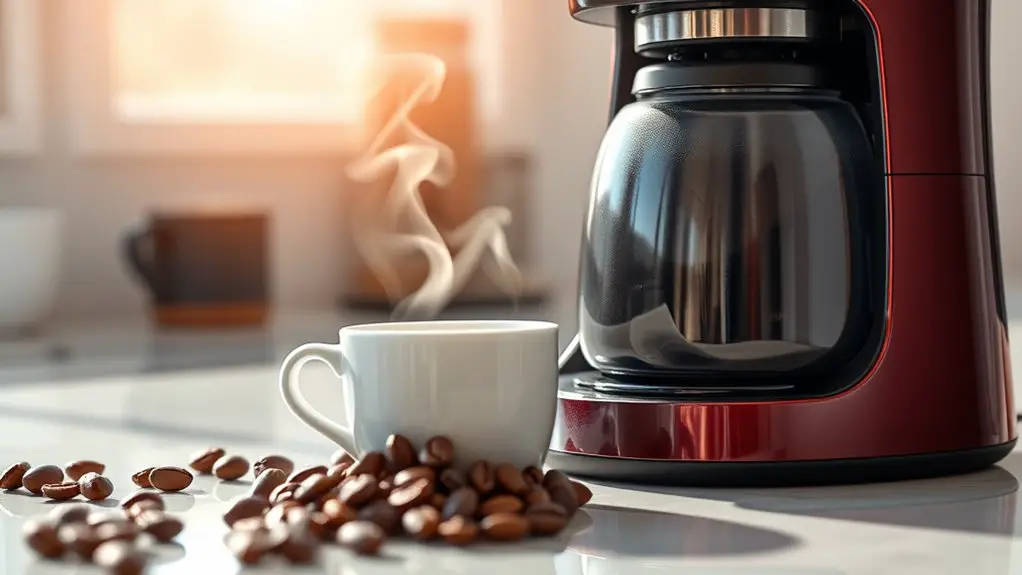
If your coffee maker tastes like plastic, it's likely due to the materials used in its construction. Many budget models contain plastic components that can leach undesirable flavors into your brew. This can be especially noticeable during those initial brews. Additionally, improper cleaning and water quality could also contribute to unwanted tastes. Switching to higher-quality materials and ensuring regular maintenance can help eliminate that plastic flavor. Want to discover more ways to enhance your coffee experience?
Understanding the Materials Used in Coffee Makers
When you brew your morning cup of joe, you might not realize that the materials used in your coffee maker can greatly impact the taste. Many coffee makers incorporate plastic components, which can leach undesirable flavors into your brew. If your coffee tastes like plastic, it's likely due to these brewing materials. High-quality machines often use stainless steel or glass, preserving the rich, bold flavors you crave. On the other hand, cheaper models may rely heavily on plastics, compromising your coffee experience. It's worth considering your coffee maker's design; investing in one with fewer plastic parts can lead to a purer, more satisfying cup. Freedom in flavor starts with understanding what goes into your brewing process.
The Impact of New Coffee Makers on Taste
Although you might be excited about your new coffee maker, it's essential to recognize how its design and technology can influence the taste of your brew. With advancements in new technology, manufacturers often prioritize efficiency, but this can sometimes lead to flavor issues. The materials used in the brewing process, like plastics, can leach unwanted flavors into your coffee, especially during the initial uses. Additionally, if the brewing process doesn't maintain ideal temperatures, it can extract bitterness or subtle notes from your beans. While new features and automation are enticing, they might compromise the purity of your coffee experience. To truly savor your cup, consider letting your machine run a few cycles with water before brewing your first pot, ensuring a cleaner taste. Regular cleaning is crucial to eliminate any potential plastic taste that may linger from the manufacturing process.
The Role of Water Quality in Flavor
Even with the best coffee maker, the flavor of your brew can fall flat if the water quality isn't up to par. Water hardness and impurities can drastically alter your coffee's taste, masking its rich flavors and aromas. To enjoy a fresh cup, consider investing in a good filtration system that removes unwanted minerals and contaminants.
| Water Quality Factor | Impact on Coffee Flavor |
|---|---|
| High Hardness | Bitter, dull taste |
| Low Hardness | Cleaner, brighter flavor |
| Contaminants | Off-putting flavors |
Importance of Regular Cleaning and Maintenance
While you might savor the rich aroma of freshly brewed coffee, neglecting regular cleaning and maintenance of your coffee maker can lead to unwanted plastic-like flavors in your cup. To enjoy a pure coffee experience, it's crucial to establish a cleaning frequency that suits your usage. Ideally, clean your machine every month, but if you brew daily, consider weekly maintenance. Use a mixture of vinegar and water to descale, and don't forget to wash removable parts with warm, soapy water. These maintenance tips help eliminate old coffee oils and mineral deposits, ensuring each brew tastes fresh and free from plastic hints. By committing to regular upkeep, you'll indulge in a delightful cup every time. Additionally, regular cleaning prevents calcium deposits and internal mold growth, further enhancing the flavor of your coffee.
How to Minimize Plastic Taste in Your Coffee
Cleaning your coffee maker isn't just about hygiene; it plays a significant role in the flavors you experience. To minimize that pesky plastic taste, start with high-quality coffee beans; their rich flavors can mask unwanted aftertastes. Next, pay attention to your brewing temperature. Ideally, you want to brew between 195°F and 205°F—too hot or too cold can extract unwanted flavors from the plastic components. Regularly wash your coffee maker with a mixture of water and vinegar to eliminate any lingering odors. Additionally, consider switching to a glass or stainless steel carafe if you're using a plastic one. By taking these steps, you'll enjoy your coffee without those distracting plastic notes, allowing the true essence of your brew to shine through. Furthermore, using CLR can effectively dissolve tough lime and calcium deposits, which may also contribute to off-flavors in your coffee.
Frequently Asked Questions
Can Using Filtered Water Eliminate Plastic Taste in Coffee?
Using filtered water can considerably enhance your coffee's flavor, reducing any unwanted plastic taste. It removes impurities and chemicals, ensuring a richer, cleaner brew that truly lets the coffee's natural notes shine through. Enjoy every sip!
How Long Does the Plastic Taste Usually Last?
You're stuck in a plastic-tasting coffee nightmare that can last anywhere from a few brews to weeks! The coffee maker materials can leach that flavor, but with time and cleaning, freedom from it's yours!
Are There Specific Brands Known for This Issue?
When considering brand comparisons, some coffee makers receive consumer reviews highlighting plastic tastes. Brands like Keurig and Mr. Coffee often face scrutiny, so exploring user experiences can help you find a better option for your brewing freedom.
Does the Brewing Temperature Affect the Plastic Taste?
Imagine a warm breeze carrying fragrant aromas. If your brewing materials heat up too much, they might release unwanted flavors. The temperature's impact on your brew can amplify that plastic taste, so keep it balanced for freedom in flavor.
Is It Safe to Drink Coffee That Tastes Like Plastic?
If your coffee tastes like plastic, it's best to avoid drinking it. The health risks associated with harmful chemicals can compromise coffee quality, diminishing your experience and potentially affecting your well-being. Prioritize your health and taste!