
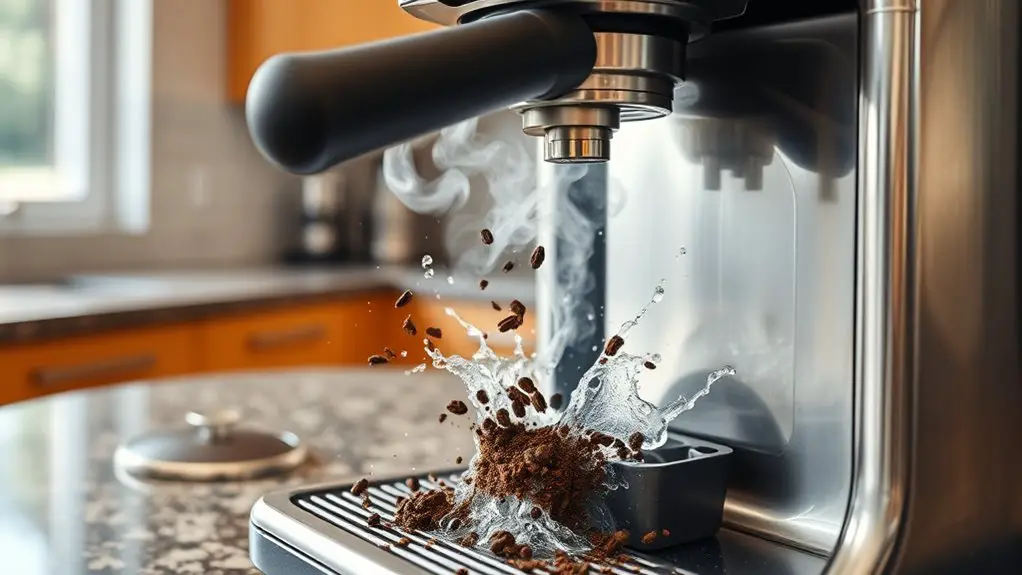
If your coffee maker's making loud noises, it's likely due to mechanical issues, mineral buildup, or loose components. Irregular coffee temperatures can cause hissing or popping sounds, while blocked water lines may lead to rattling. Additionally, worn-out parts or poorly fitted assemblies contribute to excess noise. Regular maintenance, like descaling and tightening screws, can help minimize disruptions. To explore the specific causes and solutions further, keep going for more insights.
Understanding Your Coffee Maker's Mechanics
Understanding your coffee maker's mechanics is essential to diagnosing any unusual noises it might produce. The process of coffee extraction heavily depends on the brewing temperature, which should ideally be between 195°F and 205°F. If your machine's temperature regulation is off, it might struggle to extract flavors properly, leading to potential operational issues.
Be aware that components like the pump, heating element, and water reservoir all interact to create that perfect brew. If these parts are misaligned or malfunctioning, you might hear odd sounds as they work harder than intended. Knowing how these elements function together gives you the freedom to identify problems early, ensuring you can enjoy a consistently great cup of coffee without unnecessary disruptions.
Common Causes of Loud Noises
Loud noises from your coffee maker can indicate several underlying issues that may affect its performance. One common cause is an irregular coffee temperature during brewing, which can lead to hissing or popping sounds as air bubbles form and burst. Additionally, if your brewing time is inconsistent, it might create a rattling noise as components struggle to process the water flow efficiently. Another factor could be a loose or improperly fitted filter basket, causing vibrations that result in clattering sounds. Finally, an overheated element can produce a loud whistling noise. Addressing these issues promptly can help maintain your coffee maker's functionality and guarantee a smoother brewing experience. Regularly descaling your coffee machine can also help minimize noise by removing mineral buildup that may lead to clogs.
Mineral Buildup and Its Effects
When hard water is used in your coffee maker, mineral buildup can become a significant issue over time. These mineral deposits, primarily calcium and magnesium, accumulate in important components, affecting performance and efficiency. You might notice louder noises during brewing as the machine works harder to push water through these blockages. This not only detracts from your coffee experience but can also shorten your coffee maker's lifespan. To combat this, regular use of descaling solutions is necessary. These solutions dissolve mineral deposits, restoring functionality and ensuring ideal operation. Professional descalers like Dezcal are highly recommended for maintaining your coffee machine's performance. By prioritizing maintenance, you can preserve your coffee maker's efficiency and enjoy a quieter brewing process, ultimately enhancing your daily coffee ritual. Don't overlook this critical aspect of care!
Clogged Water Lines
If you notice unusual sounds coming from your coffee maker, clogged water lines could be the culprit. These obstructions hinder water flow, causing pressure build-up and unwanted noise during the brewing process. The most common causes include mineral deposits or coffee grounds that accumulate over time. To resolve this, you can employ effective cleaning techniques. Start by using a descaling solution or a mixture of vinegar and water to flush the system. Run a few cycles of clean water afterward to guarantee all residues are cleared. Regular maintenance, such as periodic deep cleaning, will keep your water lines clear and your coffee maker functioning smoothly. Additionally, be aware that clogged pump issues can also contribute to pressure problems, which may lead to loud noises. Don't let clogs disrupt your coffee experience—act swiftly to restore that perfect brew.
Loose Components and Assembly Issues
Loose components and assembly issues can lead to unexpected noises from your coffee maker. If parts are worn out, improperly assembled, or screws are loose, it can compromise the machine's operation. Addressing these issues promptly can help restore quiet functionality and extend the life of your appliance.
Worn Out Parts
As coffee makers age, worn-out parts can lead to a variety of issues, including loud noises during operation. One common culprit is worn seals, which can cause water to leak and create disruptive sounds as the machine struggles to maintain pressure. Damaged gaskets can also contribute to these noises, resulting in an inefficient brewing process that generates excess vibrations. If you notice your coffee maker making unusual sounds, it's essential to inspect these components. Replacing worn seals and gaskets can greatly reduce noise and improve performance. Regular maintenance helps extend the life of your machine and guarantees a quieter brewing experience, giving you the freedom to enjoy your coffee without unwelcome distractions.
Improper Assembly
When components of your coffee maker aren't assembled correctly, you might notice an increase in noise during operation. Improper installation can lead to vibrations and rattling sounds that disrupt your brewing experience. To avoid this, follow some essential assembly tips. First, verify that all parts fit snugly without forcing them together. Check that the water reservoir and brew basket are seated properly. Misalignment can cause strain, resulting in loud noises. Regularly inspect for any signs of wear on gaskets or seals, as these can also affect assembly integrity. By taking the time to assemble your coffee maker correctly, you'll not only reduce noise but also enhance its overall performance, giving you the freedom to enjoy a peaceful cup of coffee.
Loose Screws
Even with proper assembly, your coffee maker can still produce unwanted noise if screws and other components are loose. Loose screws can lead to vibrations during operation, causing rattling and grinding sounds. To address this, perform a thorough assembly inspection. Check all screws and connections for tightness, ensuring they're secure but not over-tightened, which could damage components. Regular screw tightening can prevent excessive noise and prolong your coffee maker's lifespan. If you notice persistent sounds despite your efforts, consider checking internal components or consulting the manufacturer for further guidance. By maintaining a tight assembly, you'll not only enjoy a quieter brewing experience but also a more reliable coffee maker.
The Role of the Pump
The pump is an essential component in your coffee maker, responsible for delivering water to the brewing chamber at the right pressure. Understanding pump functionality is vital, as it directly influences the extraction process and overall flavor of your brew. When the pump operates smoothly, it minimizes vibrations and can lead to noise reduction, enhancing your coffee experience.
However, when the pump struggles, either due to wear or blockage, it may produce loud noises that disrupt your peaceful mornings. Recognizing these sounds can help you diagnose potential issues early, preventing further damage. By ensuring your pump operates efficiently, you not only achieve a better cup of coffee but also enjoy a quieter brewing environment.
Maintenance Tips for a Quieter Brew
To guarantee a quieter brew, you should establish a regular cleaning schedule for your coffee maker. This helps prevent mineral buildup, which can cause loud noises during operation. Additionally, check for loose parts, as these can contribute to vibrations and unwanted sounds.
Regular Cleaning Schedule
If you want to enjoy a quieter brewing experience, establishing a regular cleaning schedule for your coffee maker is essential. Consistent cleaning not only enhances the taste of your coffee but also reduces noise caused by mineral buildup and residue. Aim for a cleaning frequency that suits your usage; for daily brewers, a weekly clean is ideal, while occasional users may find monthly maintenance sufficient. Incorporate simple maintenance habits, like descaling with vinegar or a commercial solution, and cleaning removable parts regularly. This proactive approach minimizes clogs and maintains peak performance, allowing your coffee maker to operate smoothly and quietly. Remember, a clean machine contributes to a better brew and a more peaceful morning routine.
Check for Loose Parts
A well-functioning coffee maker relies on all its components being securely in place. If you're hearing loud noises during brewing, it's time to check for loose parts. Start by inspecting the machine for any loose screws—these can cause vibrations that amplify sound. Tightening them may reduce noise considerably.
Next, examine the components for wear, as this can also contribute to rattling or clanking sounds. Parts like the water reservoir or filter basket may not sit properly if worn, leading to additional noise. Regularly maintaining these elements guarantees that your coffee maker operates smoothly and quietly. By addressing loose screws and potential component wear, you'll enhance your brewing experience and prolong the life of your machine.
When to Seek Professional Help
When should you consider calling in a professional for your coffee maker's loud noises? If you've already checked for loose parts and attempted basic noise troubleshooting without success, it's time to seek expert help. Unusual sounds could indicate deeper issues, like faulty components or electrical problems, that require specialized skills. Don't risk further damage or safety hazards by ignoring persistent noise. If your coffee maker's performance is affected—such as inconsistent brewing or leaks—professional repairs may be necessary. Additionally, if the noise is accompanied by burning smells or smoke, shut the machine off immediately and contact a technician. Remember, addressing these concerns promptly can save you time and money in the long run.
Frequently Asked Questions
Can Loud Noises Indicate a Malfunctioning Coffee Maker?
Ever wondered if loud noises from your coffee maker signal trouble? Yes, they can indicate malfunction signs. Common noise sources include clogs or worn parts, so pay attention to those sounds for potential issues.
How Often Should I Clean My Coffee Maker?
You should clean your coffee maker every month for peak performance. Regular maintenance tips include descaling and washing removable parts, which helps prevent buildup and guarantees a consistently great brew, giving you the freedom to enjoy your coffee.
What Type of Water Is Best for Brewing Coffee?
For brewing coffee, it's best to use filtered water. It reduces impurities while maintaining the right mineral content, enhancing flavor extraction. Avoid distilled water, as it lacks minerals essential for a balanced taste.
Are Certain Coffee Makers Noisier Than Others?
Yes, certain coffee makers can be noisier than others. Manual espresso machines typically operate quieter than electric drip models, which may produce more sound due to pumps and heating elements, impacting your brewing experience.
Does the Age of My Coffee Maker Affect Noise Levels?
Just like a wise old tree, your coffee maker's lifespan affects its noise. As time passes, wear and tear can hinder noise reduction. So, consider maintenance or replacement for quieter brewing in your daily ritual.