
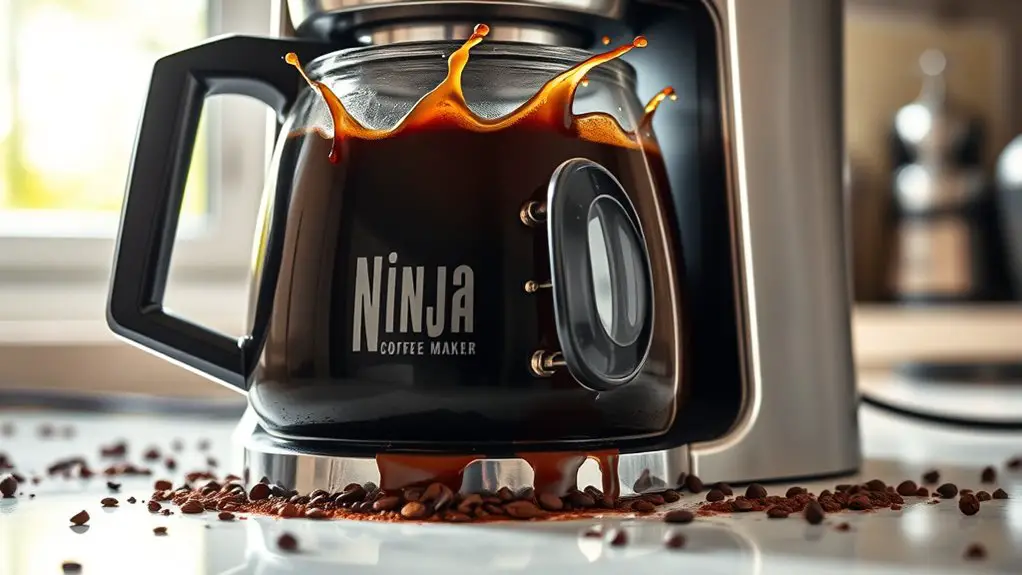
If your Ninja coffee maker is overflowing, it's likely due to several factors. You might be using too many coffee grounds relative to water, or the brew basket could be clogged from insufficient cleaning. Damaged parts, such as seals, can also disrupt proper operation. Additionally, using incompatible filters or brewing at the wrong temperature may worsen the issue. Regular maintenance can help you prevent these problems. There's more to explore to guarantee a smoother brewing experience.
Common Causes of Overflowing in Ninja Coffee Makers
While you may enjoy the convenience of your Ninja Coffee Maker, several factors can lead to overflowing during the brewing process. One common cause is inadequate coffee maker maintenance; if the brew basket or water reservoir isn't clean, residue can obstruct proper flow. Additionally, using the wrong brewing techniques can also contribute to overflow. For instance, filling the brew basket beyond its capacity can create excess pressure, forcing coffee to spill out. It's important to follow the manufacturer's guidelines for both water and coffee amounts. Regular cleaning of the machine, including descaling, promotes peak performance, reducing the risk of overflow. By staying vigilant about maintenance and employing correct brewing techniques, you can enjoy your coffee without the mess.
Incorrect Coffee Grounds Ratio
One of the primary reasons your Ninja Coffee Maker might overflow is an incorrect coffee grounds ratio. If you're using too many grounds relative to the water, it can lead to over-extraction and create a mess. For ideal coffee strength and brew consistency, a standard guideline is to use one to two tablespoons of coffee for every six ounces of water. Adjusting this ratio allows you to control the intensity of your brew while preventing overflow. If you prefer a stronger cup, slightly increase the coffee amount, but be cautious—too much can cause clogs and spills. Always remember, balance is key in achieving that perfect cup without any unintended chaos. Furthermore, the multiple brew styles available on the Ninja Coffee Maker can help you experiment with different strengths and flavors while maintaining the right coffee-to-water ratio.
Clogged Brew Basket
An overflow can also occur due to a clogged brew basket. If your filter is blocked, whether by coffee grounds or residue, water can't flow through properly, causing it to back up and spill. To address this, you should regularly check and clean your brew basket. Remove the filter and inspect for any buildup. A clogged filter can lead to inadequate brewing and an overflow issue. Rinse the brew basket thoroughly under warm water, making sure any trapped debris is cleared. You might also consider using paper filters for easier cleanup. By maintaining a clean brew basket, you can guarantee peak performance, allowing your Ninja Coffee Maker to function smoothly and deliver the perfect cup without any overflow mishaps. Additionally, using high-quality filters can help minimize the risk of clogging and overflow.
Damaged or Worn Out Parts
If components of your Ninja Coffee Maker are damaged or worn out, they can contribute to overflow issues. Start by inspecting the seals; damaged seals can create leaks, forcing water to escape instead of brewing properly. Worn components, such as the brew basket or the water reservoir, may not fit securely, resulting in misalignment that leads to overflow. Even a small crack in any part can drastically affect performance. Regular maintenance and timely replacement of these parts is essential for ideal functionality. If you notice any signs of wear or damage, addressing these issues promptly can enhance your brewing experience and prevent inconvenient spills. Don't let damaged or worn parts hinder your coffee enjoyment!
Using the Wrong Coffee Filter
Using the wrong coffee filter can also lead to overflow issues with your Ninja Coffee Maker. Each model requires specific coffee filter types for peak performance. If you're using a filter that's too small or incompatible, it can cause water to back up, resulting in overflow. For instance, paper filters may not hold up under pressure, while reusable mesh filters might not catch fine grounds effectively. Always check the manufacturer's guidelines for filter compatibility, as using the wrong type not only affects brewing but can also lead to messy situations. To guarantee a seamless experience, make sure you're using the recommended filters for your model, allowing your coffee to brew without any unnecessary complications.
Overfilling the Water Reservoir
When using your Ninja Coffee Maker, it's essential to adhere to the maximum capacity guidelines for the water reservoir to prevent overflow. Check the water level indicator to guarantee you're not exceeding the recommended amount, as overfilling can lead to spills during brewing. Employ proper filling techniques by pouring slowly and monitoring the level closely to maintain peak performance.
Maximum Capacity Guidelines
Overfilling the water reservoir of your Ninja Coffee Maker can lead to messy spills and brewing issues, as each model has a designated maximum capacity that should not be exceeded. To guarantee peak performance, it's vital to consult the coffee maker specifications for your specific model. Each Ninja coffee maker has brewing capacity limits that dictate how much water you can safely add. Ignoring these limits can not only cause overflow but may also lead to improper brewing, affecting flavor and strength. Always measure your water carefully, and remember that following the manufacturer's guidelines will help you enjoy delicious coffee without the hassle of cleanup. Respecting these limits gives you the freedom to brew worry-free.
Water Level Indicator
A water level indicator is a vital feature in Ninja Coffee Makers that helps prevent overfilling the reservoir. This indicator provides a clear visual cue, showing you the precise water level, ensuring you stay within the brewing capacity of your machine. When you fill the reservoir, it's essential to monitor this indicator; exceeding the maximum water level can lead to overflow during the brewing process. By keeping an eye on the water level, you maintain peak performance and avoid messy spills. Additionally, understanding your specific brewing capacity allows you to brew the perfect amount of coffee without the hassle of cleanup. Trust the water level indicator to enhance your brewing experience while promoting efficiency in your daily coffee routine.
Proper Filling Techniques
Making sure you fill the water reservoir correctly is essential for preventing overflow in your Ninja Coffee Maker. To achieve the ideal water to coffee ratio, it's vital to use proper measuring techniques. Overfilling the reservoir can lead to unwanted spills and messes.
| Measurement | Water Volume | Coffee Amount |
|---|---|---|
| 1 Cup | 8 oz | 1-2 tbsp |
| 2 Cups | 16 oz | 4-5 tbsp |
| 4 Cups | 32 oz | 8-10 tbsp |
Always check the water level against the indicators in your machine. A little precision can make a big difference, allowing you to enjoy your coffee without the hassle of overflowing. Adopting these techniques guarantees a smoother brewing process.
Brewing Too Quickly
If your Ninja Coffee Maker is overflowing, brewing too quickly might be the culprit. Adjusting the brewing time settings and ensuring the right amount of coffee grounds can greatly impact the extraction process. Too short a brew time or excessive grounds can create an imbalance, leading to overflow and mess.
Brewing Time Settings
When your Ninja Coffee Maker brews too quickly, it can lead to overflow issues that disrupt your coffee-making experience. To achieve ideal brewing and prevent this, you should consider making some brewing time adjustments. Here's what you can do:
- Select Brew Strength: Choose a setting that allows for a longer extraction time.
- Water Temperature: Verify your water isn't too hot, as this can speed up brewing and cause overflow.
- Brew Size: Adjust the brew size to match your coffee maker's capacity, allowing enough room for expansion.
Coffee Grounds Quantity
Brewing coffee with too many grounds can exacerbate overflow issues, as the excessive volume can lead to blockages in the filter and brewing system. It is crucial to find the right balance between coffee grind size and brewing method. If you're using a coarse grind for a quick brew, it can lead to over-extraction and overflow.
| Grind Size | Brewing Method |
|---|---|
| Coarse | French Press |
| Medium | Drip Coffee Maker |
| Fine | Espresso Machine |
| Extra Fine | Turkish Coffee |
Improper Cleaning and Maintenance
Neglecting proper cleaning and maintenance of your Ninja coffee maker can lead to significant issues, including overflowing during the brewing process. To keep your machine functioning at its best, consider these cleaning techniques and maintenance tips:
- Regular Descaling: Use a descaling solution every few months to prevent mineral buildup that can block water flow.
- Daily Cleaning: Rinse the carafe, filter basket, and brew basket after each use to eliminate coffee oils and residues.
- Check the Seal: Verify the water reservoir lid and any seals are clean and free of debris to maintain proper pressure during brewing.
Implementing these practices will help you enjoy a seamless brewing experience, allowing you the freedom to savor your coffee without concerns of overflowing.
Temperature Issues
Temperature control plays an essential role in the functionality of your Ninja coffee maker, and improper heating can contribute to overflowing issues. If the brew temperature is too high, it can cause excessive pressure within the system, leading to overflow. Conversely, a low brew temperature may result in inadequate extraction, prompting you to compensate with more coffee grounds, which can also lead to clogging. Maintaining thermal stability is vital in ensuring that your coffee maker operates effectively. If the heating element is malfunctioning or if there's a blockage in the water line, it can disrupt the temperature balance. Regular checks on your machine's temperature settings will help you prevent these overflow issues and enjoy your coffee without hassle.
Troubleshooting Steps to Resolve Overflowing Issues
Have you checked the basics of your Ninja coffee maker? Overflowing issues can often stem from simple mistakes. Here are some troubleshooting techniques to address the problem:
- Check the Brew Basket: Verify it's seated properly. An improperly placed basket can lead to overflow.
- Inspect the Filter: A clogged or overfilled filter can restrict water flow. Replace it if necessary and verify it fits snugly.
- Review Coffee Grounds: Using too many grounds can create a thick sludge, causing overflow. Stick to the recommended coffee-to-water ratio.
Regular coffee maker maintenance can prevent these issues. By following these steps, you'll regain control and enjoy your brew without the mess.
Frequently Asked Questions
Can I Use Flavored Coffee Grounds in My Ninja Coffee Maker?
Yes, you can use flavored coffee grounds in your Ninja coffee maker. For best results, follow brewing tips like adjusting grind size and water temperature to enhance flavor without risking overflow or bitterness. Enjoy your brew!
What Type of Water Is Best for Brewing Coffee?
For brewing coffee, filtered water's ideal due to its low mineral content, enhancing flavor without impurities. It balances taste and clarity, ensuring your coffee's richness shines through, giving you that perfect cup every time.
How Often Should I Descale My Ninja Coffee Maker?
To keep your coffee maker humming like a well-oiled machine, you should descale it every three to six months. Regular descale frequency guarantees peak performance and longevity, making coffee maker maintenance a breeze for you.
Can I Brew Tea in My Ninja Coffee Maker?
Yes, you can brew tea in your Ninja coffee maker. Simply use the tea brewing function, adjust the water temperature, and steep time for ideal flavor extraction. Just remember to clean it thoroughly afterward to avoid coffee residue.
Is It Normal for My Coffee Maker to Make Noise While Brewing?
Like a symphony in your kitchen, brewing sounds from your coffee maker are normal. However, if they're excessive, it might signal a need for maintenance. Regular cleaning guarantees peak performance and longevity for your beloved machine.