
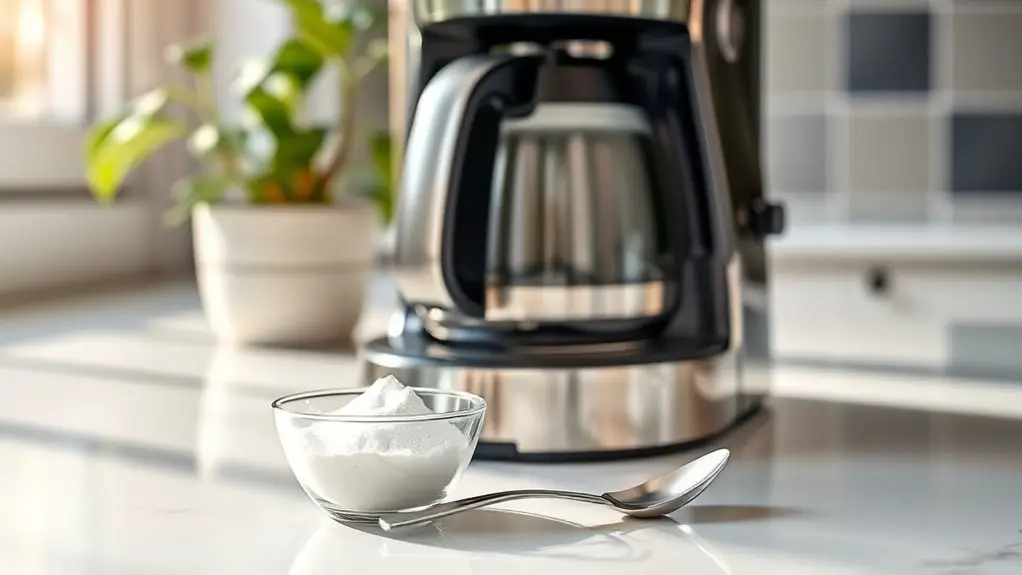
Yes, you can use baking soda to clean your coffee maker effectively. It helps remove stubborn stains, mineral buildup, and unpleasant odors while being eco-friendly and cost-effective. To clean, mix 1/4 cup of baking soda with 4 cups of water, pour it into the water reservoir, and run a full brew cycle. Let it sit for 15 minutes before rinsing with clean water. Discover more methods and tips for maintaining your coffee maker for better performance.
Understanding the Need for Coffee Maker Cleaning
Cleaning your coffee maker might not be at the top of your to-do list, but it's essential for maintaining the quality of your brew. Over time, coffee buildup can accumulate in your machine, affecting both the taste of your coffee and its performance. If you neglect this task, you may find yourself with a bitter cup instead of a bold one. Regular cleaning not only enhances flavor but also contributes to your coffee maker's longevity. By removing old oils and residues, you're preventing blockages and ensuring that your machine operates smoothly. It's a small effort that pays off in the long run, allowing you to enjoy every sip with confidence. Embrace the freedom of a clean brew, and keep your coffee maker in top shape! Additionally, regular cleaning helps prevent mold and yeast growth, which can lead to infections and allergies.
The Benefits of Using Baking Soda
When it comes to keeping your coffee maker in great shape, baking soda stands out as a powerful ally. One of the key baking soda benefits is its effectiveness as a natural cleaner. Unlike harsh chemicals, baking soda's gentle abrasiveness helps remove stubborn coffee stains and mineral buildup without damaging your machine. It's safe to use and won't leave behind any harmful residues, making it perfect for your daily coffee routine.
Using baking soda also helps eliminate odors, ensuring your coffee tastes fresh every time. Plus, it's cost-effective and readily available, giving you the freedom to clean without breaking the bank. So, if you're looking for a reliable and eco-friendly way to maintain your coffee maker, baking soda is the answer!
How to Prepare Your Coffee Maker for Cleaning
Before you start the cleaning process, it's important to prepare your coffee maker properly. First, gather your cleaning supplies and maintenance tools. You'll need a soft cloth, a measuring cup, and of course, baking soda.
Next, unplug your coffee maker and allow it to cool down completely. Disassemble any removable parts, like the filter basket and carafe, and rinse them with warm water.
Here's a handy table to keep you organized:
| Item | Purpose | Action Required |
|---|---|---|
| Coffee Maker | Main appliance | Unplug and cool down |
| Filter Basket | Holds coffee grounds | Remove and rinse |
| Carafe | Collects brewed coffee | Remove and rinse |
With everything ready, you're all set for a thorough cleaning!
Step-By-Step Guide to Cleaning With Baking Soda
To effectively clean your coffee maker with baking soda, you'll want to start with some preparation steps that set the stage for a thorough clean. Once you're ready, I'll guide you through the cleaning process, ensuring you know how to tackle stubborn stains and buildup. Finally, I'll share rinsing techniques and maintenance tips to keep your coffee maker in top shape.
Baking Soda Preparation Steps
Cleaning your coffee maker with baking soda is a straightforward process that can greatly enhance its performance and taste. Here's how to prepare for this effective cleaning alternative:
| Step | Description |
|---|---|
| 1 | Gather your materials: baking soda, water, and a measuring spoon. |
| 2 | Measure 1/4 cup of baking soda. |
| 3 | Mix the baking soda with 4 cups of water in a bowl. |
| 4 | Pour the mixture into the coffee maker's water reservoir. |
| 5 | Let it sit for 15-20 minutes before starting the cleaning process. |
These baking soda uses can help you maintain your coffee maker effectively, ensuring you enjoy better-tasting coffee with every brew. Embrace this simple yet powerful cleaning solution!
Cleaning Process Explained
Once you've prepared your baking soda solution, you're ready to tackle the cleaning process. Begin by filling the coffee maker's reservoir with equal parts water and your baking soda mixture. Run a full brew cycle, allowing the solution to circulate and break down any stubborn coffee residue. Once the cycle is complete, let the solution sit for about 15 minutes to maximize its cleaning potential. Afterward, run another cycle with just water to rinse out any remaining baking soda. For peak performance and to maintain a fresh taste, aim to clean your coffee maker every month or so, depending on your cleaning frequency. This simple method keeps your coffee maker in top shape and enhances your brewing experience.
Rinsing and Maintenance Tips
While you might think the cleaning process ends after running the baking soda solution, thorough rinsing is essential to confirm your coffee maker is free of any residue. Follow these rinsing techniques for ideal results:
- Run a Water Cycle: Fill the reservoir with clean water and run a full brew cycle to flush out any baking soda remnants.
- Repeat if Necessary: If you still notice any lingering taste or smell, repeat the water cycle until it's completely neutral.
- Wipe Down: After rinsing, use a damp cloth to wipe down the exterior and any removable parts.
To keep your coffee maker in top shape, establish a regular maintenance schedule. This guarantees your machine runs smoothly, providing you with the freedom to enjoy great coffee whenever you want!
Alternative Cleaning Methods for Coffee Makers
Although many people rely on vinegar or commercial cleaners, there are several alternative methods for keeping your coffee maker in top shape. You can use natural cleaners like lemon juice or baking soda, both of which are effective and safe. Here's a quick comparison of some options:
| Cleaning Method | Effectiveness | Cost |
|---|---|---|
| Lemon Juice | High | Low |
| Baking Soda | Moderate | Low |
| Hydrogen Peroxide | Moderate to High | Low |
| Citric Acid | High | Moderate |
These vinegar solutions and other natural cleaners are eco-friendly and can help you avoid harsh chemicals. Additionally, CLR outperforms vinegar in cleaning efficiency for tough lime and calcium deposits, making it a strong alternative for more challenging cleaning tasks. Experiment with these methods to find the one that works best for you, ensuring your coffee maker runs smoothly.
Tips for Maintaining Your Coffee Maker
To keep your coffee maker in top shape, it's crucial to establish a regular descaling schedule—typically every 1 to 3 months, depending on your water hardness. Additionally, be sure to follow proper cleaning techniques, like rinsing removable parts after each use and wiping down the exterior regularly. These simple steps will help guarantee your coffee maker brews delicious coffee for years to come. Regular cleaning prevents calcium deposits and limescale build-up, ensuring optimal performance.
Regular Descaling Schedule
A regular descaling schedule is essential for keeping your coffee maker in top condition and ensuring each cup of coffee tastes great. To maintain your machine effectively, consider these tips for descaling frequency:
- Monthly Maintenance: If you use your coffee maker daily, establish a monthly descaling routine to prevent mineral buildup.
- Water Quality: If your tap water is hard, increase descaling frequency to every 2-3 weeks to combat deposits.
- Seasonal Checkups: Infrequent users should descale every 3-6 months, aligning with your cleaning schedule to keep the machine functioning smoothly.
Proper Cleaning Techniques
Cleaning your coffee maker regularly is essential for maintaining its performance and ensuring great-tasting coffee. Aim for a cleaning frequency of at least once a month to prevent coffee stains and buildup. Start by emptying the carafe and removing any used coffee grounds. Rinse the removable parts with warm water. For a deeper clean, fill the reservoir with equal parts water and white vinegar, then run a brewing cycle. This helps dissolve mineral deposits. Afterward, run two cycles with plain water to rinse. Don't forget the exterior; wipe it down with a damp cloth. By following these proper cleaning techniques, you'll enjoy a fresher brew and prolong your coffee maker's lifespan. Your taste buds will thank you!
Common Mistakes to Avoid When Cleaning
When tackling the task of cleaning your coffee maker, avoiding a few common pitfalls can make all the difference. Here are three frequent oversights you should steer clear of:
- Neglecting the Water Reservoir: Many forget to clean this area, where mineral buildup can occur, affecting your brew's taste.
- Using Harsh Chemicals: Avoid using strong cleaners that can leave harmful residues, opting for baking soda instead for a gentle yet effective clean.
- Skipping Regular Maintenance: You might think deep cleaning is enough, but regular upkeep prevents grime buildup and extends your coffee maker's lifespan. Additionally, ensuring proper ventilation in your kitchen can help maintain a clean environment for your coffee maker, reducing the risk of steam-related damage to nearby cabinets.
When to Seek Professional Cleaning Services
While most routine coffee maker maintenance can be handled at home, there are times when seeking professional cleaning services is a wise choice. If your coffee maker shows signs of persistent stains, unusual odors, or poor performance despite your efforts, it might be time to call in the experts.
| Signs to Seek Professional Services | Emotional Impact | Potential Solutions |
|---|---|---|
| Persistent stains | Frustration | Deep cleaning |
| Unusual odors | Disappointment | Odor removal |
| Consistent poor performance | Anxiety | Equipment check |
| Complex models | Overwhelm | Professional care |
Frequently Asked Questions
Can Baking Soda Harm My Coffee Maker's Components?
Imagine your coffee maker's components corroding from improper cleaning. Baking soda's compatibility with most materials is generally safe, but it's best to avoid using it on delicate parts to guarantee smooth coffee maker maintenance and longevity.
How Often Should I Clean My Coffee Maker With Baking Soda?
You should clean your coffee maker with baking soda every month for ideal maintenance. Regular cleaning frequency helps prevent buildup, ensuring your coffee tastes great. Remember, a well-maintained machine leads to a more enjoyable brewing experience.
Is Baking Soda Effective for Removing Stubborn Coffee Stains?
When it comes to stubborn stains, baking soda's like a trusty sidekick. Its cleaning efficiency shines, effortlessly lifting those dark marks. Just mix with water, scrub gently, and watch your coffee maker sparkle again!
Can I Mix Baking Soda With Vinegar for Cleaning?
You can mix baking soda with vinegar for cleaning, but be cautious. The vinegar reactions create fizzing that can help lift grime, while baking soda benefits include deodorizing. Always test on a small area first!
Will Baking Soda Eliminate Coffee Odors From My Machine?
Yes, baking soda's great for odor removal. Just sprinkle some in your coffee maker, let it sit, then rinse. It'll help neutralize that lingering coffee aroma, ensuring your machine smells fresh for your next brew.