
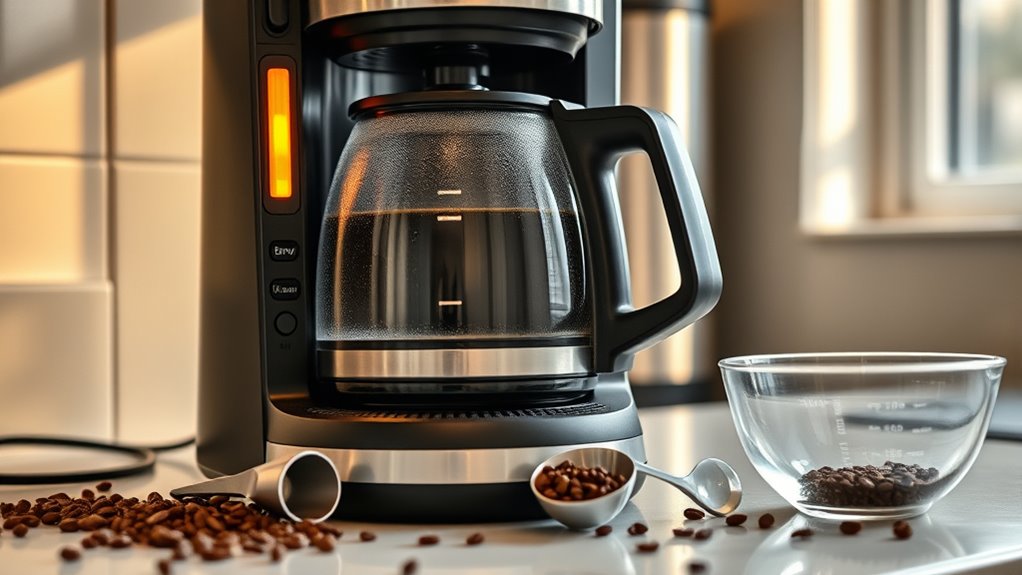
If your Mr. Coffee maker's brewing too slowly, start by checking for clogged water lines or mineral buildup in the reservoir. Clean the machine regularly, focusing on filters and removable parts. Make certain you're using the right grind size; medium grind is best. Also, inspect the water temperature and heating element for proper function. Finally, look for any damaged components that might be affecting performance. There are more tips ahead to guarantee your coffee brews quickly and efficiently.
Check for Clogged Water Lines
Before you immerse yourself in more complex repairs, it's essential to check for clogged water lines in your Mr. Coffee maker. Start by inspecting the water reservoir and verify it's free from any debris or mineral buildup. If you notice slow brewing, clogged filters might be the culprit. Remove and clean them, as they can trap particles and hinder water flow. Additionally, check the water line for blockages that could restrict the flow of water. A simple vinegar solution can help dissolve mineral buildup in the system. Run a cycle with this solution, followed by several rinses with clean water to make sure all residues are cleared. This maintenance step can restore your coffee maker's efficiency and prolong its lifespan.
Clean the Coffee Maker Regularly
To guarantee your Mr. Coffee maker operates efficiently, regular cleaning is essential. Coffee maker maintenance involves more than just rinsing the carafe; it requires deep cleaning to prevent buildup. Over time, mineral deposits from water can accumulate, affecting brewing speed and flavor. Performing regular descaling every few months will help eliminate these deposits. You can use a solution of equal parts vinegar and water for effective descaling. Run this mixture through a brewing cycle, followed by several cycles of clean water to flush out any residue. Don't forget to clean removable parts, like the filter basket, with warm soapy water. By committing to these cleaning practices, you'll verify your coffee maker remains in top condition and brews delicious coffee consistently. Additionally, regular maintenance, including cleaning with vinegar, can help prevent clogging and leaks.
Use the Right Coffee Grounds
Choosing the right coffee grounds is essential for achieving the perfect brew, as the grind size and type directly influence flavor extraction. If you're using a coarse coffee grind in a standard drip coffee maker, it can lead to slow brewing and weak flavors. Aim for a medium grind for ideal brew consistency; this allows water to flow through the grounds efficiently, promoting even extraction. Additionally, consider the coffee type—freshly ground beans yield better results than pre-ground options. If you want to maximize flavor and reduce brewing time, investing in a good grinder can make a significant difference. Remember, the right combination of grind size and freshness is key to a satisfying cup of coffee. A consistent, proper grind is essential for optimal taste in your brewing process.
Inspect the Water Temperature
One of the critical factors affecting your coffee's flavor is the water temperature during brewing. If your Mr. Coffee Maker isn't heating the water adequately, it can greatly impair brewing efficiency, leading to under-extracted coffee. To guarantee peak performance, check the following:
- Ideal Range: Water temperature should ideally be between 195°F to 205°F (90°C to 96°C).
- Heating Element: Inspect the heating element for any signs of malfunction or buildup that could hinder effective heating.
- Calibration: Consider calibrating your coffee maker if it consistently brews below the peak temperature range.
Replace Damaged or Worn Parts
While regular maintenance can extend the life of your Mr. Coffee maker, sometimes you need to replace damaged or worn parts to restore its performance. Start by inspecting the brew basket for cracks or blockages that could slow down brewing. If you notice any issues, it's crucial to replace the brew basket. Additionally, don't forget to replace filters regularly, as clogged or old filters can hinder water flow and affect brewing time. Check the water reservoir for any signs of wear, and replace it if necessary. By addressing these components, you'll guarantee your coffee maker operates efficiently, allowing you to enjoy your favorite brews without delay. Regularly maintaining and replacing these parts empowers your coffee experience.
Frequently Asked Questions
How Often Should I Descale My Mr. Coffee Maker?
You should descale your Mr. Coffee maker every three to six months, depending on water hardness. Regular descaling frequency is essential for ideal coffee machine maintenance, ensuring better performance and extending the machine's lifespan.
Can Using Tap Water Affect Brewing Speed?
You can't make an omelet without breaking eggs. Using tap water might introduce mineral buildup due to varying water hardness, which can slow brewing speed. Consider using filtered water to enhance performance and longevity of your coffee maker.
Is It Safe to Use Vinegar for Cleaning?
Yes, it's safe to use vinegar for cleaning your coffee maker. However, consider vinegar alternatives like citric acid or baking soda. Regular cleaning every month guarantees peak performance and longevity of your machine.
What Type of Coffee Filter Should I Use?
When it comes to coffee filters, you can't have your cake and eat it too. For clarity, paper filters provide a cleaner cup, while metal filters allow more oils for a richer flavor. Choose wisely!
How Do I Know if the Brew Cycle Is Complete?
To determine if the brew cycle's complete, look for completion indicators like the machine's light shutting off or a beep sound. These signals confirm your coffee's ready, allowing you the freedom to enjoy your perfect cup.