
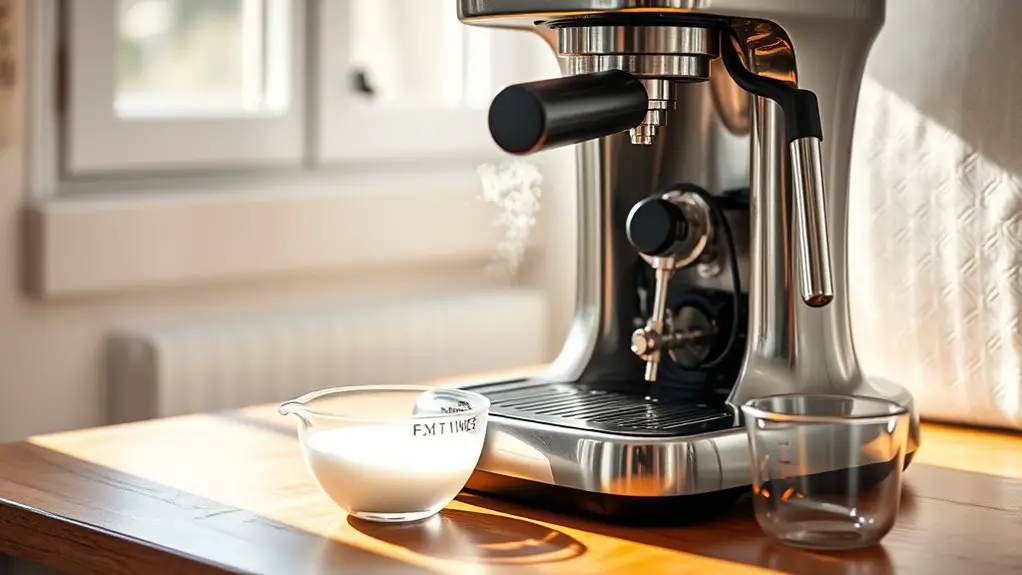
To fix a noisy coffee maker, start by identifying the source of the noise, such as the pump or heating element. Clean your coffee maker regularly to prevent mineral buildup and enhance performance. Check for loose parts or obstructions, especially in the water reservoir. Confirm you're using the right coffee grind size for your brewer. If noise persists, consider upgrading to a newer model with better technology for quieter operation. More solutions await you.
Identify the Source of the Noise
To effectively address the noise from your coffee maker, you first need to identify its source. Start by listening closely during the brewing process. Common noise sources include the pump, heating element, and grinder. If the pump is the culprit, it might be struggling to draw water, signaling a blockage or malfunction. Heating elements can produce rattling if they're loose or if mineral buildup is present. Vibration causes often stem from an uneven surface or loose components, which amplify sounds. Carefully inspect your coffee maker, ensuring all parts are securely fastened and the base is level. Documenting these findings will help you decide on the necessary repairs or adjustments, granting you the freedom to enjoy a quieter brewing experience.
Clean Your Coffee Maker Regularly
Identifying the source of noise is just the first step; maintaining a clean coffee maker is essential for peak performance and longevity. To guarantee ideal operation, establish a regular cleaning frequency—ideally, every month. Begin with the descaling process to remove mineral build-up, which can contribute to noise and inefficiency. Use a mixture of equal parts water and white vinegar, filling the reservoir and running a brew cycle. Afterward, run two cycles with fresh water to eliminate any residual vinegar taste. Don't forget to clean the carafe and filter basket with warm, soapy water after each use. By keeping your coffee maker clean, you'll not only reduce noise but also enhance the flavor of your coffee, giving you the freedom to enjoy a perfect brew every time. Regular descaling not only helps maintain performance but also preserves coffee flavor, preventing bitter or off tastes.
Check for Loose Parts
A noisy coffee maker can often be traced back to loose parts that vibrate during operation. Start by unplugging the machine for safety. Examine all visible screws and check their tightness; even a slight loosening can amplify noise. Using a screwdriver, tighten any loose screws you find, ensuring not to overtighten, as this can lead to damage. Next, inspect the alignment of all components. Misaligned parts can create additional noise. Make sure that the brew basket, drip tray, and any removable parts fit snugly into place. If you notice any parts that don't sit properly, adjust them until they align correctly. By addressing screw tightness and part alignment, you'll likely reduce the noise considerably.
Inspect the Water Reservoir
To minimize noise, start by inspecting the water reservoir for any obstructions. Verify there's no buildup or debris that could disrupt water flow. If you find any, clean the reservoir thoroughly to improve performance and reduce sound.
Check for Obstructions
Obstructions in the water reservoir can greatly contribute to a noisy coffee maker. Start by removing the reservoir and inspecting it for any obstruction types, such as mineral buildup, coffee grounds, or foreign objects. These common issues can impede water flow and create excessive noise during brewing. Carefully examine the inlet and outlet areas, as blockages often occur there. If you spot any debris, gently remove it to restore proper functionality. Additionally, check the reservoir's seals and joints for cracks or misalignments, which can also lead to noise. Ensuring that your water reservoir is clear of obstructions not only enhances your coffee maker's performance but also prolongs its lifespan.
Clean the Reservoir
While you've already checked for obstructions, it is essential to clean the reservoir regularly to maintain your coffee maker's efficiency. Neglecting reservoir maintenance can lead to poor water quality, affecting your brew. Start by emptying the reservoir and rinsing it with warm, soapy water. Use a soft cloth or sponge to scrub any deposits. For deeper cleaning, consider a mixture of equal parts vinegar and water, letting it sit for 30 minutes before rinsing thoroughly.
| Step | Purpose |
|---|---|
| Empty the reservoir | Prevents buildup of residue |
| Rinse with soap | Removes oils and contaminants |
| Vinegar solution | Breaks down mineral deposits |
| Rinse thoroughly | Guarantees no cleaning solution remains |
Use the Right Coffee Grind
Using the right coffee grind is essential for ideal brewing and reducing noise. A grind that's too coarse or too fine can disrupt the brewing process and create excess noise. Additionally, the freshness of your beans and the brewing method you choose greatly impact both flavor and sound levels during operation. It's also important to adjust grind size to ensure optimal performance and prevent issues with your coffee maker.
Grind Size Matters
Many coffee enthusiasts might not realize that the grind size of their coffee beans can greatly impact the noise level of their coffee maker. Using the wrong grind size can lead to inconsistent extraction, causing your grinder to work harder and create more noise. For ideal grind consistency, match your grind size to your brewing method—coarser grinds for French press and finer grinds for espresso. The type of grinder you use also plays a role; burr grinders provide a more uniform grind than blade grinders, which can lead to unwanted noise and uneven coffee extraction. By choosing the right grind size and grinder type, you'll not only enhance your coffee's flavor but also minimize the racket of your coffee-making process.
Freshness of Beans
The freshness of your coffee beans plays an essential role in both flavor and noise levels during brewing. To maintain grind freshness, store your beans in an airtight container, away from light, heat, and moisture. This preserves their essential oils and prevents them from becoming stale. Ideally, grind your beans just before brewing; this maximizes flavor extraction and minimizes noise caused by uneven grinding. If you use pre-ground coffee, make sure it's stored properly and consumed quickly to avoid losing its aromatic qualities. Remember, the right grind size and fresh beans will not only enhance your coffee experience but also contribute to quieter operation of your coffee maker. Prioritize these factors for the best results.
Brewing Method Impact
While selecting the right coffee grind is essential for flavor extraction, it also greatly impacts the noise level of your coffee maker. If you're using inappropriate grind sizes, like too coarse or too fine, it can lead to erratic brewing techniques that generate excess noise. A medium grind typically works best for most brewing methods, allowing for peak coffee extraction without straining the machine. When your coffee grounds are uniform, the water flows smoothly, reducing vibrations and noise. Experiment with your grinder settings to find the ideal grind for your specific machine. By doing so, you'll not only enhance your coffee's flavor but also create a quieter brewing experience, giving you the freedom to enjoy your morning routine in peace.
Consider Upgrading Your Coffee Maker
If you're tired of dealing with a noisy coffee maker, it might be time to contemplate upgrading to a quieter model. Coffee maker upgrades can greatly enhance your brewing experience. Here are three key benefits of upgrading:
- Reduced Noise Level: Newer models often utilize advanced technology to minimize operational noise, allowing for a more peaceful environment.
- Improved Brewing Efficiency: Upgraded machines typically feature better heating elements, resulting in quicker brew times without sacrificing flavor.
- Enhanced Features: Many modern coffee makers come with programmable settings, smart connectivity, and self-cleaning options, offering you greater convenience and control. Additionally, upgrading can help avoid issues like clogged water pipes that can lead to unwanted noise.
Frequently Asked Questions
What Are Common Causes of a Coffee Maker Making Gurgling Sounds?
If your coffee maker's making gurgling sounds, it's likely due to air trapped in the system, mineral buildup, or an issue during the brewing process. Regular maintenance can help prevent these disruptive noises.
How Often Should I Descale My Coffee Maker to Prevent Noise?
You might be wondering about descaling frequency. For peak performance, you should descale your coffee maker every three to six months. Regular maintenance tips can help you avoid unexpected noise and guarantee a smoother brewing experience.
Can Using Filtered Water Reduce Noise in My Coffee Maker?
Using filtered water can indeed help minimize noise in your coffee maker. The benefits of filtered water include reduced mineral buildup, enhancing performance and longevity. Implementing noise reduction techniques alongside this can further improve your brewing experience.
What Type of Coffee Maker Is Typically the Quietest?
When seeking serenity in your morning ritual, consider quiet coffee makers like pour-over or French press models, which naturally embrace noise reduction. They brew blissfully, allowing you to savor each moment without clatter disrupting your peace.
Is It Normal for a Coffee Maker to Make Loud Popping Sounds?
It's not unusual for a coffee maker to make loud popping sounds. However, it can indicate noisy equipment needing maintenance. Regular cleaning and descaling can prevent these noises, ensuring smoother operation and better coffee quality.