
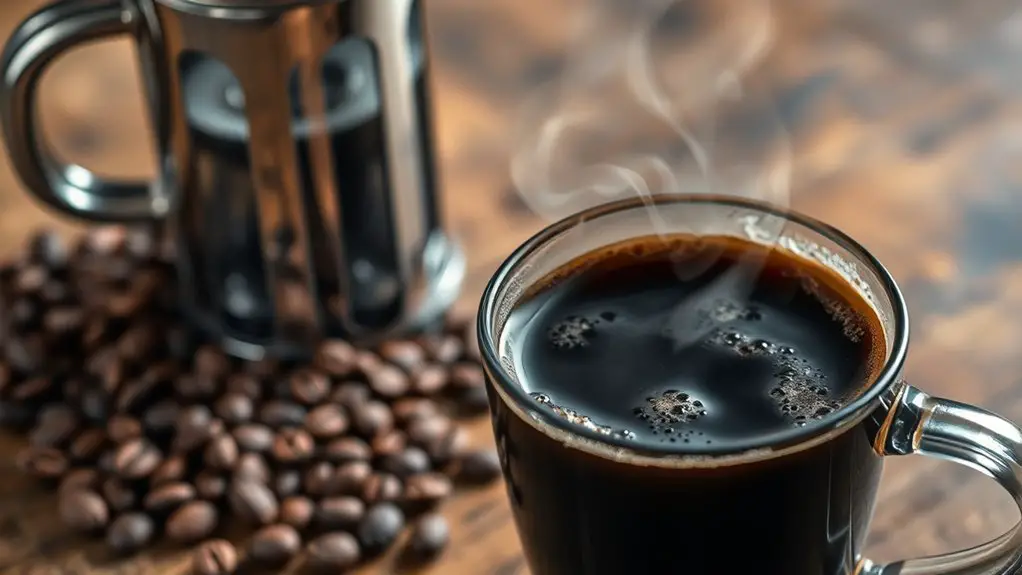
If your coffee tastes burnt, it's likely due to over-roasted beans or improper brewing methods. Over-brewing and excessively hot water can extract bitter compounds, overshadowing the coffee's natural flavors. Choosing high-quality beans, like 100% Arabica, and monitoring your water temperature are essential steps to prevent this. Also, pay attention to your grind size and brewing time to enhance extraction. To discover additional tips for a better coffee experience, keep exploring the brewing techniques available.
Understanding the Causes of Burnt Coffee
When you take a sip of coffee that tastes burnt, it can be frustrating, especially if you were looking forward to a rich, flavorful brew. Burnt coffee often results from over-roasting beans, leading to a loss of desirable coffee acidity and disrupting the flavor balance. The ideal roast should accentuate the coffee's natural characteristics, but when beans are scorched, they develop a bitter profile that overshadows the nuanced flavors you seek. Additionally, brewing temperatures too high can exacerbate this issue, extracting unwanted compounds that compromise taste. Understanding these factors empowers you to take control of your coffee experience, ensuring each cup not only meets but exceeds your expectations, allowing you the freedom to enjoy a perfectly balanced brew. To achieve this, always consider using freshly roasted coffee beans, as they maintain better flavor and aroma.
The Impact of Over-Brewing
When you over-brew your coffee, you're not just extending the extraction time; you're also increasing the likelihood of extracting bitter compounds. The temperature of the water plays an essential role here, as higher temperatures can exacerbate the burnt taste. Understanding these factors can help you achieve that perfect cup without the unpleasant aftertaste. Additionally, using the right grind size tailored for your brewing method can greatly influence the extraction process and overall flavor.
Brewing Time Importance
Although you may not realize it, the brewing time of your coffee plays a crucial role in determining its flavor profile. Over-brewing can lead to bitter notes, overshadowing the nuanced flavors you seek. Different brewing techniques require specific times for ideal flavor extraction, so it's important to find the right balance.
| Brewing Technique | Recommended Time |
|---|---|
| French Press | 4 minutes |
| Pour Over | 3-4 minutes |
| Espresso | 25-30 seconds |
| AeroPress | 2-3 minutes |
| Cold Brew | 12-24 hours |
Understanding these times can help you master your coffee-making process, allowing you to enjoy a rich, flavorful cup every time. So, pay attention to your brewing time!
Water Temperature Effects
While many factors contribute to the flavor of your coffee, water temperature stands out as a crucial element that can greatly impact the brewing process. When water's too hot, it can lead to over-extraction, pulling out bitter compounds and leaving you with that burnt taste. Ideally, you want your water temperature to hover between 195°F and 205°F for peak extraction without ruining the balance.
Moreover, water consistency plays an essential role; the mineral balance in your water affects how flavors are extracted. Soft water can result in a flat brew, while hard water may amplify bitterness. So, pay attention to your water temperature and quality to reveal the full potential of your coffee, ensuring a delightful experience every time.
Choosing the Right Coffee Beans
Choosing the right coffee beans is essential for brewing a cup that avoids the burnt taste often associated with over-roasted varieties. Start by considering the coffee origin, as beans from different regions offer unique flavor profiles. For instance, Ethiopian beans often bring fruity and floral notes, while Colombian varieties can deliver a smoother, nuttier taste. Opt for medium roast beans to strike a balance between flavor development and avoiding the bitterness of darker roasts. Don't shy away from trying single-origin coffees, as they can provide a more distinct and enjoyable taste experience. By understanding the origins and flavor profiles, you can make informed choices that lead to a satisfying cup, free from that unwanted burnt flavor. Additionally, selecting 100% Arabica coffee beans can significantly enhance the overall flavor and reduce bitterness in your brew.
The Role of Water Temperature
When brewing coffee, the water temperature plays a vital role in determining flavor. If you brew at ideal temperatures, typically between 195°F and 205°F, you can extract the rich, nuanced flavors of your beans. However, overheating the water can lead to a burnt taste, masking the coffee's true character and leaving you with a less enjoyable cup.
Ideal Brewing Temperatures
The perfect cup of coffee hinges considerably on the water temperature used during brewing, typically falling between 195°F and 205°F (90°C to 96°C). Using these ideal brewing techniques allows for maximum extraction of flavors, ensuring you enjoy a balanced, aromatic brew.
| Water Temperature | Flavor Profile | Extraction Quality |
|---|---|---|
| 195°F (90°C) | Bright, fruity notes | Balanced extraction |
| 200°F (93°C) | Rich, full-bodied | Ideal for medium roasts |
| 205°F (96°C) | Intense, bold flavors | Potential bitterness |
Experimenting within this range can reveal unique tastes in your coffee. Remember, using the right temperature not only elevates your brew but also enhances your coffee experience.
Impact of Overheating
Even if you're using the right brewing temperature initially, overheating the water can greatly alter the taste of your coffee. When water reaches excessively high temperatures, the overheating effects become apparent, leading to thermal degradation of the coffee's delicate compounds. This process breaks down aromatic oils and flavors, resulting in that burnt taste you might experience. You may not realize it, but boiling water can strip away the nuanced flavors you crave, leaving behind bitterness and astringency. To preserve the integrity of your brew, aim for a consistent temperature between 195°F and 205°F. Remember, your coffee deserves better than the harsh consequences of overheating—treat it with the care it needs for a genuinely satisfying cup.
The Importance of Grind Size
Grind size plays an essential role in determining the flavor profile of your coffee, influencing everything from extraction efficiency to bitterness. When you grind your beans, achieving grind consistency and grind uniformity is imperative. If your grind is too coarse, the water will flow through too quickly, leading to under-extraction and a sour taste. Conversely, a fine grind can cause over-extraction, resulting in that burnt flavor you're trying to avoid. To maximize flavor, aim for a uniform grind that matches your brewing method. A burr grinder can help you achieve this precision. Experimenting with different grind sizes can empower you to access the full potential of your coffee, giving you the freedom to enjoy a perfectly balanced cup. For optimal results, set your grind size to position 5 on the Breville Barista Express to achieve a balanced extraction without bitterness.
Brewing Methods That Prevent Burnt Flavors
While various brewing methods can influence the taste of your coffee, some are particularly effective at preventing that undesirable burnt flavor. Cold brew, for instance, uses a longer extraction time with cold water, which minimizes the heat exposure that often leads to a burnt taste. This method highlights the coffee's natural sweetness and complex flavors, offering a smoother cup. On the other hand, pour over brewing allows for more control over water temperature and pouring technique. By maintaining a lower temperature and a steady flow, you can extract flavors without scalding the coffee grounds. Both methods empower you to enjoy a cleaner, more flavorful cup, ensuring your coffee experience is as liberating and enjoyable as it should be. Additionally, choosing lower calorie options can also enhance your overall enjoyment of coffee beverages without compromising flavor.
Cleaning Your Coffee Equipment
To truly enhance your coffee experience, maintaining clean equipment is just as important as choosing the right brewing method. Over time, oils and residue build up in your coffee maker, leading to off-flavors and even burnt tastes. Regular equipment maintenance is essential. Start by disassembling your machine and soaking removable parts in warm, soapy water. For stubborn deposits, consider using descaling techniques with a mixture of water and vinegar or specialized descalers like CLR, which is effective for tough lime and calcium deposits. Rinse thoroughly to avoid any lingering tastes. Don't forget about your grinder; its blades can trap oils that affect flavor. By keeping your coffee equipment clean, you'll guarantee each cup is a pure reflection of the beans' true essence, free from unwanted burnt notes.
Adjusting Your Brewing Time and Ratios
Adjusting your brewing time and ratios can considerably impact the flavor profile of your coffee, especially if you're aiming to eliminate that burnt taste. By fine-tuning these elements, you can achieve a balanced brew that highlights the coffee's unique characteristics rather than masking them. Additionally, using premium dark roasted coffee beans can enhance the flavors and minimize any burnt notes.
| Brewing Ratio | Timing Adjustments | Flavor Outcome |
|---|---|---|
| 1:15 | 3 minutes | Bright and balanced |
| 1:18 | 4 minutes | Smooth and mellow |
| 1:12 | 2.5 minutes | Bold and intense |
| 1:20 | 5 minutes | Weak and watery |
Experimenting with these brewing ratios and timing adjustments lets you discover your perfect cup. Don't hesitate to play around; freedom in coffee brewing leads to delightful outcomes!
Frequently Asked Questions
Can Burnt Coffee Harm My Health?
While burnt coffee might seem harmless, it can pose health risks due to harmful compounds formed during over-roasting. You should be aware of these potential dangers, especially if you consume it regularly. Enjoy your coffee wisely!
How Long Do Coffee Beans Last Before Tasting Burnt?
Coffee beans generally last about two weeks post-roasting before freshness indicators decline. Improper roasting techniques can accelerate this process, leading to burnt flavors. Storing them correctly can help maintain their delicious taste longer.
Does Adding Milk Mask Burnt Flavors?
Think of milk as a gentle veil, softening harsh edges. While it can mask burnt flavors, milk alternatives might enhance the overall taste, providing a balanced flavor profile that encourages your palate's freedom to explore.
What's the Best Way to Store Coffee Beans?
To guarantee coffee storage maintains freshness, keep beans in an airtight container in a cool, dark place. Avoid the fridge; instead, opt for a pantry. Following these freshness tips can enhance your coffee experience greatly.
Can Burnt Coffee Affect My Mood or Energy Levels?
You know what they say, "You are what you drink." Burnt coffee can lead to mood swings and energy crashes, affecting your day. Choosing quality brews can keep your spirits high and energy steady.