
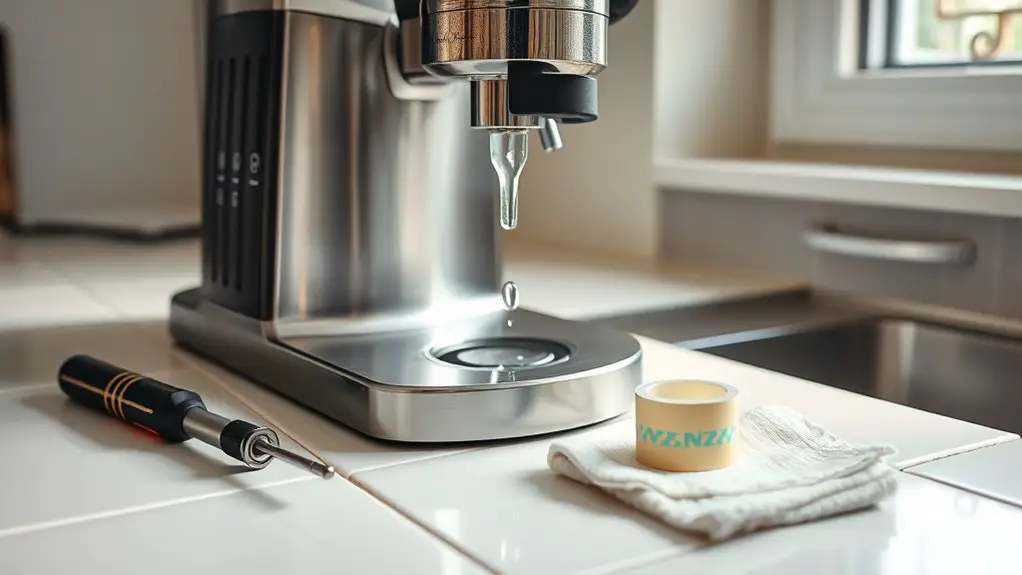
To fix a leaky coffee maker, first identify the leak source by checking the water reservoir for cracks and inspecting the brew basket for clogs or misalignments. Examine the carafe for seal wear or damage, and verify all components are properly assembled. Clean the machine regularly, focusing on the water reservoir and brew basket, to prevent buildup. Finally, run a water cycle without coffee to test for leaks and verify everything is secure. You might find more tips on maintenance and troubleshooting.
Identify the Source of the Leak
Have you ever wondered why your coffee maker is leaking? Identifying the source of the leak is essential for effective leak detection. Start by examining the machine's base and surrounding area for any signs of moisture. Check the brew basket and carafe for cracks or misalignments. If you notice water pooling, it's time to troubleshoot: verify all components are properly seated. Inspect the water lines and connections for wear or damage. Pay attention to the drip tray; a clogged or misaligned tray can cause overflow. Finally, run a cycle without coffee to pinpoint leaks while the machine's operating. Additionally, ensure you are not overfilled water reservoir beyond the maximum capacity to prevent unnecessary leaks. By following these troubleshooting tips, you can efficiently determine the cause of the leak and take steps toward fixing your coffee maker.
Check the Water Reservoir
Checking the water reservoir is an essential step in diagnosing a leaky coffee maker. Start by evaluating the water level and confirming it's not overfilled, as this can lead to spills. Follow these steps for effective reservoir maintenance:
- Inspect for Cracks: Look for any visible cracks or damage that could cause leaks.
- Check the Seal: Confirm the seal around the reservoir is intact and functioning properly.
- Clean the Reservoir: Regularly clean your reservoir to prevent mineral buildup, which can lead to improper sealing.
- Replace if Necessary: If you find significant damage, replacing the reservoir might be essential to restore functionality. Additionally, be aware that regular maintenance is crucial to prevent future leaks and ensure the machine operates smoothly.
Inspect the Brew Basket
When inspecting the brew basket, start by checking for any clogs that might be obstructing water flow. A buildup of coffee grounds or oils can create blockages, leading to leaks. Additionally, confirm the brew basket fits securely in its place; an improper fit can cause overflow during the brewing process. Regularly cleaning and descaling your machine can help prevent nozzle clogging and other issues that lead to leaks.
Check for Clogs
One essential step in resolving a leaky coffee maker is inspecting the brew basket for clogs. Clogged pipes can often stem from coffee grounds that haven't been fully cleared away. Here's how to check for clogs effectively:
- Remove the brew basket: Take it out and inspect for any visible blockages.
- Rinse thoroughly: Use warm water to rinse away any stuck coffee grounds.
- Check the filter: Verify the filter isn't damaged or overly saturated, as this can cause leaks.
- Inspect the water reservoir: Look for any buildup in the reservoir that could affect water flow.
Ensure Proper Fit
Guaranteeing a proper fit of the brew basket is essential for preventing leaks in your coffee maker. Start by inspecting the brew basket for any signs of damage or warping that could compromise the seal integrity. If the basket doesn't sit snugly in place, you might need to make fit adjustments. Check for any obstructions or debris that may be preventing a tight seal. Make sure the basket is correctly aligned with its housing to avoid gaps that could lead to leaks. If necessary, consider replacing the brew basket altogether. Regularly evaluating the fit guarantees your coffee maker operates efficiently, giving you the freedom to enjoy your favorite brews without the hassle of leaks.
Examine the Carafe
The carafe is a crucial component of your coffee maker, and a thorough examination can reveal potential sources of leaks. Start by guaranteeing effective carafe maintenance and consider if a carafe replacement is necessary. Here are some key areas to inspect:
- Seal Integrity: Check the lid seal for wear or deformation that could cause leaks.
- Spout Condition: Inspect the spout for any blockages or damage that may impede proper pouring.
- Carafe Surface: Look for scratches or stains that could harbor bacteria or affect performance.
- Fit with Base: Ascertain the carafe fits securely on the coffee maker base, as an improper fit can lead to spills. Additionally, make sure to inspect for any damaged water reservoir issues, as this can also contribute to leakage during brewing.
Look for Cracks and Damage
While inspecting your coffee maker, don't overlook the potential for cracks and damage that can lead to leaks. A thorough crack inspection and damage assessment are essential in ensuring your machine operates correctly. Start by examining the exterior and interior surfaces for any visible damage.
| Area to Inspect | Common Issues | Solutions |
|---|---|---|
| Water Reservoir | Cracks, holes | Replace the reservoir |
| Brew Basket | Warping, fractures | Replace the brew basket |
| Heating Element | Corrosion, breaks | Consult a professional |
Additionally, regular maintenance can help prevent issues such as internal mineral buildup that may contribute to leaks.
Clean the Coffee Maker
To prevent leaks, you should establish a regular cleaning schedule for your coffee maker. Using a vinegar solution helps to remove mineral buildup that can affect performance, while regularly checking the water reservoir guarantees it's free of clogs. By staying proactive with maintenance, you can extend the life of your machine and maintain ideal brewing conditions. Regular cleaning prevents calcium deposits and limescale build-up that can lead to leaks.
Regular Cleaning Schedule
Establishing a regular cleaning schedule for your coffee maker is essential to prevent leaks and guarantee peak performance. By adhering to a cleaning frequency that suits your usage, you can extend your coffee maker's lifespan and make certain that every cup tastes great. Here are some maintenance tips to keep in mind:
- Daily Rinse: After each use, empty and rinse the carafe and brew basket to eliminate residue.
- Weekly Deep Clean: Perform a thorough clean of removable parts in warm, soapy water.
- Monthly Vinegar Cycle: Run a cycle with a vinegar solution to descale the internal components.
- Yearly Checkup: Inspect hoses and seals for wear, replacing any parts as necessary.
Stick to this schedule, and your coffee maker will thank you!
Use Vinegar Solution
One effective method to clean your coffee maker and prevent leaks is by using a vinegar solution. Start by mixing equal parts of water and white vinegar to create a powerful cleaning solution. Pour this mixture into the water reservoir, then run a brewing cycle without coffee grounds. This allows the vinegar to circulate through the system, breaking down mineral buildup and residue. After the cycle, let the solution sit for about 15 minutes to maximize vinegar benefits. Finally, run two or three cycles with fresh water to remove any lingering vinegar taste. Regular use of this cleaning solution not only helps maintain your coffee maker's performance but also extends its lifespan, ensuring your coffee stays delicious.
Check Water Reservoir
A clean water reservoir is essential for preventing leaks in your coffee maker. Regular reservoir maintenance helps guarantee peak performance and longevity. Here's what you need to do:
- Inspect the Reservoir: Check for cracks or damage that could lead to leaks.
- Clean with Vinegar: Run a vinegar solution through the reservoir to eliminate mineral buildup affecting the water level.
- Rinse Thoroughly: After cleaning, rinse the reservoir with fresh water to remove any vinegar residue.
- Monitor Water Level: Always fill the reservoir to the recommended level, avoiding overfilling, which can cause spills.
Test for Proper Assembly and Seal
Before diving into repairs, it's essential to verify that your coffee maker is properly assembled and sealed, as even minor misalignments can lead to leaks. Start by disassembling the coffee maker and inspecting each component for assembly issues. Pay special attention to the water reservoir and brew basket; make sure they're securely in place. Next, check the gaskets and seals for any signs of wear or damage. Proper seal integrity is important for preventing leaks during operation. If any parts feel loose or damaged, consider replacing them. Additionally, regular descaling can help maintain the integrity of your seals and prevent future leaks. Once you've reassembled the coffee maker, run a water cycle without coffee to test for leaks. If everything's secure, you're back in business and ready to enjoy a leak-free brew.
Frequently Asked Questions
Can I Use Vinegar to Clean a Leaky Coffee Maker?
Yes, you can use a vinegar solution to clean your coffee maker. Regular cleaning frequency helps prevent leaks. Just mix equal parts vinegar and water, run it through, and rinse thoroughly for peak performance and safety.
How Often Should I Clean My Coffee Maker?
You should clean your coffee maker every month for peak performance. Regular maintenance tips include descaling and deep cleaning, ensuring your machine brews the best flavor while preventing buildup that could lead to leaks or malfunctions.
What Type of Coffee Maker Has the Most Leaks?
When you're exploring coffee makers, drip coffee machines often leak more than espresso machines. Their intricate brew systems can lead to spills. Regular maintenance helps keep your freedom in enjoying that perfect cup without the mess.
Does Using Hard Water Cause Leaks in Coffee Makers?
Yes, using hard water can cause leaks in your coffee maker. The minerals in hard water build up over time, leading to clogs and increased pressure, which may result in leaks or malfunctioning components.
Can a Leaky Coffee Maker Affect the Taste of Coffee?
Yes, a leaky coffee maker can negatively impact coffee flavor during the brewing process. Water escaping can lead to inconsistent extraction, affecting taste balance and resulting in a weaker, less flavorful cup of coffee.