
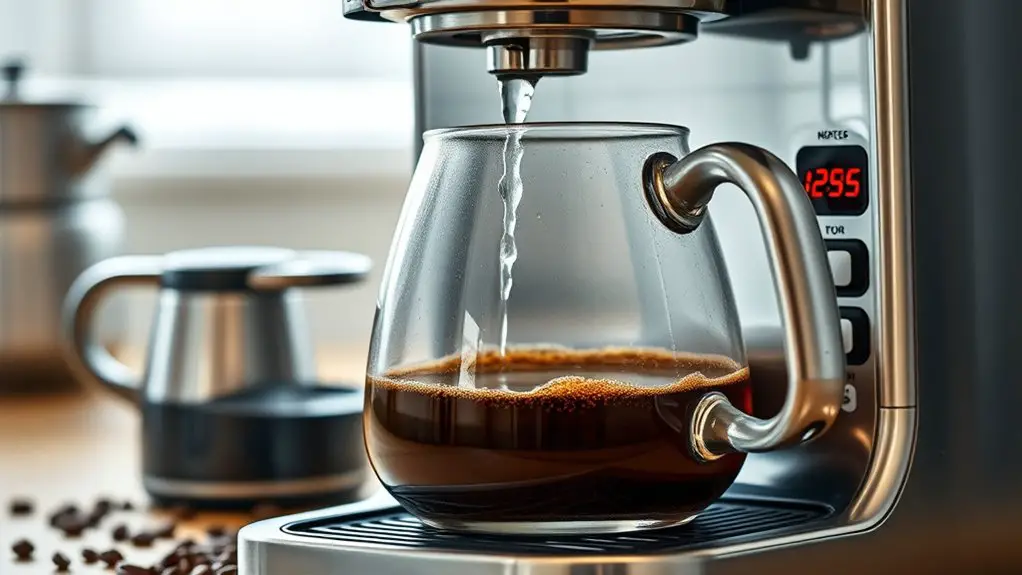
If your coffee maker is brewing too slowly, it could be due to several issues. Mineral buildup from hard water can clog parts and slow water flow, so descaling regularly is key. Additionally, using the wrong grind size or incorrect coffee-to-water ratios can hinder extraction. Finally, check the water temperature; improper heating can also cause slower brewing. For more insight into resolving these problems, there's more you can explore on maintaining your coffee maker.
Mineral Buildup and Clogs
When you notice your coffee maker struggling to brew or producing a weak cup of coffee, it may be due to mineral buildup and clogs. Over time, minerals from hard water create deposits inside your machine, obstructing the flow of water. These mineral deposits can lead to longer brewing times and diminished coffee flavor. To combat this issue, regularly use descaling solutions specifically designed for coffee makers. These solutions effectively break down the buildup, restoring peak performance. Simply follow the manufacturer's instructions for application, and make sure you run a couple of water cycles afterward to rinse any residues. By maintaining your coffee maker in this way, you can enjoy the freedom of consistently excellent coffee without the hassle of frequent repairs. Additionally, it is recommended to descale your machine every 3 to 6 months to ensure optimal performance.
Incorrect Coffee Grind Size
When it comes to brewing coffee, the grind size plays a vital role in the extraction process. A coarse grind typically requires a longer brew time, while a fine grind can lead to over-extraction in a shorter period. Understanding the relationship between grind size and brew time is essential for achieving the desired flavor profile. For optimal results, aim for a medium grind consistency that balances flavor and compatibility with your Keurig machine.
Coarse vs. Fine Grind
The grind size of your coffee beans can greatly impact the extraction process, affecting the flavor and quality of your brew. When you use a coarse grind, water flows through the grounds quickly, which can result in under-extraction and a weak flavor. Conversely, a fine grind increases the surface area, allowing for better extraction but can lead to over-extraction if the brew time isn't adjusted. Achieving grind consistency is essential for extraction balance; uneven grounds can create a muddled taste. If you're experiencing slow brewing, check if your grind size aligns with your coffee maker's requirements. Finding the right grind size will enhance your brewing experience, giving you the freedom to enjoy the rich flavors your coffee has to offer.
Brew Time Impact
If your coffee grind size isn't matched to your brewing method, you might notice a significant impact on brew time and overall flavor. Coarse grinds often lead to longer brew times because water flows through them more quickly, reducing extraction efficiency. Conversely, fine grinds can cause brew time variability, as they may clog filters and slow down water flow, leading to over-extraction and bitterness. To achieve ideal extraction, adjust your grind size according to your brewing method—coarse for French press and fine for espresso. This balance guarantees you maximize flavor while minimizing brew time issues. Ultimately, understanding the relationship between grind size and extraction efficiency empowers you to brew coffee that meets your taste preferences without unnecessary delays.
Insufficient Water Temperature
When your coffee maker isn't brewing at the proper temperature, it's often due to heating element issues or a malfunctioning thermostat. If the heating element isn't functioning correctly, it may not heat the water adequately. Additionally, a faulty thermostat can fail to regulate the temperature, leading to consistently lukewarm coffee.
Heating Element Issues
Although a coffee maker's heating element is designed to bring water to the ideal brewing temperature, issues may arise that prevent it from functioning properly. If the heating element isn't reaching the necessary temperature, your coffee will brew slowly, resulting in a subpar cup. Regular heating element maintenance is vital; mineral buildup from hard water can hinder performance. You might want to descale your machine periodically to keep it in top shape. If problems persist, heating element replacement could be necessary. Check your manufacturer's guidelines for compatible parts and installation instructions. Remember, a well-maintained heating element guarantees your coffee maker brews efficiently, allowing you to enjoy your favorite brew without delay.
Thermostat Malfunction
A malfunctioning thermostat can lead to insufficient water temperature, ultimately compromising the quality of your coffee. When the thermostat isn't calibrated correctly, you might experience inconsistent brewing temperatures, affecting extraction and flavor.
| Issue | Possible Cause | Solution |
|---|---|---|
| Low coffee temperature | Faulty thermostat | Check and recalibrate |
| Inconsistent brewing | Thermostat malfunction | Replace the thermostat |
| Slow brewing speed | Improper calibration | Perform regular checks |
To maintain temperature consistency, regularly monitor your coffee maker's thermostat calibration. If you notice persistent issues, consider replacing the thermostat to restore peak performance. A properly functioning thermostat is essential for brewing a satisfying cup of coffee.
Overfilled Coffee Grounds
Overfilling coffee grounds is a common issue that can lead to several brewing problems. When you exceed your coffee maker's brewing capacity, it can cause slow extraction and poor flavor. Using the wrong coffee ground types exacerbates this issue, leading to a clogged filter and inefficient brewing.
Overfilling coffee grounds can hinder extraction and flavor, leading to clogged filters and inefficient brewing.
Here are some key points to take into account:
- Measure your coffee: Stick to recommended coffee-to-water ratios to guarantee ideal extraction.
- Know your coffee ground types: Coarse grounds require different brewing techniques than fine grounds.
- Clean your equipment: Regularly clear out any buildup that might restrict flow due to overfilled grounds. Additionally, regrinding coffee grounds can lead to a loss of flavor, making it crucial to use the right grind size for optimal brewing.
Old or Faulty Coffee Maker
When your coffee maker starts showing signs of age or malfunction, it can greatly impact your brewing experience. Aged machines often struggle with heating elements, leading to slower brew times and inconsistent temperatures. You might notice your coffee isn't as hot or flavorful as it used to be, signaling the need for assessment. Regular maintenance can extend your coffee maker's lifespan, but if it's over five years old, you might be looking at replacement options. Consider newer models with advanced technology for improved brewing efficiency. Investing in a reliable coffee maker not only enhances your daily brew but also grants you the freedom to enjoy coffee without the hassle of frequent repairs. Additionally, regular descaling can help maintain optimal performance and prevent issues related to limescale buildup. Don't hesitate to explore your options!
Using the Wrong Coffee-to-Water Ratio
Age and wear aren't the only factors that can negatively affect your coffee brewing experience; using the wrong coffee-to-water ratio can lead to subpar results as well. Achieving the perfect brewing balance is vital for ideal flavor extraction. If your coffee maker is brewing too slowly, consider these points:
Age and wear aren't the only culprits; incorrect coffee-to-water ratios can hinder your brewing experience and flavor extraction.
- Coffee Ratios: A common guideline is 1 to 2 tablespoons of coffee per 6 ounces of water.
- Under-Extraction: Too little coffee can cause weak, watery coffee.
- Over-Extraction: Too much coffee can clog your machine and slow the brewing process.
Adjusting your coffee ratios can notably enhance your brewing experience. A well-balanced brew not only improves flavor but also guarantees your coffee maker operates efficiently, allowing you to enjoy your coffee without delays.
Maintenance and Cleaning Practices
Although it might seem tedious, regular maintenance and cleaning practices are essential for keeping your coffee maker in ideal condition. Establish a maintenance schedule that includes monthly cleanings to prevent buildup of coffee oils and minerals, which can slow brewing. Your cleaning frequency should increase if you use hard water, as mineral deposits accumulate faster. For a thorough clean, run a solution of equal parts vinegar and water through the machine, followed by several cycles of plain water. Don't forget to clean removable parts like the carafe and filter basket regularly, as these can harbor bacteria. By prioritizing these practices, you'll not only enhance your coffee's flavor but also extend the lifespan of your coffee maker, granting you the freedom to enjoy more perfect brews. Additionally, regular cleaning with a vinegar solution can help prevent clogging and leaks that may affect performance.
Frequently Asked Questions
Can the Type of Coffee Bean Affect Brewing Speed?
Yes, the type of coffee bean affects brewing speed. A finer coffee grind increases extraction, while brewing temperature also plays a vital role. If it's too low, extraction slows, leading to longer brewing times.
How Often Should I Descale My Coffee Maker?
Just as a gardener tends to their plants, you should descale your coffee maker every three to six months. This maintenance tip guarantees peak performance and flavor, preserving your brewing freedom for each delightful cup.
Is It Normal for My Coffee Maker to Make Noise?
It's normal for your coffee maker to make sounds during operation. The brewing noise often indicates water circulation and heating. However, unusual or excessive coffee maker sounds could signal a need for maintenance or inspection.
Can Using Filtered Water Improve Brewing Time?
Using filtered water can enhance water quality, promoting better brewing efficiency. Impurities in tap water may slow extraction, so opting for filtered water guarantees a cleaner taste and potentially faster brewing, giving you that perfect cup sooner.
What Should I Do if My Coffee Tastes Burnt?
If your coffee tastes burnt, check the brewing temperature; it might be too high. Lowering it can prevent over-extraction, which causes that burnt flavor. Experiment with different settings to find your ideal brew.