
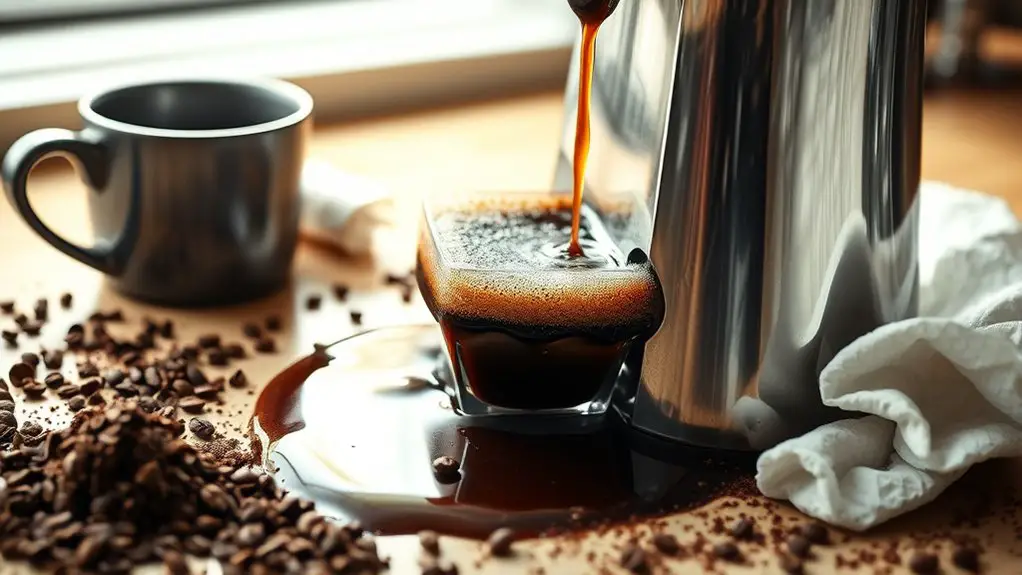
If your coffee maker is overflowing, it could be due to several issues. Clogged filters restrict water flow, while using the wrong coffee-to-water ratio can cause spills. Overfilling the water reservoir is another common mistake. Additionally, a faulty brew basket or malfunctioning components can lead to leaks and overflow. To optimize your brewing experience and minimize disruptions, it is crucial to address these potential causes and consider solutions. There's more to explore about maintaining your coffee maker efficiently.
Clogged Coffee Filter
A clogged coffee filter is often a primary culprit behind an overflowing coffee maker. When you brew your coffee, the filter's job is to separate coffee grounds from the liquid. If it's clogged, water can't flow through efficiently, causing an overflow. This often happens when you use too many coffee grounds or if the filter is old and hasn't been properly maintained. Regular filter maintenance is essential for ideal brewing. Make sure to replace disposable filters frequently, and consider rinsing reusable ones to remove accumulated oils and particles. By keeping your filter clean and ensuring you're using the right amount of coffee grounds, you can enjoy a perfectly brewed cup without the mess of overflow. Additionally, using high-quality filters can significantly improve water flow and reduce the risk of clogging.
Incorrect Coffee-to-Water Ratio
If your coffee maker is overflowing, the coffee-to-water ratio might be off. Using the ideal measurements is essential, as common mistakes in this ratio can lead to excess brew spilling over. You may also need to adjust the ratio based on your preferred brew strength to achieve the best results. For instance, a coffee pot labeled as 12 cups typically holds 60 ounces of liquid, meaning the measurements must be carefully calculated to prevent overflow.
Ideal Coffee Measurements
Many homebrewers overlook the importance of the coffee-to-water ratio, which can lead to an overflowing coffee maker. To achieve the ideal balance, use measurement tools like a scale or a coffee scoop. A general guideline is to use one to two tablespoons of coffee per six ounces of water, depending on your taste preferences. It's essential to take into account the coffee grind as well; coarser grinds require more water, while finer grinds need less. If you're aiming for freedom in your brewing, don't hesitate to experiment, but always keep those ratios in mind. Accurate measurements guarantee a smooth brewing process and prevent excess overflow, allowing you to enjoy your coffee without the mess.
Common Ratio Mistakes
Even with careful measurements, common ratio mistakes can still lead to an overflowing coffee maker. The incorrect coffee-to-water ratio is often the culprit, stemming from various factors. Here are some common pitfalls:
- Too much coffee grind: Using more coffee than recommended can saturate the water, causing overflow.
- Brew time miscalculations: If you're brewing too long, the coffee can over-extract, leading to a clogged filter and spills.
- Wrong water volume: Adding insufficient water can result in a concentrated brew that overflows when the coffee expands.
To avoid these issues, stick to the ideal ratio, adjust your grind size, and monitor your brew time closely. This way, you can enjoy your coffee without the mess.
Adjusting for Brew Strength
While adjusting for brew strength, it's crucial to maintain the correct coffee-to-water ratio; otherwise, you risk an overflow. When you make brew strength adjustments, using too much coffee can lead to a clogged filter and excess grounds. Aim for a 1:15 ratio of coffee to water for balanced flavor. If you want a stronger brew, slightly increase the coffee without drastically changing the ratio. This approach allows for coffee flavor enhancement without compromising the brewing process. Remember, consistency is key; sticking to a measured approach guarantees your coffee maker operates smoothly. By finding that sweet spot, you'll enjoy a rich cup without the mess of overflow, maximizing both flavor and experience.
Faulty Brew Basket
If your coffee maker is overflowing, a faulty brew basket might be the culprit. Clogs or damage to the brew basket seal can disrupt the brewing process, leading to excess coffee and water spilling over. Additionally, make certain you're using the correct coffee-to-water ratio to prevent further issues. Regular maintenance and cleaning can help address clogged exit needles that may contribute to brewing problems.
Clogged Brew Basket
A clogged brew basket can lead to overflow issues in your coffee maker, as it prevents water from flowing through the coffee grounds properly. Regular brew basket maintenance is essential to guarantee efficient brewing and prevent messes. Here are some effective cleaning techniques to keep your brew basket in top shape:
- Rinse after each use: Remove coffee grounds and rinse the basket to prevent buildup.
- Soak in vinegar: For deeper cleaning, soak the brew basket in a mixture of equal parts water and vinegar, then rinse thoroughly.
- Use a soft brush: Gently scrub with a brush to dislodge stubborn coffee residue without damaging the basket.
Incorrect Coffee-to-Water Ratio
An overflowing coffee maker can also result from an incorrect coffee-to-water ratio. When you use too much coffee, it can lead to excessive pressure in the brew basket, causing overflow. On the flip side, too little coffee results in weak coffee strength, impacting your brew experience. Maintaining the right balance is essential, especially at ideal brew temperature.
| Coffee Amount | Water Amount | Result |
|---|---|---|
| 2 tablespoons | 6 ounces | Balanced brew |
| 4 tablespoons | 6 ounces | Overflow risk |
| 2 tablespoons | 12 ounces | Weak coffee strength |
| 3 tablespoons | 8 ounces | Ideal coffee strength |
Damaged Brew Basket Seal
When the brew basket seal is damaged, it can lead to significant overflow issues during the brewing process. A faulty seal can cause hot water to leak out, resulting in a messy kitchen and wasted coffee. To prevent this, consider the following:
- Inspect the brew basket for any visible cracks or wear.
- Verify the seal is properly seated in its groove.
- Perform a seal replacement if necessary.
Regular maintenance of your coffee maker can help avoid these problems. If you notice inconsistent brewing or leaks, don't hesitate to check the brew basket seal. Fixing it quickly can save you from larger issues down the line, allowing you to enjoy your coffee without the hassle of overflow messes.
Overfilled Water Reservoir
If you've ever noticed your coffee maker overflowing, one common culprit might be an overfilled water reservoir. It's essential to maintain the proper water level to guarantee ideal brewing and avoid messy spills. Most coffee makers have a marked fill line; exceeding this can lead to overflow during the brewing process.
For effective overflow prevention, always check the water level before starting your brew cycle. If you're unsure about your machine's capacity, consult the user manual for guidance. Additionally, using a measuring cup can help you accurately fill the reservoir. By being mindful of how much water you add, you'll not only protect your kitchen from spills but also enjoy a perfectly brewed cup of coffee every time.
Using the Wrong Type of Coffee
While managing the water level is important for preventing overflow, using the wrong type of coffee can also contribute to brewing issues. If you're not careful about your coffee grind and freshness, you might end up with a mess. Here are a few factors to take into account:
- Coffee Grind: A grind that's too fine can clog your filter, causing overflow.
- Coffee Freshness: Stale coffee can expand during brewing, leading to excess pressure and potential spills.
- Coffee Type: Some blends may produce more oils or foam, impacting how your coffee brews. Additionally, using oily coffee beans can lead to excess buildup in your coffee maker, further increasing the likelihood of overflow.
Malfunctioning Machine Components
Although many coffee makers are designed for reliable performance, malfunctioning machine components can lead to overflow issues that disrupt your brewing experience. A common culprit is a malfunctioning pump. If the pump isn't functioning properly, it may force too much water into the brew basket too quickly, causing spills. Additionally, worn out gaskets can compromise seals within the machine, allowing water to escape and overflow. Regular maintenance is essential—check the pump's operation and inspect gaskets for wear. Replacing these components can restore your coffee maker's efficiency and prevent unwanted messes. By addressing these issues promptly, you can enjoy a hassle-free brewing experience and reclaim the freedom to savor your favorite cup of coffee without worry. Additionally, regular cleaning routines can help maintain optimal performance and reduce the risk of overflow.
Frequently Asked Questions
How Often Should I Clean My Coffee Maker?
You should clean your coffee maker regularly for ideal coffee maker maintenance. Aim for a thorough cleaning every month, adjusting the cleaning frequency based on usage. This guarantees better taste and extends the life of your machine.
Can Using Old Coffee Beans Cause Overflow?
Using stale beans can indeed cause brewing issues. In fact, over 60% of coffee drinkers report a decline in flavor with old beans. Freshness is key for ideal extraction and to prevent overflow in your coffee maker.
What Type of Water Is Best for Coffee?
For the best coffee, use filtered water to eliminate impurities. Additionally, make certain the water temperature is between 195°F and 205°F for ideal extraction, enhancing flavor without risking overflow or bitterness in your brew.
Is It Safe to Use a Coffee Maker With Hard Water?
Using a coffee maker with hard water isn't ideal. It can lead to mineral buildup, affecting performance and taste. Regular descaling can help mitigate these issues, ensuring your coffee experience remains enjoyable and efficient.
How Can I Prevent Future Overflow Issues?
To prevent overflow issues, you'll want to master preventive maintenance. Make certain you're using proper measurements for water and coffee, keeping your machine clean, and checking for clogs, so your coffee doesn't erupt like a volcano!