
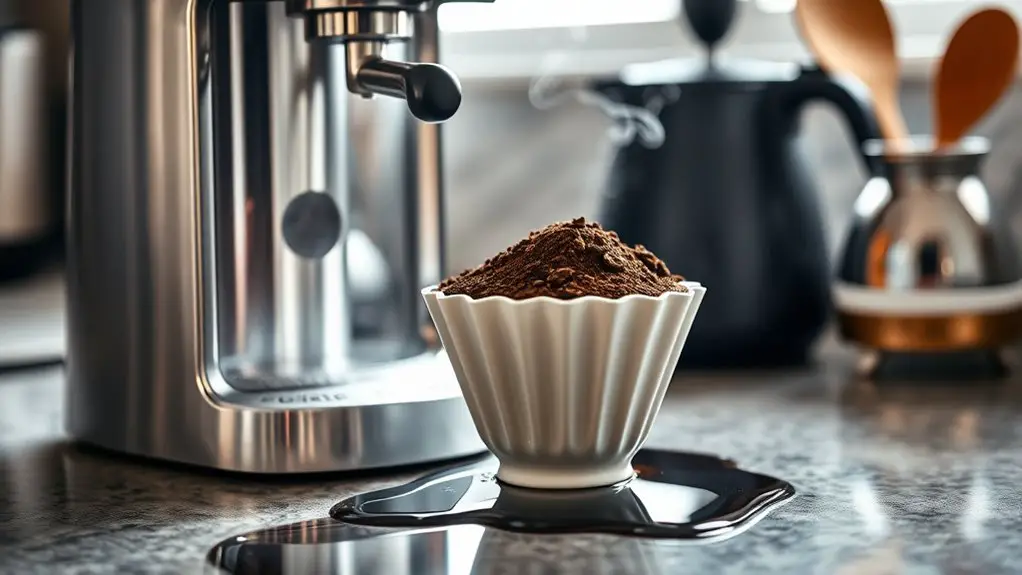
If your Cuisinart coffee maker is overflowing, it could be due to a few common issues. Check if the coffee basket is clogged or if you've used too many coffee grounds. An incorrect coffee-to-water ratio can also lead to excess brewing. Furthermore, make certain the water reservoir isn't overfilled and that your coffee pods are compatible. Regular maintenance can prevent these problems. For a more thorough exploration into solutions, there are more tips available.
Understanding Your Cuisinart Coffee Maker
When you understand how your Cuisinart coffee maker works, you can troubleshoot issues like overflowing more effectively. Familiarize yourself with the key coffee maker features, including the water reservoir, brew basket, and carafe. Each component plays a crucial role in the brewing process, utilizing advanced brewing technology to guarantee exceptional flavor extraction.
Pay attention to the brew settings and the programmable options, which allow you to customize your coffee experience. Knowing the correct water-to-coffee ratio and how to operate the machine will enhance your brewing capability. Additionally, understanding how the heating element functions can help you prevent overheating and overflow. Embrace the freedom of crafting your perfect cup by mastering your Cuisinart coffee maker's features and technology.
Common Causes of Overflow
If your Cuisinart coffee maker is overflowing, a couple of common causes might be at play. A clogged brew basket can restrict water flow, while using the wrong water-to-coffee ratio can lead to excess brewing. Addressing these issues can help prevent future overflow problems. Additionally, ensuring that you do not exceed excess coffee grounds is crucial in maintaining proper brewing efficiency and preventing overflow.
Clogged Brew Basket
A clogged brew basket can lead to overflow in your Cuisinart coffee maker, as the blockage prevents water from flowing through effectively. Brew basket issues often stem from coffee grounds accumulating over time, especially if you're using fine grind coffee or not cleaning regularly. If you're not following proper coffee brewing techniques, such as using the right grind size or measuring the coffee accurately, it can exacerbate this problem. Regularly check and clean your brew basket to maintain ideal flow and prevent overflow. A simple rinse after each use can help, but consider a deeper clean using vinegar or a specialized coffee maker cleaner periodically. Keeping your brew basket clear is essential for enjoying your favorite cup without the mess.
Incorrect Water Ratio
Using the correct water ratio is essential for preventing overflow in your Cuisinart coffee maker. When you don't measure your water accurately, it can lead to brewing issues that cause spills. Here are three common causes related to water measurement:
- Too Much Water: Adding more water than recommended can exceed the brewer's capacity, causing overflow.
- Incorrect Brewing Techniques: Not following proper brewing methods can result in an improper water-to-coffee ratio, leading to excess liquid.
- Inaccurate Measurements: Using the wrong tools or forgetting to account for evaporation can skew your water measurement, resulting in overflow.
To enjoy your coffee without mess, always double-check your ratios and refine your brewing techniques.
Incorrect Coffee Ground Size
Using the wrong coffee grind size can lead to overflow in your Cuisinart coffee maker. It's essential to match the grind type to your brewing method for best results. Understanding the impact of grind size on extraction can help prevent issues and improve your coffee experience.
Importance of Grind Size
Grind size plays an essential role in the brewing process, directly impacting the flavor and consistency of your coffee. When your grind isn't uniform, it can lead to over-extraction or under-extraction, causing your Cuisinart coffee maker to overflow. Achieving proper grind consistency and uniformity is important for ideal brewing. Here are three key points to take into account:
- Coarse Grind: Ideal for French press and cold brew, allows for slow extraction without clogging.
- Medium Grind: Works well for drip coffee makers, promoting balanced extraction.
- Fine Grind: Best for espresso, ensuring quick extraction but can clog filters if too fine.
Paying attention to grind size can help prevent messy spills and enhance your coffee experience.
Recommended Grind Types
When the coffee grounds are not the right size for your Cuisinart coffee maker, it can lead to brewing issues and overflowing. It's important to achieve the right grind consistency for your chosen brew methods. For drip coffee makers like yours, a medium grind is often ideal, while a coarse grind works better for French presses. If you use a fine grind, you might clog the filter, causing overflow. Alternatively, too coarse a grind can result in weak coffee. Always consider the brew method you're using and adjust your grind size accordingly. Consistency in your grind guarantees peak extraction and prevents messes. Choosing the right grind type is essential to enjoy a smooth, trouble-free brewing experience.
Impact on Brewing
Incorrect coffee ground size can considerably affect your brewing results. Using the wrong grind can lead to over-extraction or under-extraction, negatively impacting flavor and brew temperature. Here are three key points to reflect on:
- Brew Temperature: Finer grounds retain heat differently, potentially causing your coffee to brew at an unsuitable temperature.
- Extraction Rate: Coarse grounds may lead to weak coffee, as they won't extract flavors efficiently, while too-fine grounds can result in bitterness.
- Coffee Freshness: Larger particles tend to retain freshness longer, while smaller ones can oxidize quickly, affecting taste.
Clogged Coffee Filter
A clogged coffee filter can lead to significant overflow issues in your Cuisinart coffee maker. When coffee grounds build up, they restrict water flow, causing brewing problems and potential spills. Regular coffee filter maintenance is essential to prevent this. Make it a habit to check and clean your filter after each use, ensuring it's free from residue. If your filter is showing signs of wear or damage, consider filter replacement options, such as paper filters or reusable mesh filters, to maintain peak performance. Using the right filter type can enhance your coffee's flavor and prevent overflow. Staying proactive with your filter care will help you enjoy a reliable brewing experience without the mess. Additionally, be sure to perform regular cleaning of your coffee maker to prevent any build-up that could exacerbate overflow issues.
Water Reservoir Issues
If your Cuisinart coffee maker is overflowing, water reservoir issues could be the culprit. Check the following to verify everything's functioning properly:
- Water Level: Make sure you're not exceeding the maximum fill line. Overfilling can lead to spills and overflow.
- Reservoir Leaks: Inspect the reservoir for cracks or damage. Even small leaks can create significant issues during brewing.
- Sealing Issues: Verify the reservoir is seated correctly on the machine. Misalignment can cause water to escape rather than flow into the brewing chamber.
Overfilled Coffee Basket
Overfilling the coffee basket is a common mistake that can lead to messy spills and overflowing during the brewing process. When your basket's overfilled, water struggles to flow through the grounds properly, resulting in excess coffee spilling over the edges. To avoid this issue, always adhere to the recommended coffee-to-water ratio outlined in your brewer's manual. A good brewing tip is to measure your coffee with a scoop, ensuring you don't exceed the basket's capacity. Additionally, consider using a filter that fits well; a loose or improperly placed filter can exacerbate overflow. By keeping your basket adequately filled, you'll enjoy smoother brewing and a cleaner coffee-making experience. Maintaining the correct coffee-to-water ratio can significantly reduce the risk of overflow.
Incompatible Coffee Pods
While using incompatible coffee pods might seem like a minor issue, it can lead to significant overflow problems in your Cuisinart coffee maker. When you mix incompatible pod types or deal with pod size issues, the results can be messy. Here's what to watch out for:
Using incompatible coffee pods may seem trivial, but it can cause major overflow issues in your Cuisinart coffee maker.
- Size Compatibility: Verify the pod fits snugly in the holder. A loose fit can cause water to flow improperly.
- Type of Pods: Stick to the manufacturer's recommendations. Using third-party or off-brand pods can lead to clogs.
- Seal Integrity: If the pod's seal doesn't break properly, it can create pressure buildup, resulting in overflow.
Maintenance and Cleaning Tips
Using incompatible coffee pods can lead to overflow, but regular maintenance and cleaning can help prevent these issues. Establish a maintenance schedule to keep your Cuisinart coffee maker functioning efficiently. Start by descaling your machine every 1-3 months, depending on water hardness. Use vinegar or a descaling solution as part of your cleaning techniques. Regularly clean the brew basket and carafe with warm, soapy water to eliminate coffee residue. Don't forget to wipe down the exterior and the warming plate to maintain its appearance and performance. Make certain the water reservoir is free of mineral buildup by rinsing it frequently. By following these steps, you'll enjoy a trouble-free brewing experience and minimize the risk of overflow. Additionally, using filtered water can significantly enhance coffee quality and minimize mineral buildup in your machine.
When to Seek Professional Help
If you've tried troubleshooting your Cuisinart coffee maker and it's still overflowing, it might be time to seek professional help. Ignoring persistent issues could lead to further damage. Here are three signs to evaluate:
- Consistent Overflow: If it overflows regularly despite regular coffee maker troubleshooting, it's a red flag.
- Electrical Issues: If you notice strange noises or smells, don't risk it. This could indicate a serious problem.
- Unresponsive Controls: If buttons or settings aren't functioning properly, professional repair might be necessary.
Don't hesitate to contact a qualified technician. Their expertise can save you time and money, ensuring your coffee maker operates smoothly once again. It's better to be safe than sorry when it comes to appliance repairs.
Frequently Asked Questions
Can I Use Tap Water in My Cuisinart Coffee Maker?
They say, "You are what you drink." Using tap water in your Cuisinart is fine, but consider water quality and health concerns. Filtered water often enhances flavor and reduces impurities, ensuring a better brew experience.
How Often Should I Descale My Cuisinart Coffee Maker?
You should descale your Cuisinart coffee maker every three to six months, depending on your water's hardness. Regular maintenance tips include using a descaling solution, ensuring peak performance, and prolonging your coffee maker's lifespan.
What Is the Warranty Period for My Cuisinart Coffee Maker?
Your Cuisinart coffee maker typically has a one-year warranty coverage. To guarantee you're covered, it's important you complete the warranty registration within the specified period. Check your manual for specific details related to your model.
Are There Specific Cleaning Products Recommended for Cuisinart Machines?
Did you know that 90% of coffee enthusiasts believe regular maintenance improves flavor? For Cuisinart machines, use recommended cleaning solutions like vinegar or descaling agents. Follow these maintenance tips for ideal performance and longevity.
How Can I Improve the Taste of My Coffee?
To improve your coffee's taste, focus on coffee bean selection—opt for fresh, high-quality beans. Experiment with brewing techniques, adjusting grind size and water temperature, to discover your ideal flavor profile and enhance your coffee experience.