
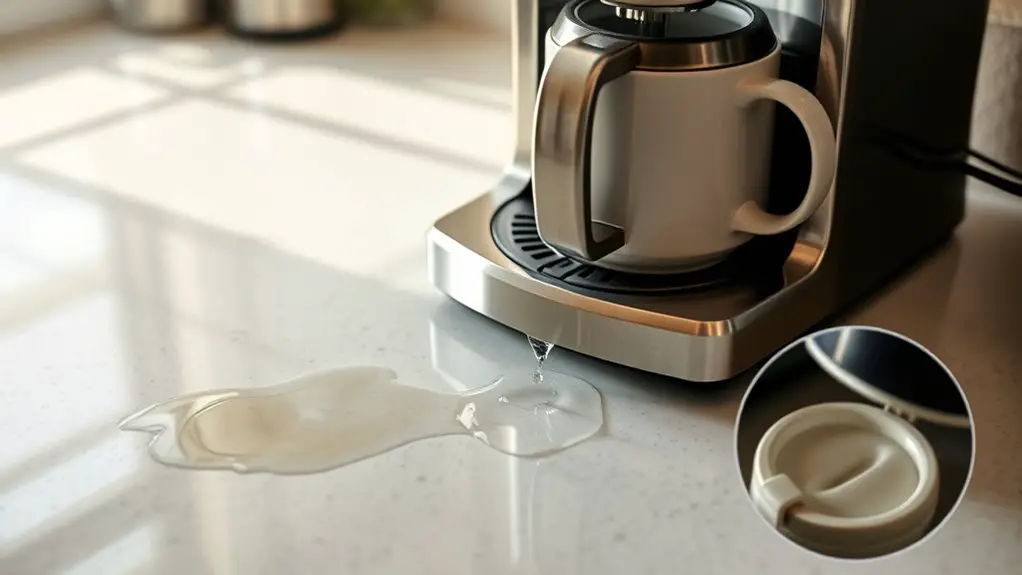
If your Cuisinart coffee maker is leaking water, first check the water reservoir for cracks or improper seating. Inspect the brew basket and seals for wear, as these are common culprits. Additionally, examine the water lines and connections for clogs or damage that might cause leaks. Regular maintenance, such as cleaning and descaling, can prevent future issues. Keep these tips in mind, and you'll discover more about maintaining your coffee maker effectively.
Understanding the Leaking Issue
When dealing with a Cuisinart coffee maker, identifying the source of water leakage can be essential for maintaining ideal performance. Effective leak detection starts with a systematic inspection of your machine. Begin by checking the water reservoir for cracks or improper seating. Utilize troubleshooting techniques, such as running a cycle without coffee to observe any leaks more easily. Pay attention to the brew basket and drip tray, as these are common areas for water accumulation. If the issue persists, inspect the internal components and seals for wear or damage, which could exacerbate the problem. By pinpointing the source of the leak, you can implement targeted repairs or replacements, ensuring your coffee maker operates efficiently and effectively.
Common Causes of Water Leaks
While a Cuisinart coffee maker is designed for durability, several common factors can lead to water leaks that disrupt its functionality. One primary cause of leaks is a damaged or improperly seated water reservoir. If the reservoir isn't aligned correctly, water can escape. Another issue could be a cracked or worn-out brew basket, which might not hold water effectively. Additionally, check the rubber seals; deterioration over time can allow leaks to form. Clogs in the drainage system can also contribute to leaks, as they may force water out of unintended areas. For efficient troubleshooting tips, regularly inspect components and verify everything is clean and properly fitted to maintain peak performance and prevent leaks. Regular maintenance, including cleaning with vinegar, can help prevent clogging and reduce the likelihood of leaks.
Checking the Water Reservoir
To address leaks in your Cuisinart coffee maker, start by checking the water reservoir. Inspect it for any cracks, verify it's seated correctly, and look for blockages that might prevent proper water flow. These steps can help identify the source of the leak and facilitate effective troubleshooting.
Inspect for Cracks
A careful inspection of the water reservoir is essential in identifying potential leaks that could lead to water pooling beneath your Cuisinart coffee maker. Start by examining the entire surface for any visible cracks or damage. Focus on areas where stress might cause hairline fractures, as these can be tricky to spot. Use a flashlight to enhance crack detection, ensuring you don't miss any imperfections. If you find a crack, consider repair solutions like epoxy or silicone sealant specifically designed for plastics. Remember to let any repair cure fully before using the coffee maker again. By proactively checking the reservoir, you can prevent leaks and maintain your machine's functionality, ensuring your coffee experience remains uninterrupted.
Ensure Proper Seating
Proper seating of the water reservoir is essential for preventing leaks in your Cuisinart coffee maker. To guarantee proper alignment, carefully place the reservoir into its designated slot, making sure it fits snugly against the coffee maker. If the reservoir isn't securely placed, it can lead to water seeping out during operation. Check for any obstructions that might prevent a tight fit, as even minor misalignments can cause significant issues. Once seated, gently tug on the reservoir; it should remain firmly in place without any wobbling. Regularly inspect this connection to maintain peak performance and avoid unnecessary spills. Taking these steps will help you enjoy your brewing experience without the worry of water leaks.
Check for Blockages
Even with the water reservoir properly seated, blockages can still occur, leading to leaks in your Cuisinart coffee maker. If you notice water pooling around the machine or inconsistent brewing, these are common blockage symptoms. Start by inspecting the water reservoir for any debris or mineral buildup. Rinse it thoroughly and ascertain the inlet is clear. Next, check the water lines for kinks or obstructions. If necessary, use a soft brush or a cloth to perform blockage removal. For persistent clogs, consider running a vinegar solution through the system to dissolve any stubborn deposits. By maintaining a clean water reservoir and lines, you can prevent further leaks and extend the life of your coffee maker.
Inspecting the Brew Basket and Seal
When you notice water leaking from your Cuisinart coffee maker, one of the first areas to inspect is the brew basket and its seal. Start by removing the brew basket and checking for any cracks or damage that could lead to leaks. Ascertain that the basket is properly seated in its holder; misalignment can cause water to escape during brewing. Next, conduct a thorough seal inspection. Look for wear or debris on the rubber gasket that seals the brew basket, as even minor imperfections can result in leaks. If you find any issues, consider replacing the brew basket or sealing components. Regular maintenance of these parts can help prevent future leaks and ascertain a smooth brewing experience.
Examining the Water Lines and Connections
One critical area to examine for leaks in your Cuisinart coffee maker is the water lines and their connections. Start with a thorough water line inspection; look for any visible cracks, kinks, or wear that could lead to leaks. Make sure that the water lines are properly seated in their fittings. Loose or improperly connected lines can compromise connection integrity, allowing water to escape during operation. If you notice any signs of damage, consider replacing the affected parts. Additionally, check for mineral buildup or debris that might obstruct the flow, which could also lead to leaks. By addressing these aspects, you can greatly reduce the chances of leaks and enjoy a trouble-free brewing experience.
Maintenance Tips to Prevent Future Leaks
To prevent future leaks in your Cuisinart coffee maker, establish a regular cleaning schedule to remove any buildup. It's also essential to inspect seals and gaskets for wear and tear, ensuring a tight fit. Finally, always use the recommended water type to maintain peak performance and reduce leakage risks. Additionally, regular cleaning of the coffee maker is crucial to prevent overflow and improve overall functionality.
Regular Cleaning Schedule
Although neglecting regular maintenance can lead to leaks in your Cuisinart coffee maker, establishing a consistent cleaning schedule can greatly reduce this risk. Aim for a cleaning frequency of at least once a month to prevent mineral buildup and residue accumulation. Use appropriate cleaning tools, such as a soft cloth, vinegar, and a brush for the filter basket. Begin by descaling the machine with vinegar to remove mineral deposits, then wipe down the exterior and interior components. Don't forget to clean the water reservoir and the brew basket thoroughly. By sticking to this schedule, you'll not only enhance your coffee maker's performance but also extend its lifespan, ensuring you enjoy your coffee without the hassle of leaks.
Inspect Seals and Gaskets
Inspecting seals and gaskets regularly is essential for preventing leaks in your Cuisinart coffee maker. Over time, these components can wear down, leading to water leakage. Start by examining the rubber seals around the brew basket and water reservoir. Look for any cracks or deformities that might indicate the need for seal replacements. Gasket maintenance is equally important; make sure that the gaskets fit snugly and aren't brittle. If you notice any signs of damage, replace them promptly to maintain peak performance. Regular inspections can save you from costly repairs and enhance your coffee-making experience. By keeping an eye on these critical parts, you'll make certain your coffee maker operates efficiently and leak-free.
Proper Water Usage
Proper water usage is essential for preventing future leaks in your Cuisinart coffee maker. Start by confirming you're using high-quality water, ideally filtered or purified, to minimize mineral buildup. Hard water can lead to scale accumulation, which may obstruct water flow and cause leaks. Additionally, be mindful of your brewing temperature; using excessively hot water can damage components over time, increasing the risk of leaks. Regularly descale your machine according to the manufacturer's recommendations to maintain peak performance. Always fill the reservoir to the recommended level, avoiding overfilling. By adhering to these guidelines regarding water quality and brewing temperature, you can help confirm your coffee maker operates efficiently and leak-free for years to come.
Frequently Asked Questions
Can I Use My Cuisinart Coffee Maker if It's Leaking?
Over 70% of coffee maker issues stem from inadequate maintenance. If your coffee maker's leaking, it's best to avoid using it until you troubleshoot the problem. Regular maintenance can prevent leaks and guarantee peak performance.
Is a Leaking Coffee Maker Dangerous?
A leaking coffee maker can pose leaking hazards, such as electrical risks or slips. It's essential you take safety precautions, like unplugging the machine and addressing the leak promptly to guarantee your kitchen remains safe.
How Can I Tell if My Coffee Maker Is Under Warranty?
If your coffee maker's warranty isn't as clear as a sunny day, check the manual for warranty duration and contact the manufacturer for warranty verification. That'll guarantee you enjoy every drop without worry.
What Should I Do if Water Leaks From the Bottom?
If you notice water leakage from the bottom, first unplug the machine. Inspect for cracks, loose components, or a clogged reservoir. Use these troubleshooting tips to address the issue and restore your coffee maker's functionality.
Where Can I Find Replacement Parts for My Cuisinart Coffee Maker?
If you think finding replacement parts is a hassle, it's easier than you think. Check authorized retailers, online marketplaces, or the Cuisinart website for various replacement part options and essential coffee maker accessories to keep your machine running smoothly.