
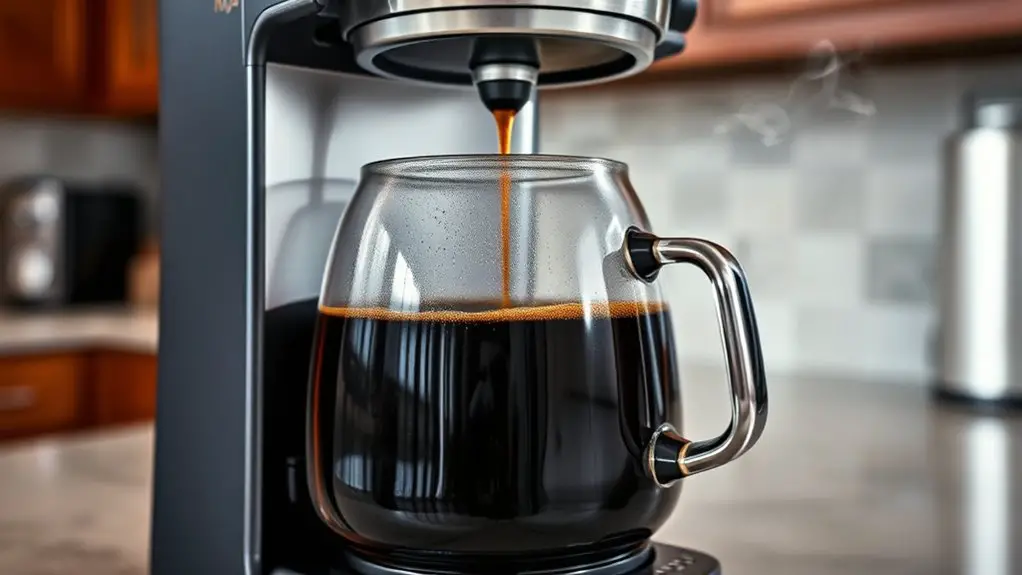
If your Ninja Coffee Maker smells burnt, it could be due to several factors. Over-roasted coffee beans may mask flavors with a burnt aroma. Overheating components and poor temperature control from a malfunctioning thermostat can exacerbate the issue. Hard water also contributes to mineral buildup, affecting brewing quality. Regular cleaning, using freshly roasted beans, and proper brewing practices can help. Maintaining your machine is essential for peak performance, and there are more insights on effective solutions to explore.
Understanding the Ninja Coffee Maker Components
When you understand the components of your Ninja Coffee Maker, you'll be better equipped to diagnose any issues, like that burnt smell. Your Ninja coffee maker consists of several key components: the water reservoir, brew basket, filter holder, and heating element. The water reservoir holds the water, while the brew basket contains the coffee grounds. The filter holder is essential for guaranteeing that only the brewed coffee passes through. If any of these Ninja components malfunction or become clogged, it can lead to improper brewing temperatures. Understanding these parts allows you to identify potential problems—like a malfunctioning heating element—which could contribute to that unpleasant burnt aroma. Regular maintenance guarantees that your coffee maker operates efficiently, preserving the quality of your brew.
The Role of Burnt Coffee Beans
Even with a well-functioning Ninja Coffee Maker, the quality of your coffee can be negatively impacted by the use of burnt coffee beans. When beans are over-roasted, they develop a burnt aroma that can overwhelm the subtle flavors in your brew. This burnt flavor often masks the natural sweetness and complexity that fresh beans should provide. To maintain the integrity of your coffee, prioritize bean freshness; ideally, use beans roasted within the last two weeks. Stale or burnt beans not only affect taste but can also lead to an unpleasant brewing experience. By being mindful of your bean selection, you can guarantee that your Ninja Coffee Maker delivers the rich, flavorful coffee you desire, free from the detriments of burnt beans.
Temperature Control Issues
If your Ninja coffee maker is producing burnt smells, temperature control issues might be to blame. Inconsistent heating elements, improper brewing time, and calibration problems can all lead to overheating your coffee. Understanding these factors is essential for achieving the perfect brew and preventing that burnt taste.
Inconsistent Heating Elements
Although you might not notice it right away, inconsistent heating elements in your Ninja coffee maker can lead to temperature control issues that affect the brewing process. When the heating elements malfunction, they can create inconsistent settings that result in uneven brewing temperatures. This inconsistency can cause coffee to brew at too high or too low a temperature, affecting flavor extraction and potentially leading to a burnt smell. Additionally, element malfunctions can prevent the machine from reaching ideal brewing conditions, compromising your coffee quality. To maintain a consistent brew, it's crucial to regularly check for any signs of wear or damage in the heating elements and verify they're functioning properly. Addressing these issues promptly can enhance your coffee experience considerably.
Brewing Time Factors
When brewing coffee, the duration of the process is critical, as it directly affects flavor and aroma; consequently, temperature control issues can greatly impact brewing time. If your Ninja Coffee Maker isn't maintaining the ideal temperature, the brewing duration may extend, leading to over-extraction or under-extraction of the coffee. This can result in a burnt smell or a lackluster taste.
| Brewing Duration | Effect on Coffee Extraction |
|---|---|
| 3 minutes | Over-extraction (bitter) |
| 4 minutes | Balanced extraction |
| 5 minutes | Under-extraction (sour) |
| 6 minutes | Burnt flavor |
| 7+ minutes | Charred taste |
Monitoring and adjusting brewing time is essential for achieving your desired flavor profile.
Temperature Calibration Problems
Temperature calibration problems can greatly affect the performance of your Ninja Coffee Maker, leading to undesirable brewing outcomes. When the temperature is off, you may experience:
- Under-extraction: If the water isn't hot enough, your coffee may taste weak or sour.
- Over-extraction: Conversely, too high a temperature can cause bitterness and a burnt flavor.
- Inconsistent results: Fluctuations in temperature can disrupt brewing accuracy, leading to unpredictable flavor profiles.
To maintain ideal brewing performance, regularly check and adjust the temperature calibration. Ensuring your Ninja Coffee Maker operates at the correct temperature is essential for achieving the perfect brew, balancing flavor and aroma. By addressing temperature calibration issues, you can enjoy a consistently satisfying cup of coffee.
Overheating and Its Effects
If your Ninja coffee maker is producing a burnt smell, overheating is likely the culprit. Overheating can occur due to several causes, such as a malfunctioning thermostat, prolonged brewing cycles, or insufficient airflow. When your coffee maker overheats, it can lead to burnt coffee, damage to internal components, and even safety hazards. To combat this issue, consider implementing overheating solutions like regularly cleaning your coffee maker to guarantee proper airflow, checking the thermostat for accurate temperature readings, and avoiding prolonged brewing times. By understanding the causes and remedies of overheating, you can maintain your coffee maker's performance and enjoy a consistently great cup of coffee without that burnt aroma.
The Impact of Hard Water
If you're using hard water in your Ninja Coffee Maker, mineral buildup can greatly impact its performance and lead to that burnt smell. Over time, calcium and magnesium deposits can accumulate, hindering the brewing process and affecting the taste of your coffee. Regular maintenance and descaling are crucial to prevent these issues and guarantee peak functionality.
Mineral Buildup Effects
Although you might not notice it immediately, mineral buildup from hard water can considerably impact the performance of your Ninja coffee maker. This buildup can interfere with the brewing process and alter your coffee flavor. Here are three effects you should be aware of:
- Reduced Efficiency: Mineral deposits can clog internal components, causing your machine to work harder and potentially overheat.
- Inconsistent Brewing Temperature: Buildup can affect heat distribution, leading to uneven extraction and an unsatisfactory coffee experience.
- Off-Flavors: Accumulated minerals can leach into your brew, altering the intended flavor profile of your coffee.
Understanding these impacts can help you maintain the quality and longevity of your coffee maker while preserving the rich flavors you love.
Maintenance Tips Needed
To guarantee your Ninja coffee maker remains in peak condition, addressing the impact of hard water is essential. Hard water contains minerals that can accumulate, leading to clogs and affecting the brewing process. To combat this, establish a regular cleaning schedule, ideally every 1-2 months, depending on your maintenance frequency. Use a descaling solution specifically designed for coffee makers to effectively remove mineral buildup. If you notice a burnt smell, it may indicate that the heating element is struggling due to these deposits. Additionally, consider using filtered or distilled water to reduce mineral content, prolonging your machine's lifespan and ensuring superior performance. Consistent attention to these factors can enhance your brewing experience and maintain flavor integrity.
Cleaning and Maintenance Practices
Maintaining your Ninja Coffee Maker is essential for guaranteeing ideal performance and preventing unpleasant odors, such as a burnt smell. Establishing a proper cleaning frequency and maintenance schedule can help you enjoy your coffee without the unwanted scent. Here are three key practices to follow:
- Daily Cleaning: Rinse removable parts, including the brew basket and carafe, to eliminate residue.
- Weekly Deep Clean: Run a mixture of equal parts water and white vinegar through the system to remove mineral buildup.
- Monthly Maintenance: Check and replace any worn-out components, like filters or seals, to guarantee optimal functionality. Additionally, regular descaling practices will help prevent any mineral deposits that may contribute to burnt odors.
Brew Time and Grind Size Considerations
When brewing coffee, both brew time and grind size play essential roles in determining flavor and aroma, as they directly influence the extraction process. If your grind size is too fine, the coffee may over-extract during a longer brew time, leading to a burnt taste. Conversely, a coarse grind with an inadequate brew time can result in under-extraction, making your coffee taste weak or sour. Striking a balance is vital; typically, a medium grind paired with a brew time of around four to six minutes yields ideal results. Experimenting with these variables allows you to tailor your coffee to your preference while preventing that unpleasant burnt smell from your Ninja Coffee Maker. Additionally, using freshly ground beans can significantly enhance the flavor and aroma of your brew.
The Importance of Quality Coffee
Quality coffee is fundamental to achieving a satisfying brew; it directly impacts flavor, aroma, and the overall drinking experience. When you choose quality beans, you're investing in a cup that truly reflects the intricacies of its origin. Consider the following points:
- Flavor Profiles: Quality beans offer diverse flavor profiles, enhancing your coffee's complexity.
- Freshness: Good beans retain their freshness longer, preventing stale tastes that can ruin your brew.
- Roast Consistency: High-quality beans guarantee even roasting, which is essential for balanced flavor extraction. Additionally, organic coffee promotes a healthier beverage choice free from harmful additives.
Tips for Preventing Burnt Smells
To prevent your Ninja coffee maker from emitting a burnt smell, it's vital to pay attention to several key factors that influence the brewing process. First, make sure you're using the right coffee-to-water ratio; too little water can lead to overheating. Regular coffee maker upkeep is essential—clean the machine frequently to remove coffee oils and residue that contribute to burnt odors. Additionally, avoid over-brewing; if the coffee sits on the warming plate for too long, it can develop a burnt taste and smell. Finally, consider the type of coffee beans you're using; stale beans can exacerbate burnt flavors. By implementing these burnt odor prevention strategies, you'll enjoy a fresher, more aromatic cup of coffee every time. Always opt for freshly roasted coffee beans as they maintain better flavor and aroma.
Frequently Asked Questions
Can Using Flavored Coffee Beans Cause a Burnt Smell?
Using flavored coffee beans can potentially cause a burnt smell if the brewing temperature's too high. The added oils from the flavoring may burn, impacting taste and aroma, so monitor the brewing process carefully.
How Often Should I Descale My Ninja Coffee Maker?
You should descale your Ninja coffee maker every three to six months for peak performance. Regular maintenance tips include checking water hardness and using a quality descaling solution to prevent buildup and guarantee great-tasting coffee.
What Type of Water Is Best for Brewing Coffee?
When brewing coffee, think of water as the canvas for your masterpiece. Filtered water, low in mineral content, enhances flavor purity, ensuring your brew's rich notes shine without unwanted impurities clouding your morning ritual.
Is It Normal for the Coffee Maker to Smell Hot?
It's common for your coffee maker to emit a hot smell during operation. However, if you detect a burnt smell, it may indicate overheating, requiring immediate attention to prevent damage or safety hazards in your coffee maker.
Does the Age of the Coffee Maker Affect Smell?
Think of your coffee maker as a car; without proper maintenance, its performance deteriorates over time. The age can affect smell due to decreased brewing efficiency, making regular coffee maker maintenance essential for peak operation.