
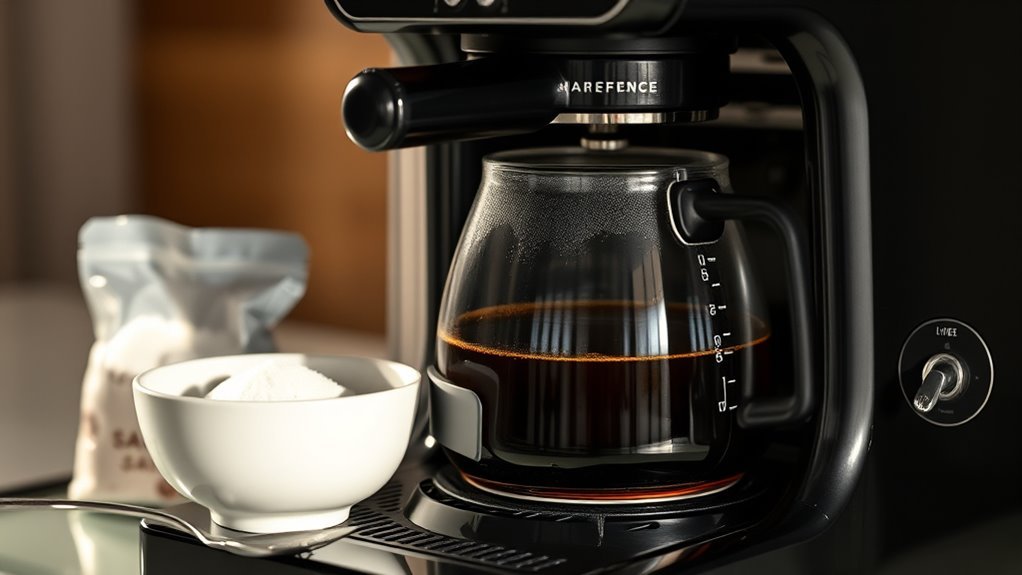
If your coffee maker's brewing bitter coffee, start by checking your beans for freshness; aim for recent roasts. Adjust the grind size—finer grinds increase bitterness. Make certain your water temperature is between 195°F and 205°F to avoid over-extraction. Experiment with brew time and stick to the coffee-to-water ratio of 1:15 for balanced flavor. Finally, consider your water quality; filtered water can enhance taste. Want to discover more tips?
Understanding the Causes of Bitter Coffee
When you take a sip of coffee that tastes overly bitter, it is essential to understand what might be causing that unpleasant flavor. One major factor is coffee acidity, which can vary greatly depending on the beans and brewing methods. If your brew is too acidic, it can lead to an imbalanced taste, resulting in bitterness. Another key element is the brewing temperature; if your water is too hot, it can extract undesirable flavors from the coffee grounds. Ideally, the brewing temperature should be between 195°F and 205°F. Maintaining the right balance of acidity and temperature not only enhances the flavor but also allows you to enjoy the rich complexities of your coffee without the bitterness that detracts from your experience. Additionally, the quality of the coffee beans used can significantly influence the overall taste, as inferior beans may contribute to bitterness.
Check Your Coffee Beans for Freshness
Bitterness in coffee can often stem from the quality and freshness of the beans used. To guarantee you're brewing the best cup, check the following:
- Purchase Whole Beans: Whole beans retain freshness longer than pre-ground coffee.
- Check Roast Date: Opt for beans roasted within the last two weeks for peak flavor.
- Store Properly: Use airtight containers, away from light, heat, and moisture to preserve quality.
- Know Your Bean Origin: Different origins can affect taste; research the beans to find those you enjoy most. Additionally, choose fresh Arabica beans for a less bitter and more balanced flavor profile.
Adjusting the Coffee Grind Size
Though you may not realize it, the grind size of your coffee can greatly impact its flavor profile, including bitterness. If your coffee tastes harsh, it might be time to re-evaluate your grind settings. A finer grind increases extraction, which can lead to a bitter taste, while a coarser grind allows for a smoother flavor profile. Aim for ideal grind consistency by adjusting your grinder until you find the sweet spot. Remember, the ideal grind size varies based on your brewing method; for instance, espresso requires a fine grind, while French press benefits from a coarse grind. Additionally, using medium grind for Keurig machines is crucial to avoid over-extraction. Experimenting with these settings can help you achieve a balanced cup, reducing bitterness and enhancing your overall coffee experience.
Optimize Your Water Temperature
If you want to brew a great cup of coffee, maximizing your water temperature is crucial. The right temperature can drastically affect the extraction process, guaranteeing you achieve a balanced flavor without bitterness. Here are some key points to take into account:
- Ideal Range: Aim for a water temperature between 195°F and 205°F (90°C to 96°C) during brewing.
- Avoid Boiling: Water that's too hot can extract undesirable compounds, leading to bitterness.
- Preheat Your Equipment: Confirm your coffee maker and carafe are warmed up to maintain consistent temperature.
- Experiment with Brewing Techniques: Different methods might require slight adjustments in temperature for best results. Additionally, using an effective odor remover like ground mustard powder can help maintain your coffee maker's freshness.
Experiment With Brew Time
While you might think the brewing process is straightforward, the duration you allow your coffee to steep plays a significant role in the final flavor profile. Experimenting with brew time can help you discover the perfect balance, reducing bitterness and enhancing the taste. Typically, a shorter brew time may yield a milder flavor, while extending it can extract more oils and compounds, often leading to bitterness.
Consider making timing adjustments based on your preferred brewing techniques. For instance, if you're using a French press, aim for four minutes; for drip coffee, stick to about five minutes. Adjust these times gradually, tasting after each change. This way, you'll gain control over your coffee's flavor, creating a brew that truly satisfies your palate. Additionally, be aware that water leakage can affect your machine's performance, which might indirectly influence your coffee's taste.
Clean Your Coffee Maker Regularly
Sure! Here's the revised content following your instructions:
—
Neglecting the cleanliness of your coffee maker can contribute to bitter flavors in your brew. Regular cleaning is crucial to maintain the quality of your coffee. Here are some effective cleaning techniques you can adopt:
- Descale your machine every month to remove mineral buildup.
- Wash the carafe and filter basket with warm, soapy water after each use.
- Run a cycle with a mixture of equal parts water and vinegar every few weeks to eliminate oils and residue.
- Establish a maintenance schedule to guarantee you're cleaning consistently. Additionally, maintaining cleanliness enhances the taste and freshness of brewed coffee.
—
Let me know if you need any further adjustments!
Use the Right Coffee-to-Water Ratio
To brew a balanced cup of coffee, you need to take into account the ideal coffee measurement for your preferred strength. Water quality also plays an essential role, as impurities can affect flavor. Don't hesitate to experiment with different ratios to find the perfect balance that suits your taste. Remember that the average coffee bean to cup ratio affects yield; 1 kilo yields about 120 to 140 cups, which can help guide your measurements.
Ideal Coffee Measurement
Achieving the perfect cup of coffee hinges substantially on the coffee-to-water ratio you use. To guarantee ideal coffee types shine through, it's essential to get this balance right. Here's a simple guide for perfect brewing:
- Use 1 to 2 tablespoons of coffee for every 6 ounces of water.
- Adjust based on strength preference; add more for a bolder flavor.
- Consider the grind size; finer grinds typically require less coffee.
- Experiment; each coffee type has unique characteristics, so find what works best for you.
Water Quality Matters
Even with the right coffee-to-water ratio, the quality of water you use can greatly impact your brew's flavor. If you're using hard water, the higher mineral content can lead to bitter notes in your coffee. Calcium and magnesium, while beneficial for health, can interfere with the extraction process, making your coffee taste off. Ideally, you want to use filtered or purified water, which allows the coffee's natural flavors to shine through without interference from unwanted minerals. Pay attention to the water's pH level, too; slightly acidic water can enhance extraction. By ensuring you're using high-quality water, you set the foundation for a more balanced, flavorful cup, reducing the chances of bitterness considerably.
Experiment With Ratios
Finding the right coffee-to-water ratio is essential for balancing flavor and avoiding bitterness in your brew. Your coffee preferences play an important role in this adjustment, so don't hesitate to experiment with different brewing techniques. Here's a simple guide to help you find the sweet spot:
- Start with a 1:15 ratio (1 gram of coffee for every 15 grams of water).
- Adjust based on taste—try a 1:16 ratio for a milder brew.
- If you prefer stronger coffee, increase to a 1:14 ratio.
- Always measure your coffee and water accurately to maintain consistency.
Explore Different Brewing Methods
While many factors contribute to the bitterness of coffee, exploring different brewing methods can greatly impact the final flavor profile. For instance, the French Press allows for full immersion, which can extract richer flavors, while the Pour Over method offers control over water flow, yielding a cleaner cup. The AeroPress Method is versatile, enabling you to experiment with pressure and steeping time. Cold Brew eliminates bitterness through a longer steeping process, resulting in a smoother taste. The Espresso Technique creates a concentrated shot, but be wary of over-extraction. Drip Brewing is convenient, though it can vary in flavor. Siphon Coffee adds a theatrical touch, while Turkish Coffee delivers bold flavors. Percolator Style and Single Serve options also present unique brewing experiences worth exploring. Additionally, using ground coffee instead of instant coffee can enhance the overall flavor profile of your brew.
Consider Water Quality
When brewing coffee, the quality of your water plays an essential role in the final taste. Tap water often contains minerals and chemicals that can contribute to bitterness, while filtered water can enhance flavor clarity. By choosing the right water, you'll greatly improve your coffee experience.
Tap Water Issues
If you're experiencing bitter coffee, it might be time to examine your tap water quality. Poor water mineralization and tap water contaminants can notably affect your brew's flavor. To identify potential issues, consider these factors:
- Chlorine: High levels can impart a harsh taste.
- Hardness: Excessive minerals may lead to over-extraction during brewing.
- pH Levels: Water that's too acidic can create bitterness.
- Contaminants: Lead or other pollutants can alter the taste profile.
Assessing these elements can empower you to improve your coffee experience. If your tap water isn't meeting quality standards, it could be the culprit behind your bitter coffee. Remember, the foundation of a great cup starts with the water you use.
Filtered Water Benefits
Using filtered water can considerably enhance your coffee's taste, as it removes impurities and balances mineral content. When you opt for filtered water, you're not just improving flavor; you're also tapping into significant health benefits. Many tap waters contain chlorine, heavy metals, and other contaminants that can negatively affect both your coffee and your well-being. By using filtered water, you reduce your exposure to these harmful substances, which can lead to a cleaner, healthier brew. Additionally, the right mineral balance in filtered water promotes ideal extraction, resulting in a smoother, less bitter cup. Ultimately, choosing filtered water empowers your coffee experience while supporting your health, allowing you to enjoy your daily brew without compromise.
Invest in a Good Coffee Maker
Investing in a good coffee maker can dramatically improve your brewing results, as the quality of your equipment directly impacts the taste of your coffee. When considering a new machine, focus on essential coffee maker features and advanced brewing technology. Here are four key aspects to look for:
- Temperature Control: Make sure your coffee maker maintains ideal brewing temperatures for better extraction.
- Brewing Time: Choose a model that brews within the perfect time frame to avoid over-extraction.
- Grind Size Compatibility: Select machines that accommodate various grind sizes to enhance flavor.
- Programmability: Look for features that allow you to customize brewing settings for your preferences. Additionally, consider machines with programmable features that enhance your morning routine and simplify the brewing process.
Frequently Asked Questions
Can Over-Brewing Cause Coffee to Taste Bitter?
Yes, over-brewing can definitely cause bitterness. When brewing time extends, the extraction process pulls more compounds from the coffee, leading to unwanted flavors. Shortening your brewing time may enhance your coffee's overall taste.
How Often Should I Descale My Coffee Maker?
Descaling frequency can make or break your coffee's flavor. For ideal taste, you should descale your coffee maker every three to six months. Regular maintenance keeps your machine running smoothly, ensuring freedom from bitter brews.
Do Different Coffee Roasts Affect Bitterness Levels?
Yes, different coffee roasts do affect bitterness levels. Light roasts tend to be milder and less bitter, while dark roasts often have a stronger, more pronounced bitterness due to longer roasting times and caramelization of sugars.
What Type of Water Is Best for Brewing Coffee?
You might've noticed your coffee tastes off; using filtered water can make a difference. Ideal water should have balanced mineral content, enhancing flavors without overwhelming bitterness. Experiment with different types to find your perfect brew.
Can I Use Flavored Coffee Beans Without Bitterness?
Yes, you can use flavored beans without bitterness. By adjusting your brewing techniques—like water temperature and brew time—you'll enhance flavors while minimizing bitterness, allowing you to enjoy a rich, aromatic cup tailored to your taste.